Protein and Bakery
Chickpea, pea and rice: comparing new bakery proteins
Compare chickpea, pea and rice protein samples: technical data sheets, water, flavour, process and supply for bakery projects.
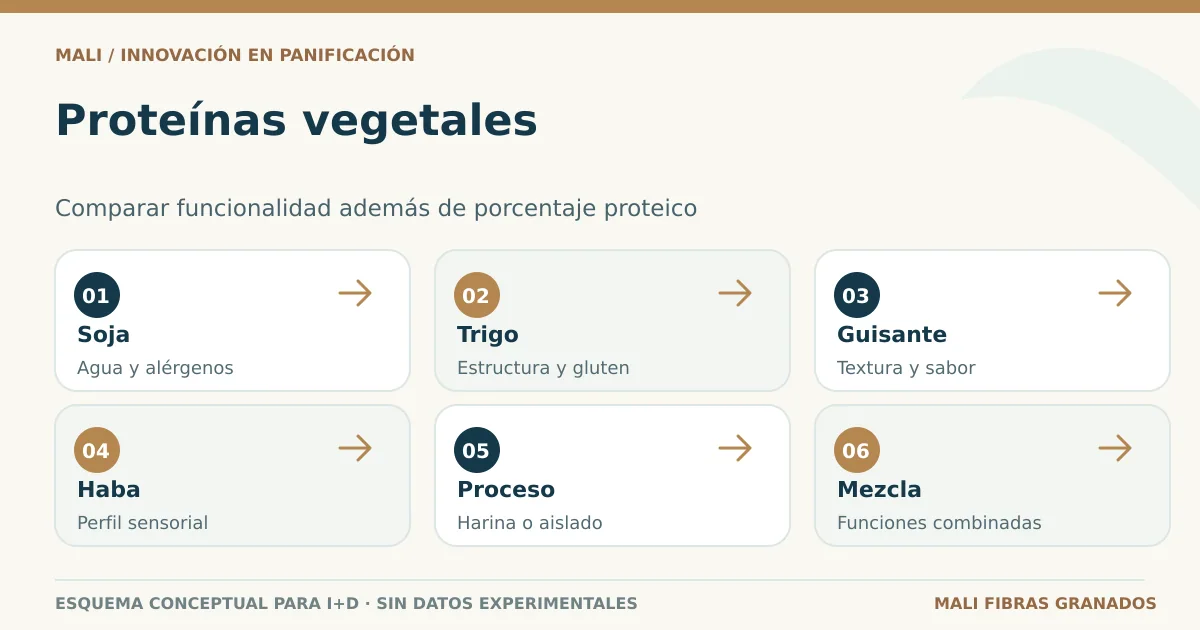
Evaluating alternative proteins for 2027 does not mean replacing soya or wheat with a fashionable raw material. It means comparing specific ingredients and deciding whether they improve the project. This guide proposes a selection trial for R&D and Procurement; the general comparison of plant proteins explains the context of each source.
Compare equivalent ingredients, not just names
Chickpea can mean flour, concentrate or isolate. Two pea products may differ in extraction and treatment. The plant name alone does not describe solubility, particle size, water behaviour or flavour.
Ask for composition, moisture, process identification when relevant, allergens, conservation and batch criteria. Express values on comparable bases before calculating costs. Do not confuse price per kilo of ingredient with cost per protein supply or cost of finished bread.
What to study in each alternative
| Source | Question for the Test |
|---|---|
| pea | How does this ingredient respond to water and the sensory target? |
| chickpea | Are you looking for legume identity or protein concentration? |
| Faba bean | Does it provide an alternative function and supply? |
| Rice | What role does it have in a combination? |
| Wheat | What structural need should be maintained? |
These are not 1:1 substitutions. Proteins other than gluten do not automatically reproduce the wheat network. The absence of an ingredient requiring mandatory allergen declaration does not prove the absence of allergy risk or cross-contamination.
Design a comparison that teaches something
Keep a reference formulation and document which variable you change. Compare consistency, form, fermentation, volume, texture and acceptance during storage. If you adjust water for each sample, register it: it is part of its cost and application behaviour.
A study with chickpea flours treated in different ways found different responses in gluten-free rice bread. It is evidence of the importance of the ingredient and the matrix; it does not demonstrate the yield of a particular isolate on an industrial wheat bread.
Criteria for R&D
Compare on three levels
- SheetIdentity and composition
- TestWater, dough and taste
- PurchaseBatch and continuity
Decision scheme; does not represent experimental results of a Mali Fibras Granados formulation.
Combinations and supply
A mixture can distribute functions, but introduces more variables. Also check availability, lots, deadline and documentation. An alternative is only approved when it meets the application criteria, not when the sample is received.
Approve an alternative against the existing benchmark
Requests a representative sample of the supply and an exact specification of the material. The name of the legume does not allow comparison of two ingredients on its own.
| Document or evidence | Reason |
|---|---|
| Identity: flour, concentrate or isolate | Compare equivalent matrices |
| Composition and allergens | Review nutrition and customer requirements |
| Declared processing conditions | Understanding Relevant Functional Differences |
| trial versus the current ingredient | Measure water, volume, texture and taste |
| Lot and availability | Linking the result to an industrial offer |
This guide supports the evaluation of samples and suppliers. The comparison of plant protein sources explains the technological role of each family.
Mali Fibras Granados Solutions
Protein Pan and Protein Snacks are designed for protein bakery applications. This does not mean they contain chickpea, rice or every source covered in this guide. If the brief requires one of these ingredients, request a specific protein development.