Protein and Bakery
Plant proteins in breadmaking: soya, pea, wheat and alternatives
Plant sources differ in water absorption, gluten interaction, volume, taste and allergens. A comparison to select protein baking ingredients.
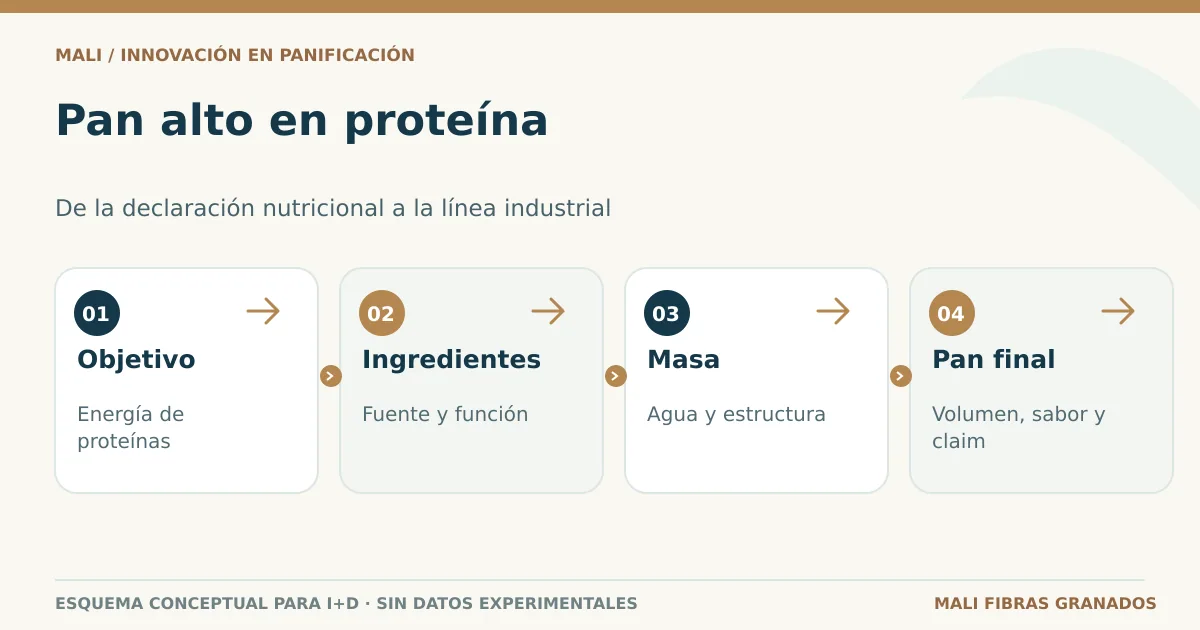
Two ingredients with the same protein percentage can produce very different doughs. Water requirements, the gluten network, volume, crumb and flavour depend on the protein source and how it was produced. This guide helps you select a raw material; for the complete product design, see how to develop high-protein bread, and for existing defects, see protein bread troubleshooting.
In summary
- Soya, wheat gluten, pea, faba bean and lupin have different properties.
- Origin, concentration and production process matter: flour, concentrate and isolate are not the same.
- The nutritional objective should be balanced with hydration, gas retention, texture and taste.
- Wheat, soya and lupin require specific attention to allergen labelling in the EU.
- There is no ‘best protein’ for all breads.
Soya: concentration and functional properties
Soya ingredients have long been used to enrich food. Depending on their format, they can influence water, viscosity, crumb and taste. The effect on bread depends on the amount added and the formulation of wheat with which they are combined. Soybean is an allergen listed in Annex II to Regulation (EU) 1169/2011; it is necessary to review label and possible cross-contacts.
Wheat: structural function
Wheat gluten can contribute to elasticity, extensibility and gas retention. It is useful when other sources of protein modify the dough network, although it does not automatically compensate for any level of substitution. Grains containing gluten, including wheat, are subject to declaration of allergens under the European regulation.
Technical comparison
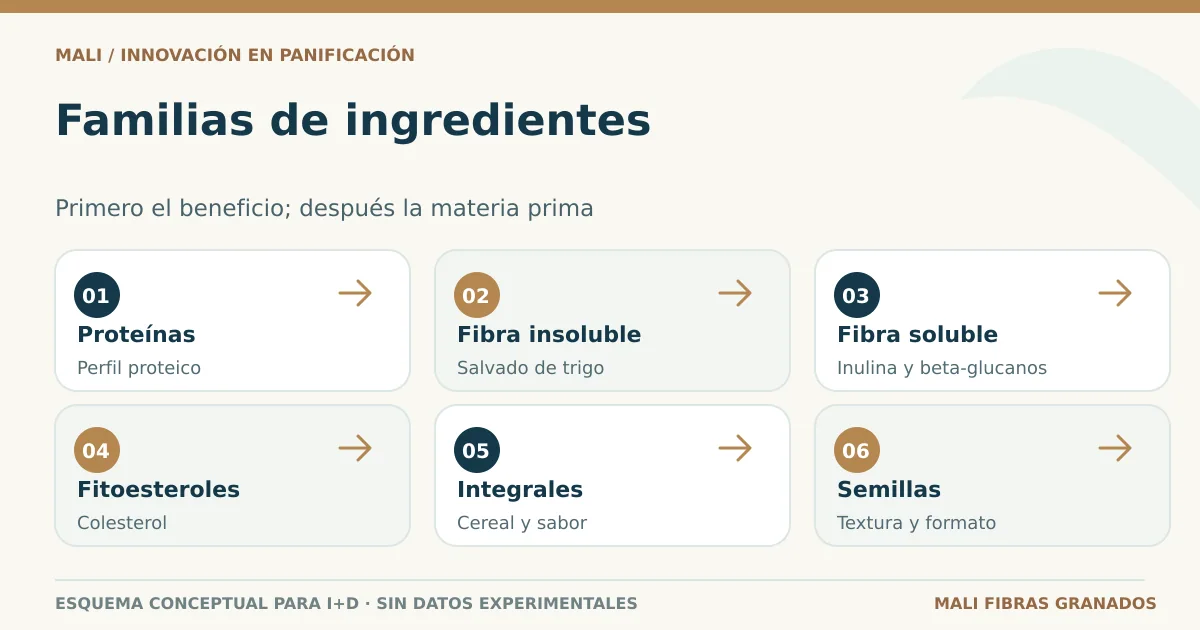
Protein is not chosen only by its percentage
- SoyaFunction and allergens
- WheatStructure and gluten
- peaWater and taste
- Faba beanSensory profile
- ProcessFlour or isolate
- MixtureCombined functions
Responses depend on origin, treatment, dose, and full formulation.
potential and sensory limits
Pea protein allows exploration of plant formulations, but certain concentrates and isolates can increase water demand, reduce volume, or harden crumb by increasing their proportion. The research describes different effects according to processing and dosage. Vegetal notes, bitterness and acceptance should also be tested. That the pea is not listed as a specific category in Annex II does not allow the claim that an ingredient or product is allergen-free without its own evaluation.
Faba bean, lupin and other pulses
They offer different compositional and sensory profiles and are not direct substitutes for soya or pea. Lupin is expressly included among the allergens requiring declaration in the EU. Procurement and R&D should review specification, availability, colour, flavour and performance in the food matrix before selecting them.
Flour, concentrate or isolate
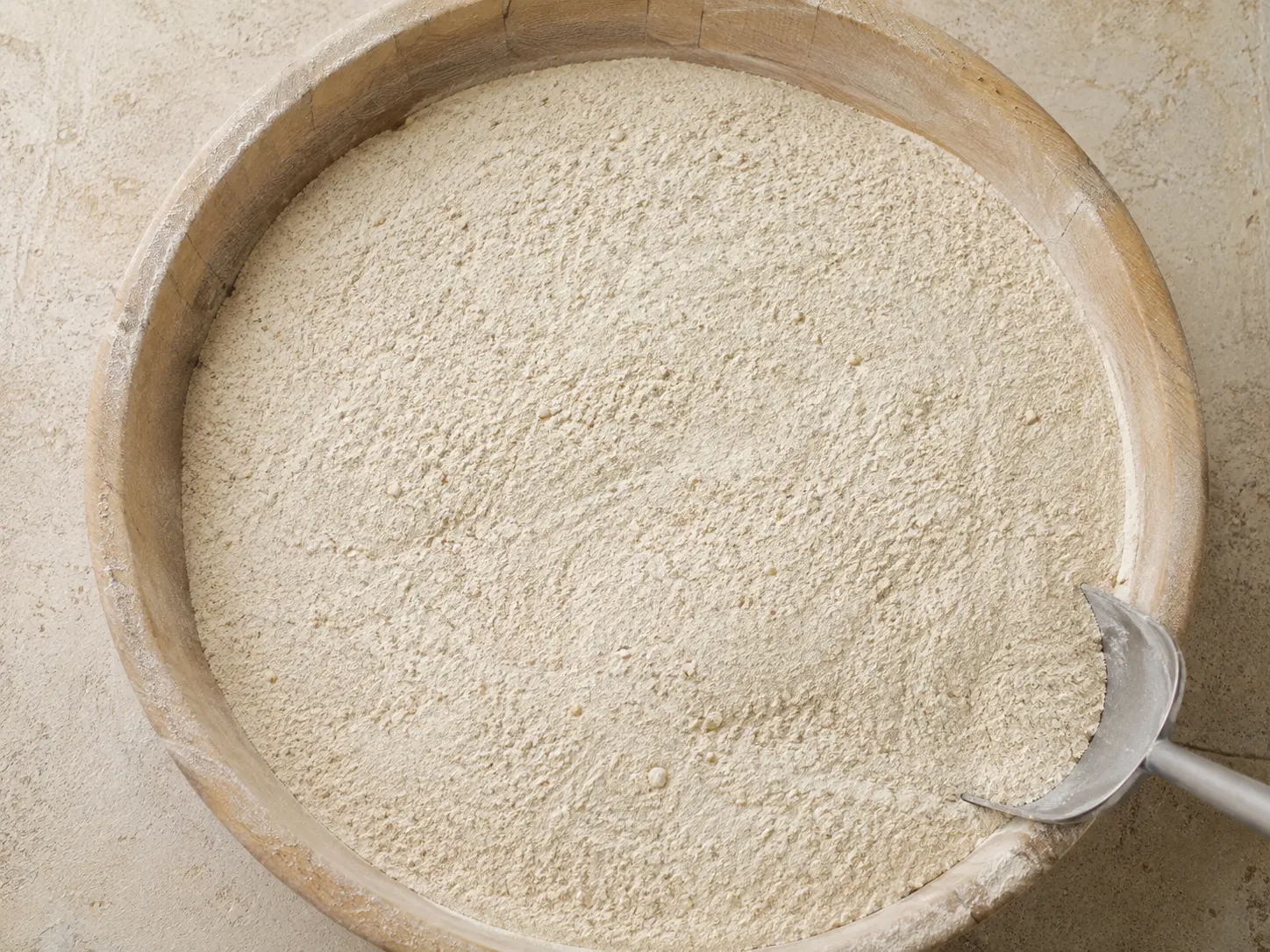
A flour contains other components of the seed, such as starch and fibre; concentrates and isolates have different protein proportions and different treatments. Two materials from the same plant can change absorption, dispersion and heat response. Therefore, the name of the source and the percentage of protein do not describe the Bakery result alone.
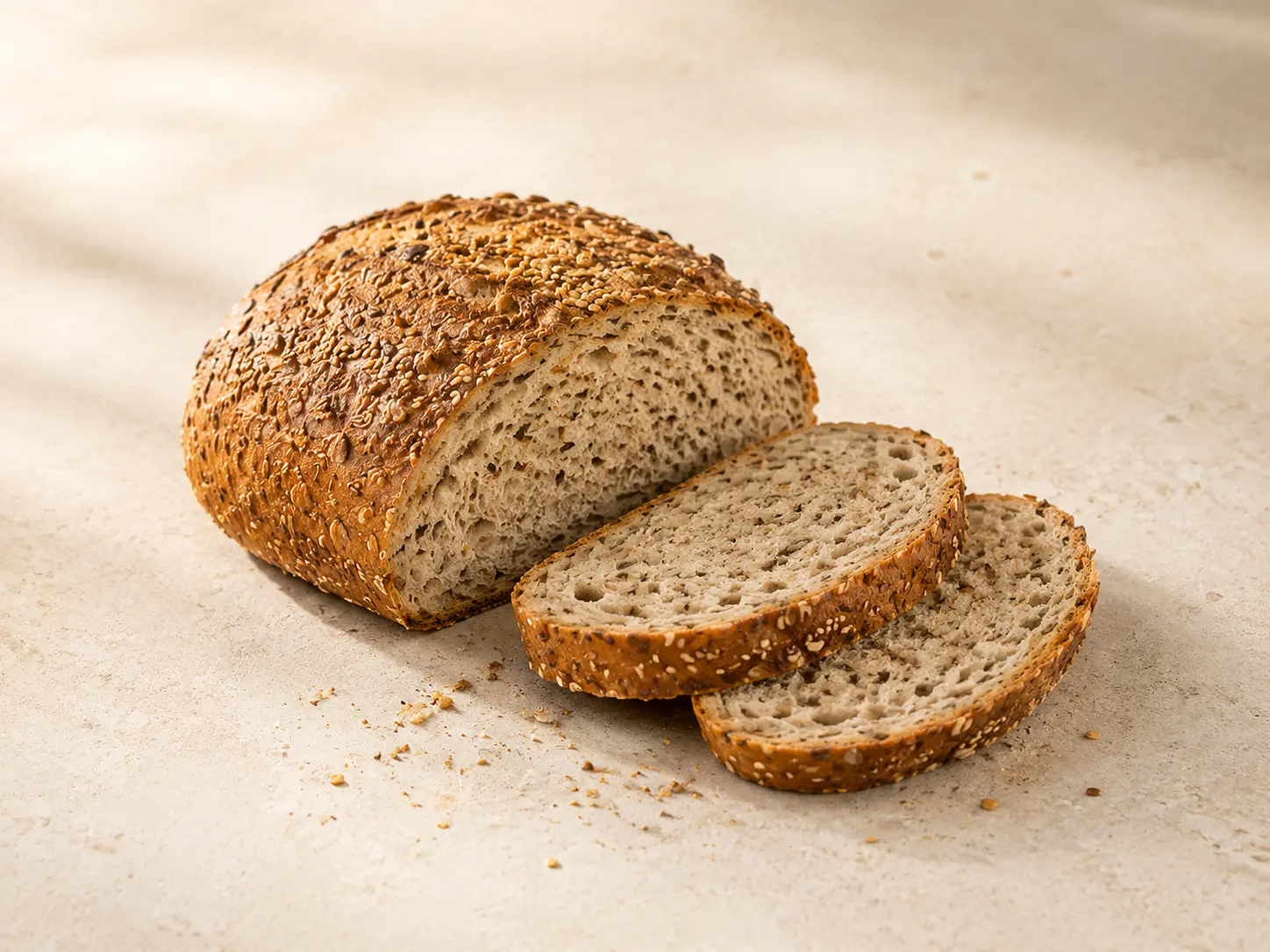
Water, volume and taste: joint evaluation
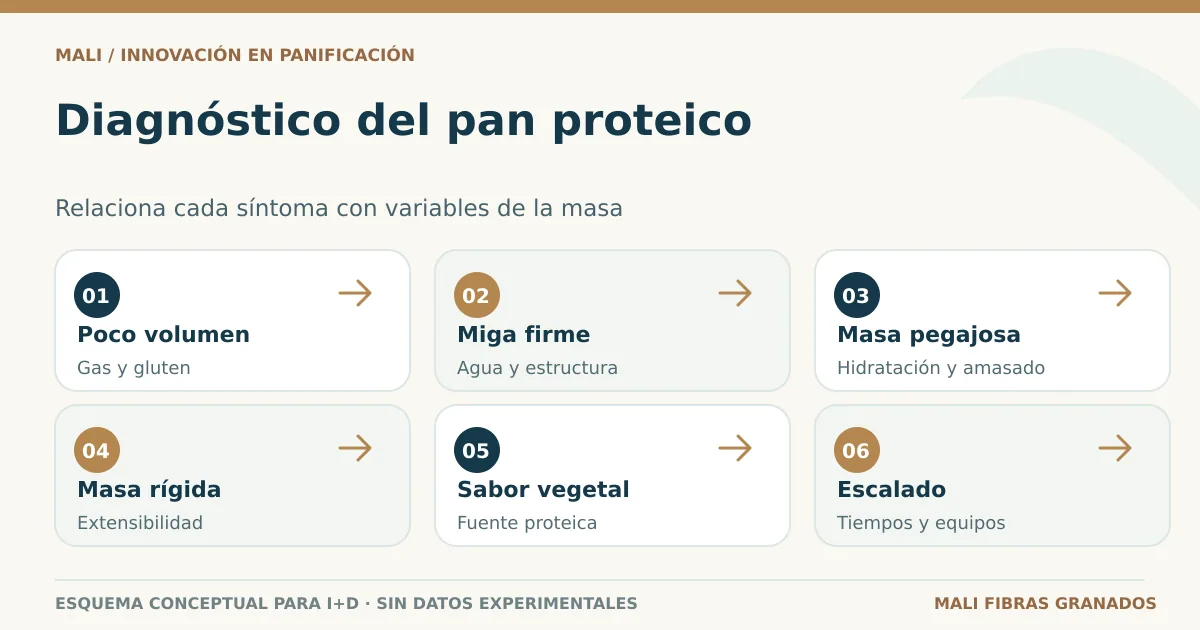
The replacement of flour changes the balance between added protein, gluten, starch and water. The final volume depends on producing gas, retaining it and fixing the structure during baking. If the volume falls, check simultaneously hydration, extensibility, fermentation and protein source. And measure the taste: a nutritionally correct bread may not get repeat shopping if it is hard or has an intense aftertaste.
| Objective | What to Compare in Samples |
|---|---|
| Nutrition | Protein energy in the final bread |
| Process | Absorption, stickiness, kneading and tolerance |
| Structure | Extensibility, gas retention and volume |
| sensory | Firmness, taste, colour and aroma |
| Quality | Allergens, batches and supply stability |
Which one should we choose?
The choice depends on the intended claim, production system, cost and target sensory profile. Many projects trial protein combinations rather than a single source. Protein Pan is the Mali Fibras Granados mix for developing high-protein breads; ingredients and specific production conditions are assessed directly with the manufacturer. For other product areas, see functional ingredients in bakery; for a different format, see baked protein snacks.
Compare samples in the same matrix
Nutritional information indicates concentration, but selection for bakery applications requires comparable trials. Identify whether the material being tested is flour, concentrate, isolate or gluten: they are not equivalent.
| Source | Variable to characterize | Implementation question |
|---|---|---|
| Wheat | Structural function and specification | How does the gas retention change? |
| Soya | Hydration and sensory profile | Does it fit in dough, taste, and allergen declaration? |
| pea | Ingredient processing and performance | What about volume, firmness and taste? |
| Other legumes | Batch composition and variability | Does the sample represent the industrial supply? |
Do not rank protein sources by a supposed universal quality standard. The guide to approving alternative proteins explains how to prepare a Procurement and R&D trial.
Compare new protein references
For approval of specific samples, see how to compare chickpea, pea and rice proteins for bakery applications. If legume identity is the priority, see flour, concentrate or isolate in bakery.