
Ingredients and formulation
Upcycled ingredients: assessing co-products for bakery use
Assess a food co-product for bread and snacks: legal status, safety, variability, stability, flavour and development feasibility.
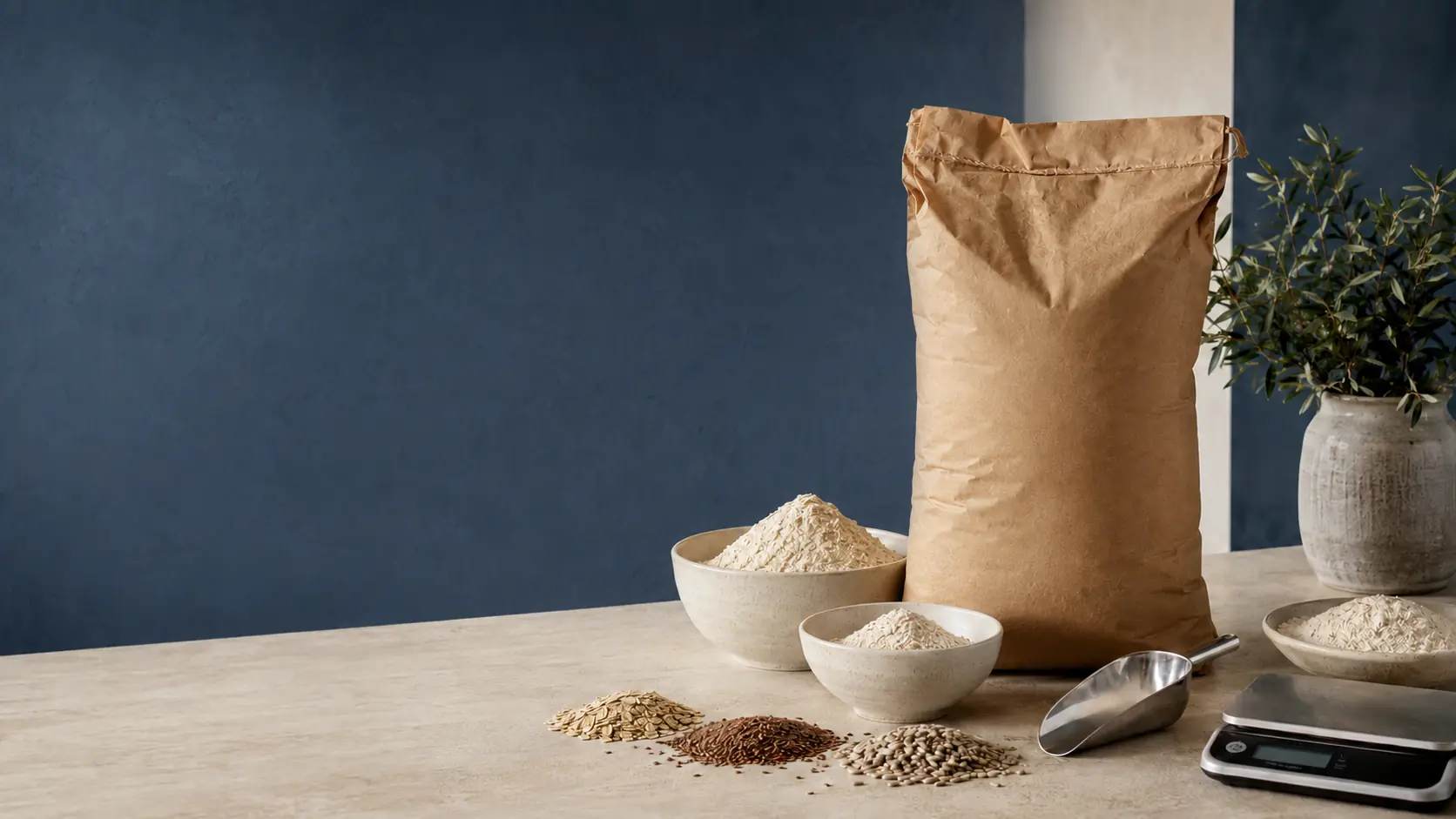
A co-product may contain components useful in bakery applications, but turning it into an ingredient requires much more than finding a use for it. Confirm its legal status, safety, stability and traceability before formulation. “Upcycled” describes a resource-use approach; it is not food authorisation or, by itself, evidence of lower environmental impact.
Start with identity and the legal situation
Brans, spent grains, pomaces and pulps are broad categories. Identify the raw material, the process that generates the stream, subsequent treatments and intended destination. Do not assume any waste material is suitable for re-entry into the food chain.
The European framework distinguishes uses and management of food resources. Where relevant, novel food rules must also be assessed: a new process or ingredient may require specific checks. The indicative catalogue does not replace documentation or a required authorisation.
Five filters before an industrial test
| Filter | Evidence to ask for |
|---|---|
| Safety | Hazard assessment and relevant controls |
| Variability | Specifications and results between batches |
| Stability | Moisture, conservation and shelf life |
| sensory | Profile of taste, smell and colour |
| Technology | Response in the format and process envisaged |
Analytical requirements depend on origin and process. Consider relevant microbiological, chemical and physical hazards; a material stream’s clean appearance or good nutritional composition is not sufficient.
The real cost includes conditioning
Drying, stabilizing, transporting and storing can completely change viability. Compare the cost of the usable ingredient, regularity and yield against a conventional alternative. A low-priced raw material is not necessarily an economic industrial solution.
Criteria for R&D
From the use of the viable ingredient
- IdentifyOrigin and legal status
- CharacterizeSafety and variation
- TestApplication and acceptance
- DecideSupply and total cost
Decision scheme; does not represent experimental results of a Mali Fibras Granados formulation.
Defining what it brings to the product
Fibre, protein, flavour or visual differentiation can be investigated without taking the benefit for granted. The trial needs a control and acceptance criteria. For fibre-rich applications, see how to select fibre systems.
Environmental communication needs evidence and review of its own. The origin of a co-product does not automatically demonstrate superior sustainability, complete circularity or quantified emission reduction.
Minimum record before a food test
Value recovery must start with the material stream’s suitability for food use and its traceability. An attractive name or sustainability story does not replace that check.
| Filter | Information required |
|---|---|
| Origin | Raw materials, process and separation points |
| Safety | Relevant hazards and applicable controls |
| Stability | Moisture, conservation and behaviour during storage |
| Variability | Characterisation of representative lots |
| Intended use | Application, legal conditions and labelling |
If required by the ingredient, process or use, its novel food regulatory status must also be assessed. Mali Fibras Granados’ role is to evaluate the bakery application using a suitable, characterised raw material; it should not be assumed that the company turns any waste material into a food ingredient.
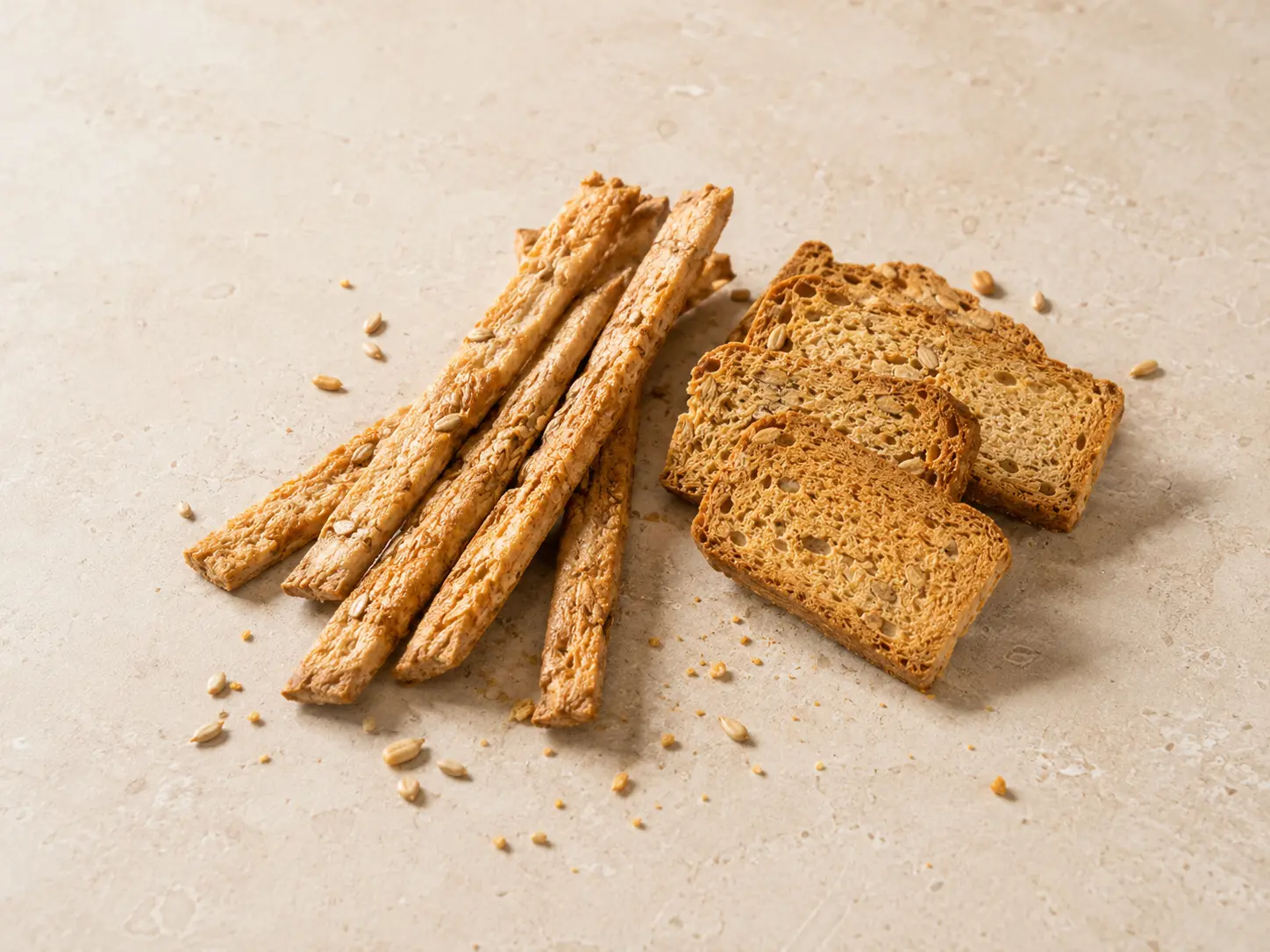
Development with Mali Fibras Granados
If you have a documented food ingredient that you want to incorporate into bread or snacks, Mali Fibras Granados can assess its application. This is not a waste-treatment service, and there is no guarantee that any material stream can be used. Start by sharing the ingredient’s identity, documentation, storage condition and the product objective.


