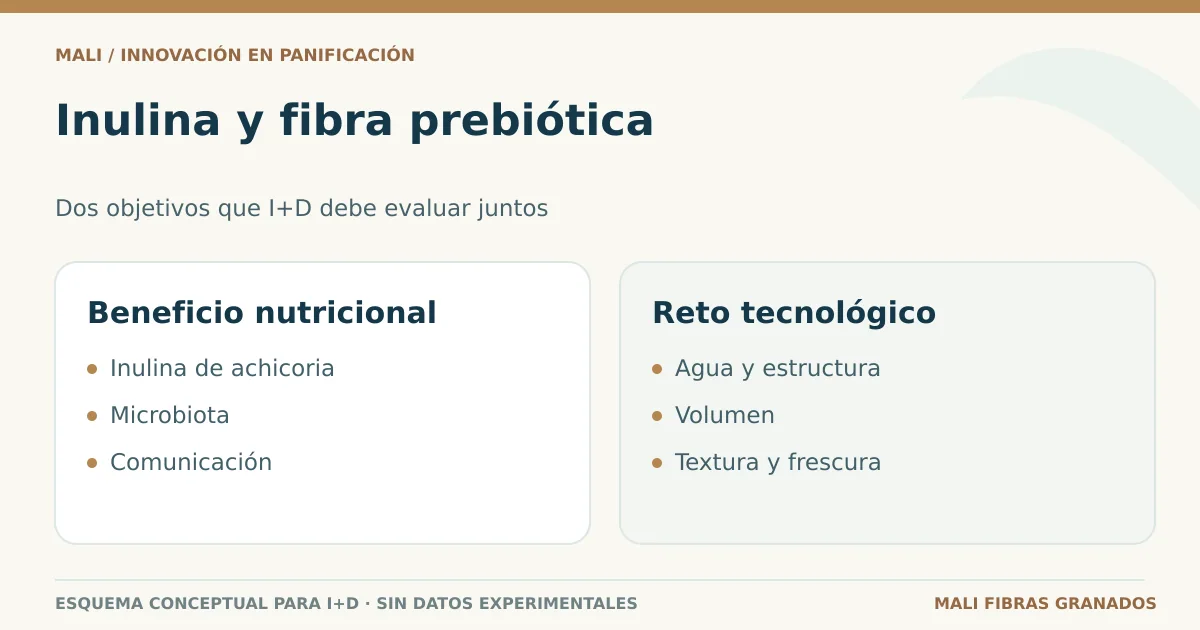
Prebiotics and intestinal health
Inulin in breadmaking: adjusting dough, volume and texture
Trial guide for R&D and bakeries: identify inulin, adjust water, compare volume and measure texture during bread preservation.
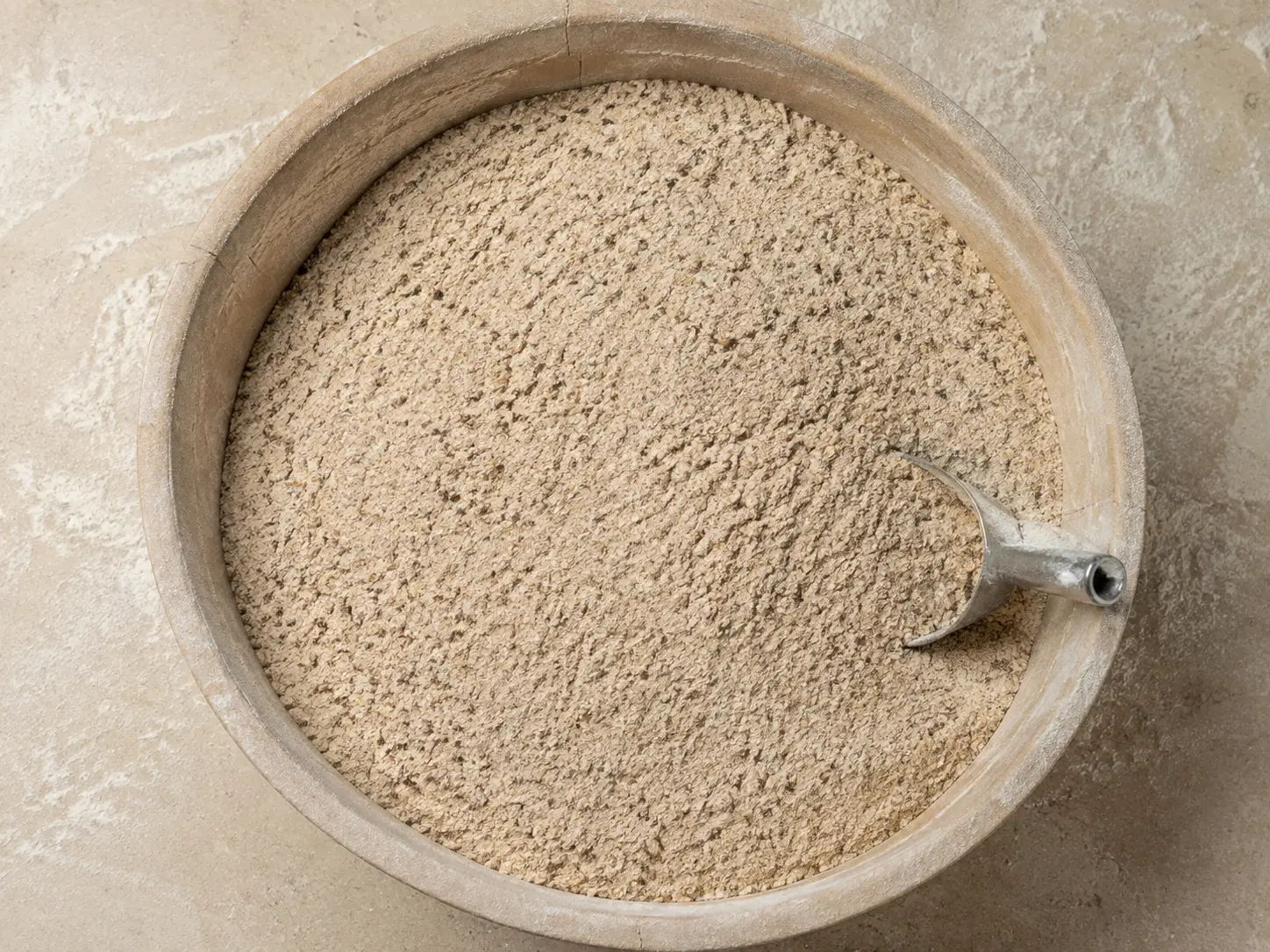
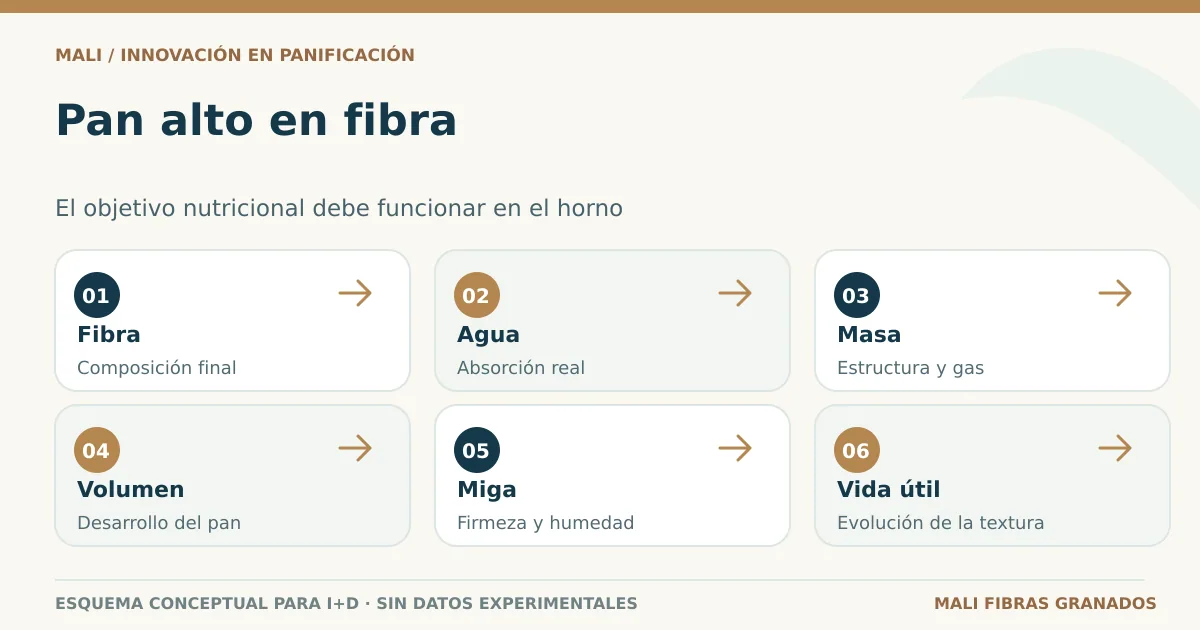
Inulin can change the consistency of the dough, volume and texture of the bread. To adjust it, you have to identify the specific ingredient and compare the recipe with a control. This guide proposes a sequence of tests to interpret the changes and decide on the next trial; it does not set a universal dose.
If you are still defining the commercial concept, first see inulin and prebiotic fibre for bakery applications. Here, the focus is on bakery production and R&D.
Identify which inulin enters the recipe
Chain length, expressed as degree of polymerisation, and ingredient composition influence performance. A review of inulin applications in bread describes different responses depending on the type of inulin, formulation, fermentation and baking. The name “inulin” alone is therefore not enough to reproduce a result.
Before the trial, record the supplier, product reference, batch, composition and incorporation instructions. Clarify whether flour is being replaced or the ingredient is added while retaining the remaining solids. These options change the formula differently and must be compared using an explicit calculation basis.
Adjust the water without losing the reference
Plan an initial series using the same flour, inulin, dosage and process, changing only water. Record consistency at the end of mixing and after resting, dough temperature and ease of shaping. Compare the bread too: an easy-to-handle dough can still produce an unsatisfactory crumb.
Do not assume every fibre requires the same water increase. Check the chosen inulin’s response before applying an adjustment used for bran or psyllium. With a mix, use the instructions for the complete system as the reference.
Separate gas production and gas retention
If bread loses volume, identify when the difference appears: during resting, at the end of fermentation or in the oven. Record piece shape and crumb development. Together, these observations help determine whether the next trial should focus on consistency, structure or fermentation.
As a proposed protocol, retain the usual recipe as a control, produce variants under comparable conditions and measure cooled bread volume and weight. Volume per unit weight helps interpret differences when yield changes. Comparisons require the same format and a consistent measurement method.
Technology map
The result depends on the ingredient and process
It is not an experimental curve: each formulation requires measuring its actual response.
Diagnosis: what to change in the next test
| Observation | Scenarios to explore | Proposed comparison |
|---|---|---|
| Firmer dough after rest | Change in water distribution and consistency | Same inulin and doses with controlled water variations |
| Sticky dough that spreads | Excessively soft consistency or insufficient structure | Separate water adjustment from flour change |
| Lower volume without clear fermentation change | Gas retention difference | Compare dough structure and volume of cold bread |
| harder crumb during storage | Changes in structure, baking or water distribution | Same recipe, packaging and measuring times versus control |
| Similar recipe with different result | Specification or batch of ingredient, flour or process | Check data sheets, weights, temperatures and times |
These hypotheses do not replace the observation of the process. If you change water, flour and fermentation at the same time, you will be able to evaluate the set, but not attribute the result to a single adjustment.
Texture and freshness: what to measure
Firmness, elasticity, cohesion and perceived moistness describe different aspects. Agree with the customer what constitutes a satisfactory crumb and compare samples at equivalent times after baking. Include ease of slicing and flavour acceptance alongside any instrumental measurements.
An experimental study using different inulin levels assessed dough and bread properties and how they changed during storage. It illustrates why the response of a specific formulation needs to be measured; its results do not transfer automatically to another mix or process.
Suggested storage record: recipe, batch, baking time, weight, packaging, environmental conditions, opening date, firmness and sensory assessment. Use the same conditions for each variant and repeat the selected trial before scaling up.
What happens during fermentation and baking
The stability of the fructans may be affected by the ingredient and production conditions. It is not appropriate to automatically equate the quantity incorporated with the quantity retained by the bread. If the target depends on that amount, select with the laboratory an appropriate method and evaluate the final product.
This does not prevent formulation with inulin: it identifies the data the project needs to finalise composition and communication. The guide to prebiotic fibre and inulin explains the distinction between total fibre, the ingredient and the benefit communicated.
A trial sequence that makes it easier to decide
| Phase | Keep Identified | Decision at the end |
|---|---|---|
| Reference | Usual recipe and process | What should be equalized or improved? |
| Water | Ingredient, dose and basis of calculation | Handleable consistency range |
| Structure and process | Comparison format and conditions | Variant that preserves volume and crumb |
| Storage | Packaging and times | Acceptable texture and quality during the planned period |
| Confirmation | Representative lots and scale | Repeatability, composition and cost |
Frequently Asked Questions
Does the inulin increase the volume of bread?
A general increase cannot be promised. The result depends on recipe and process; use a control and measure the finished bread.
Does the inulin lengthen the shelf life?
A texture modification does not by itself demonstrate more shelf life. This is established for the recipe, process, packaging and storage conditions, including the corresponding safety controls.
Can I change supplier without repeating tests?
It is appropriate to check the equivalence of specifications and the behaviour in application. A common name does not guarantee the same technological response.
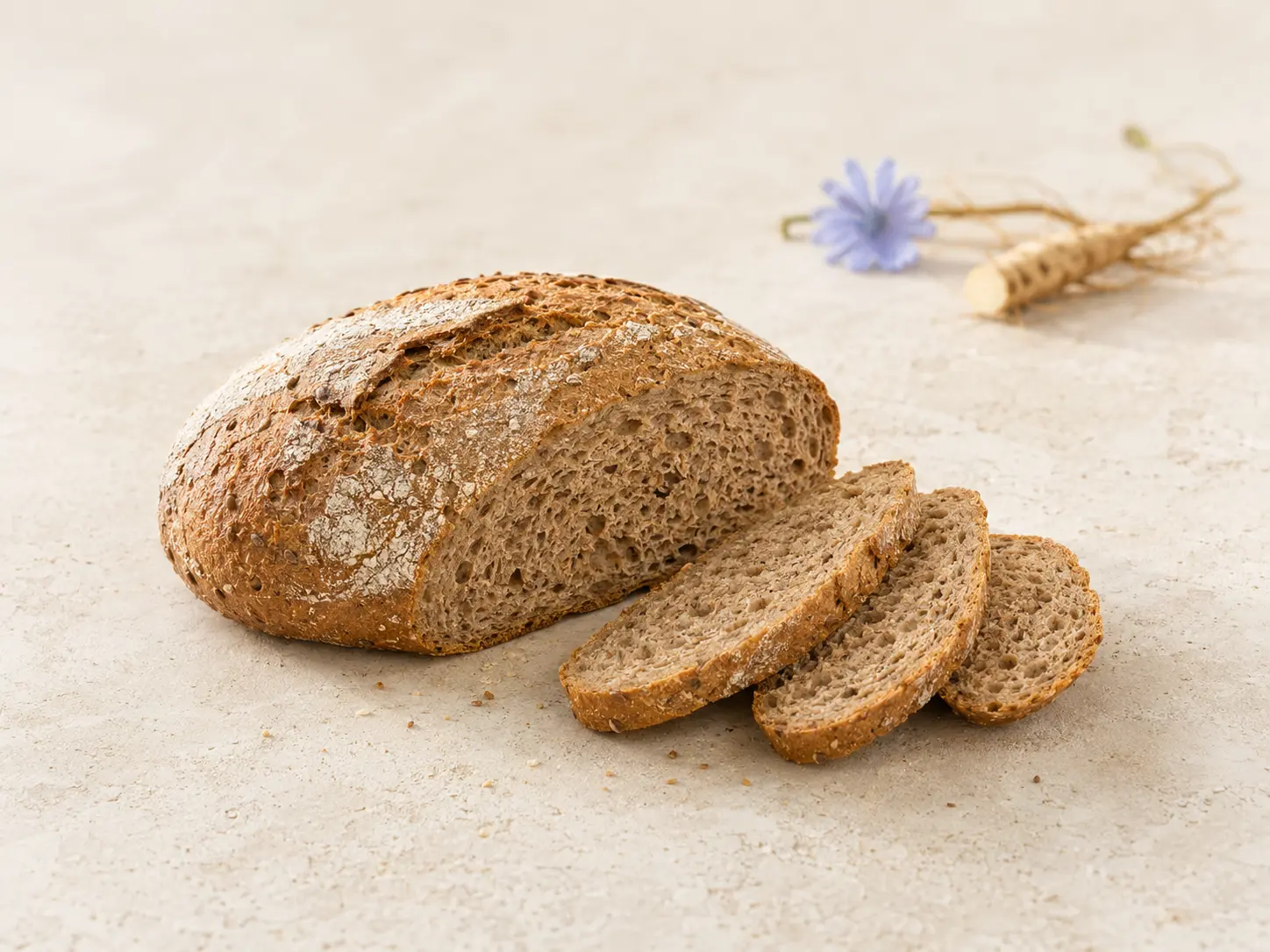
Apply inulin with Prebiomix or a tailor-made mixture
Prebiomix incorporates chicory fibre into a bakery solution. To assess an application, share your flour, starting recipe, equipment and the problem you want to solve. Discuss your inulin development with Mali Fibras Granados.