fibre in breads and snacks
How to develop high-fibre bread: hydration, volume and texture
Guide for bakeries and manufacturers: calculate the fibre of the finished bread, choose the mixture, adjust the water and solve volume problems or dry crumb.
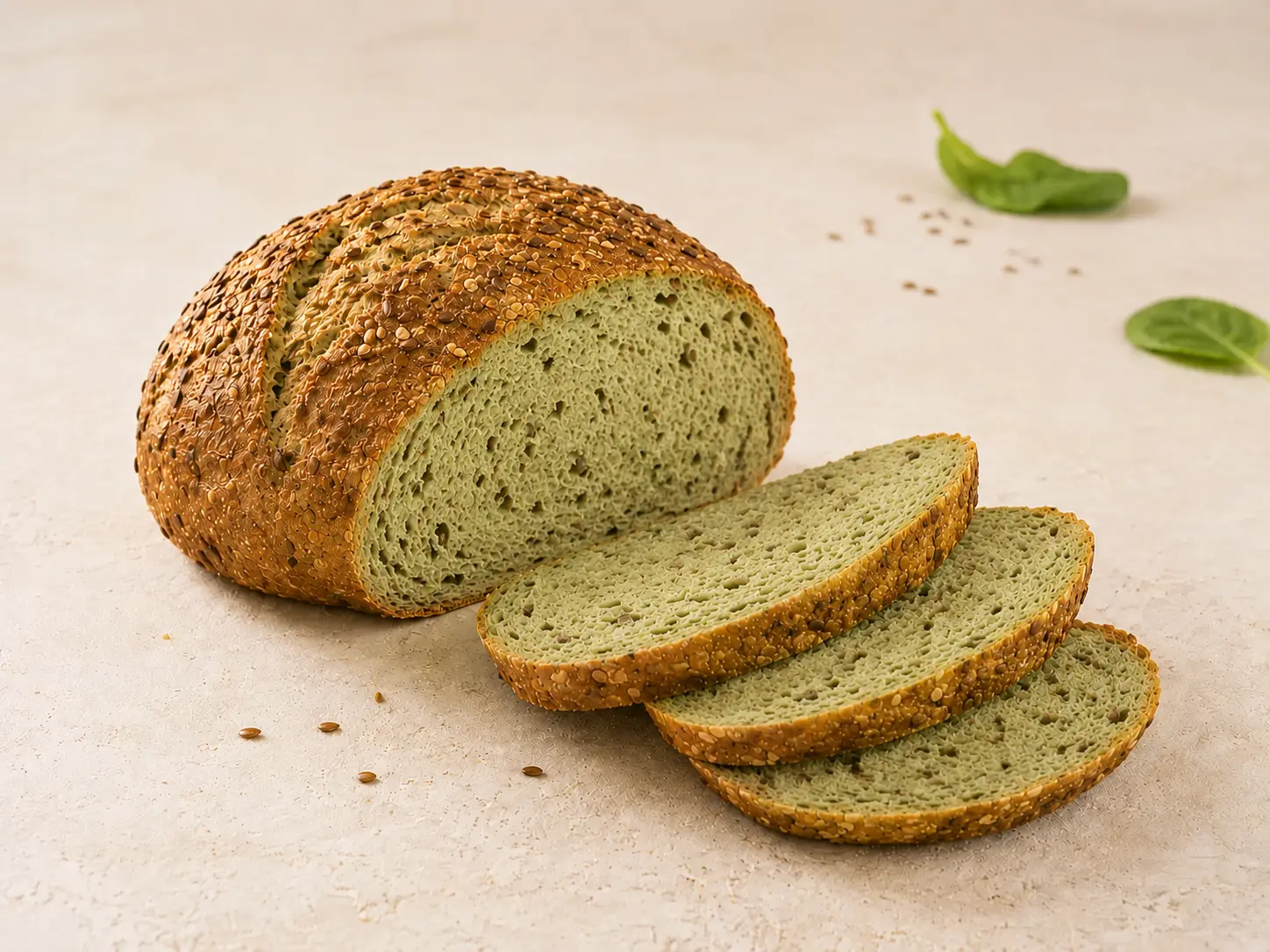
High-fibre bread needs a recipe that meets the nutritional objective and a dough that can be mixed, divided, fermented and baked consistently. Start by defining the format, estimating finished-product fibre content and comparing water and structure trials against a control. This guide proposes a working method for artisan bakeries, industrial bakeries and R&D teams.
How much fibre does the finished bread need
In the EU, “high fibre” requires at least 6 g of fibre per 100 g of food or 3 g per 100 kcal. “Source of fibre” requires 3 g per 100 g or 1.5 g per 100 kcal. These thresholds apply to the bread as sold, under the conditions for nutrition claims.
The mix percentage in the recipe is not the bread’s fibre percentage. Add the contribution of every ingredient and relate it to the final weight after baking and cooling. As a development estimate, divide total batch fibre in grams by finished bread weight in grams, then multiply by 100.
Illustrative example: if a batch retains 600 g of fibre and produces 8,000 g of bread, the estimate is 7.5 g of fibre per 100 g. A 50 g portion would provide 3.75 g. These figures explain the calculation; they do not represent a Mali Fibras Granados recipe. If yield changes or fibre is modified during processing, review the estimate and check it against the final composition.
Choose fibres and flour according to the format
An artisan loaf, a sliced loaf and a bread roll require different results. Define the colour, seed content, crumb firmness, slicing performance and storage requirements before selecting ingredients. The guide to choosing fibres for bakery applications compares functions and applications.
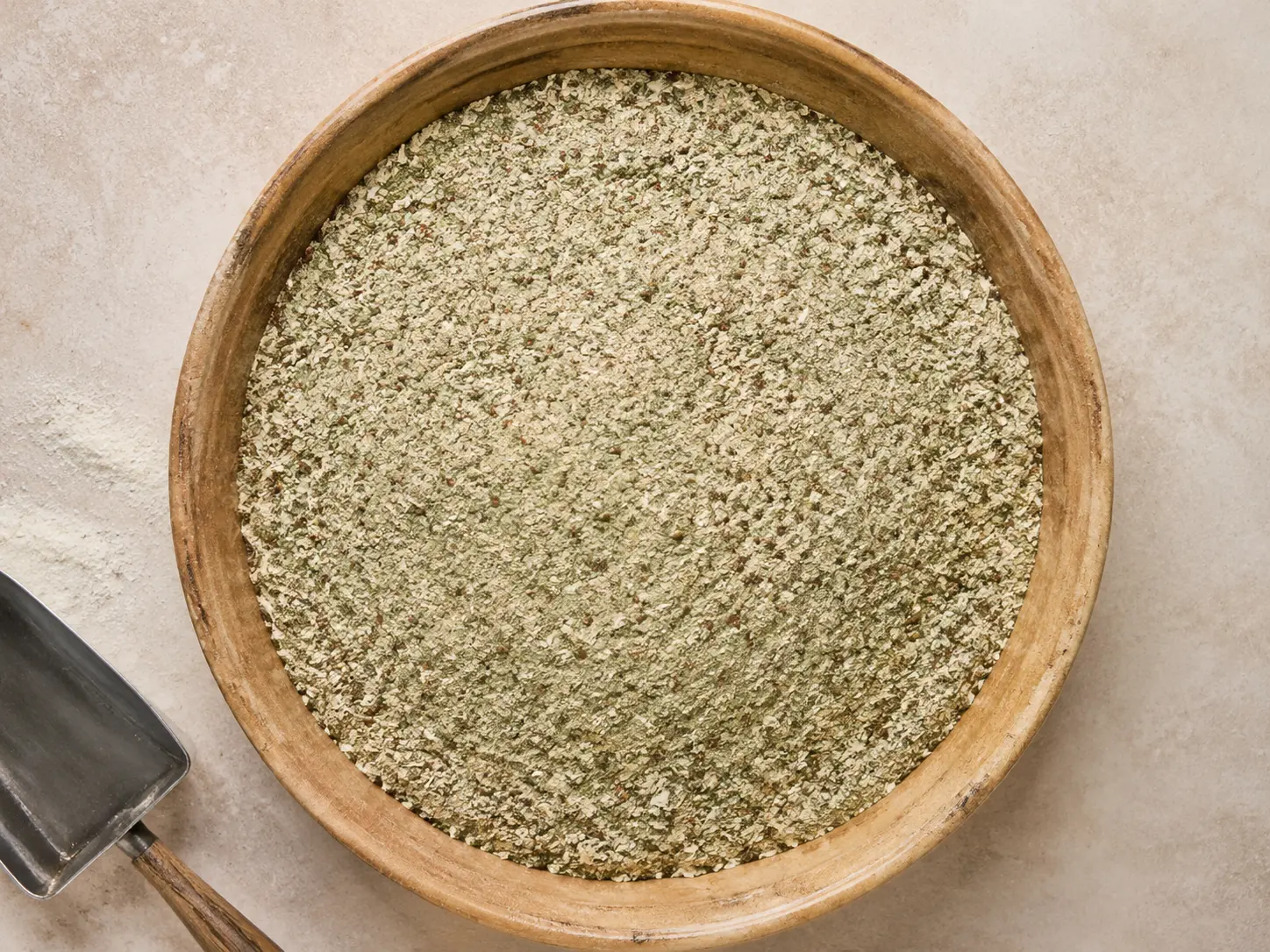
Fibra Verde, a mix for high-fibre bread, combines soluble and insoluble fibres with wholemeal flours, brans, vegetables and seeds. Prebiomix provides a way to work with prebiotic chicory fibre. If the project requires a different appearance, concentration or nutritional combination, consider a bespoke development.
How to adjust the hydration of a bread with fibre
Always record the basis used to express water addition: flour alone, flour plus mix, or another calculation basis. Two hydration percentages cannot be compared if they use different denominators. Also identify the flour, mix batch, final dough temperature and resting time.
As a proposed trial, start with the mix’s technical recipe and compare small water adjustments while keeping the other ingredients constant. Observe the dough as it leaves the mixer and after resting: an initially manageable consistency can change during processing. Record stickiness, extensibility, ease of dividing and shaping results. Base the decision on baked bread as well as dough feel.
If you study prehydrating a fraction of bran or seeds, count that water within the total and record duration and temperature. It is a variant that must be compared with control; prehydration does not have a universal result for all fibres.
Fibra Verde as a system
The benefit comes from a combination, not from a single ingredient
The finished bread must also reach the high-fibre threshold and the specific conditions of the transit declaration.
What to check when the bread is low in volume
Adding fibre can alter dough structure and water distribution. Before extending fermentation, compare development through the process: how much the piece rises, whether it holds its shape and when it loses stability. More time alone does not correct insufficient gas retention.
The following table organizes test hypotheses. No observation alone identifies a cause.
| Problem observed | What to review first | Proposed test | What to record |
|---|---|---|---|
| Stiff dough that is difficult to shape | Water available and hydration time | Vary only water relative to the control | Consistency after resting, shaping and volume |
| Dough piece that spreads | Excess water, structure or fermentation | Compare consistency and fermentation point separately | Height and width before and after baking |
| Compact bread with manageable dough | Gas retention and flour base | Compare a base of greater baking capacity without changing the whole process | Volume per unit weight and crumb structure |
| Dry crumb the following day | Baking, weight loss and storage | Compare baking and packaging while keeping the recipe unchanged | Weight, firmness and sensory valuation at the same time |
| Fragile crumb during slicing | Structure, particles and slicing time | Compare particle size or cooling, one variable at a time | Intact slices and waste |
Measure texture and performance during storage
Agree on a sensory reference with the customer and assess samples with equal weight, slice thickness and time since baking. Heavier or moister bread is not necessarily softer. Compare the product initially and throughout the intended storage period in the same packaging.
A useful test sheet can collect these fields:
- Recipe code, batches and production date.
- Basis of calculation of hydration, total water and final temperature of dough.
- Mixing, resting, fermentation, baking and cooling times.
- Weight of dough and weight of cold bread; volume and appearance of crumb.
- Ease of slicing, firmness, aroma and perceived dryness.
- Final composition, packaging, storage conditions and cost per unit sold.
This sheet is a proposed protocol, not the result of a trial performed. Shelf life also requires defined food safety controls for the product and process.
Wholemeal bread, high fibre and intestinal transit: three decisions
The wholemeal designation and fibre content follow different criteria. Reaching the fibre threshold does not authorise any message about bowel health. For a development using Fibra Verde, the specific benefit for intestinal transit requires a review of the conditions for the wheat bran fibre claim, including information about a daily intake of 10 g of that fibre. The guide to Fibra Verde and bowel-health communication explains this in more detail.
Formulation FAQs
Can you use the same hydration as on a regular bread?
It may serve as an initial reference, but the fibre-containing recipe must be tested again. Use the mix’s technical recipe and also record performance after resting.
Does adding gluten always improve volume?
It is a possible variable when the structure needs it, not an automatic correction. First it is best to separate water, flour, kneading and fermentation problems, and to review the effect on bite, cost and label.
Does the same mix serve for sliced bread and snacks?
It can be a starting point, but a different format changes the texture target and process. See developing sliced bread with protein and fibre or the guide to crunchy high-fibre snacks.
Develop high fibre bread with Mali Fibras Granados
To recommend a mix, we need to know your bread format, available flour, process, fibre target and flavour profile. We can assess Fibra Verde, Prebiomix or a bespoke mix for your line. Request technical information for your high-fibre bread.