Protein snacks
How to launch and position a high-protein snack
From commercial briefing to launch decision: audience, occasion, proposal, price, packaging and validation of a baked protein snack.
Launching a high protein snack requires defining why the consumer would choose it and demonstrating that the factory can deliver it with viable quality and cost. The claim is a requirement of the concept, but it does not replace a commercial proposal: occasion, taste, texture, portion and price should make sense together.
This guide helps Marketing, Innovation and R&D decide when a concept is ready to progress. The industrial protein snack development guide covers formulation and process; here, the focus is on positioning and launch.
1. Defining an audience and a concrete occasion
“People who want protein” is too broad a brief. A sharing snack and an individual snack for work may target the same person but require different formats, packaging and prices.
Describe where to buy, when to consume, with what alternative to compete and what problem it solves. Avoid assuming that every active consumer seeks sports aesthetics or that every protein buyer accepts flavour commitments.
2. Write a proposal that can be contrasted
Write a simple statement: what the product is, who it is for and why it deserves a trial. Then test it with people from the defined audience. Ask what they understand, what they expect and what would make them buy it again.
The proposition can highlight protein alongside a savoury or convenient eating experience. Every feature does not need to become a front-of-pack message. The guide to products with multiple benefits helps set priorities without accumulating promises.
3. Choose format, flavour and texture together
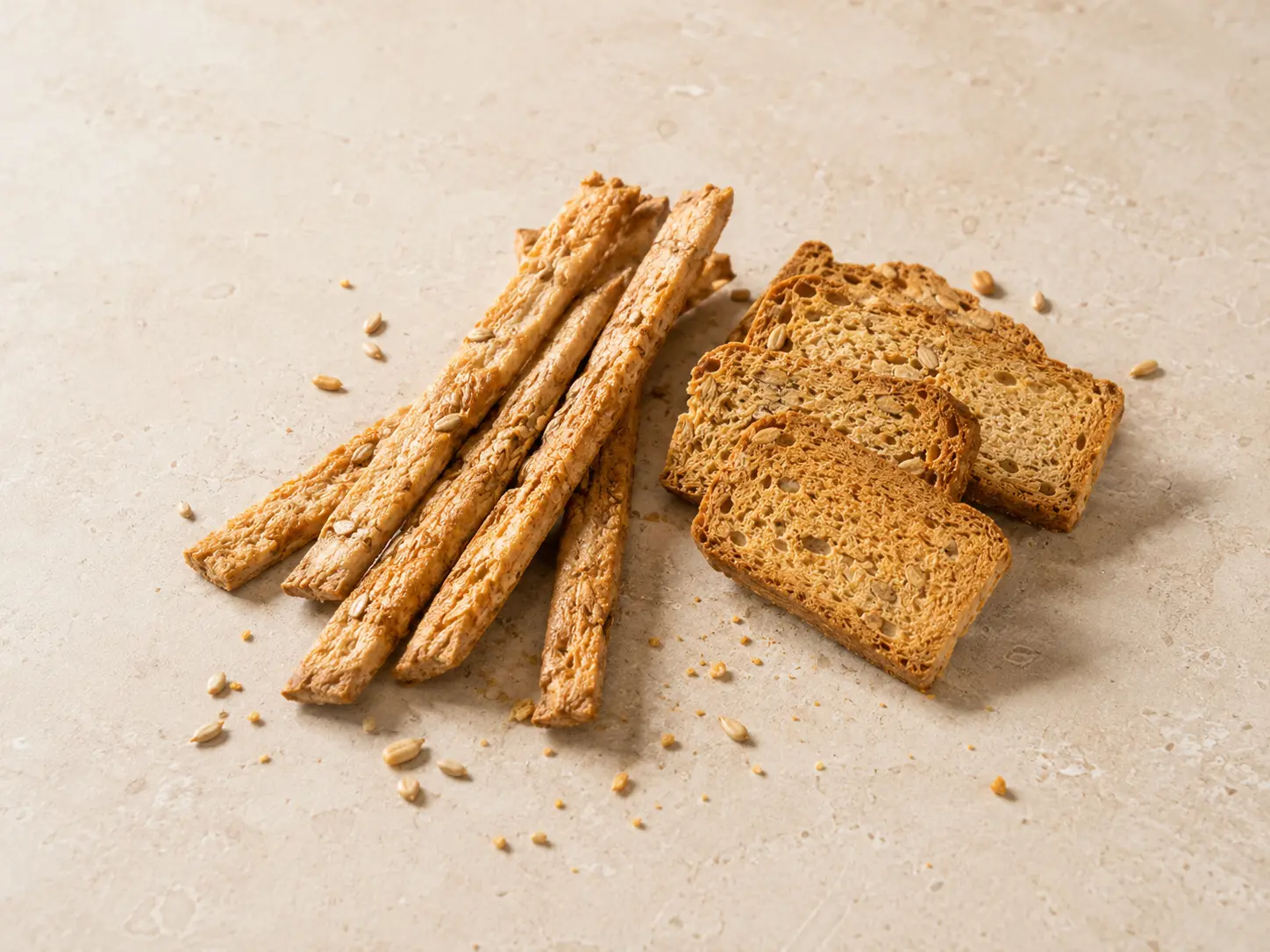
breadsticks, crackers, bites and mini toast allow for different occasions. Define how the piece should be broken, how it is taken and what portion makes sense. Crunch and hard do not describe the same experience.
Herbs, tomatoes, spices or cheese profiles are ideas for testing, not formulas already validated. Each option can change ingredients, allergens, cost or process. Compare the actual basis with the expected seasoning, not two separate developments that only come together at the end.
See snacking formats to explore and, if a defect appears, the texture and crunch troubleshooting guide.
Trade decisions
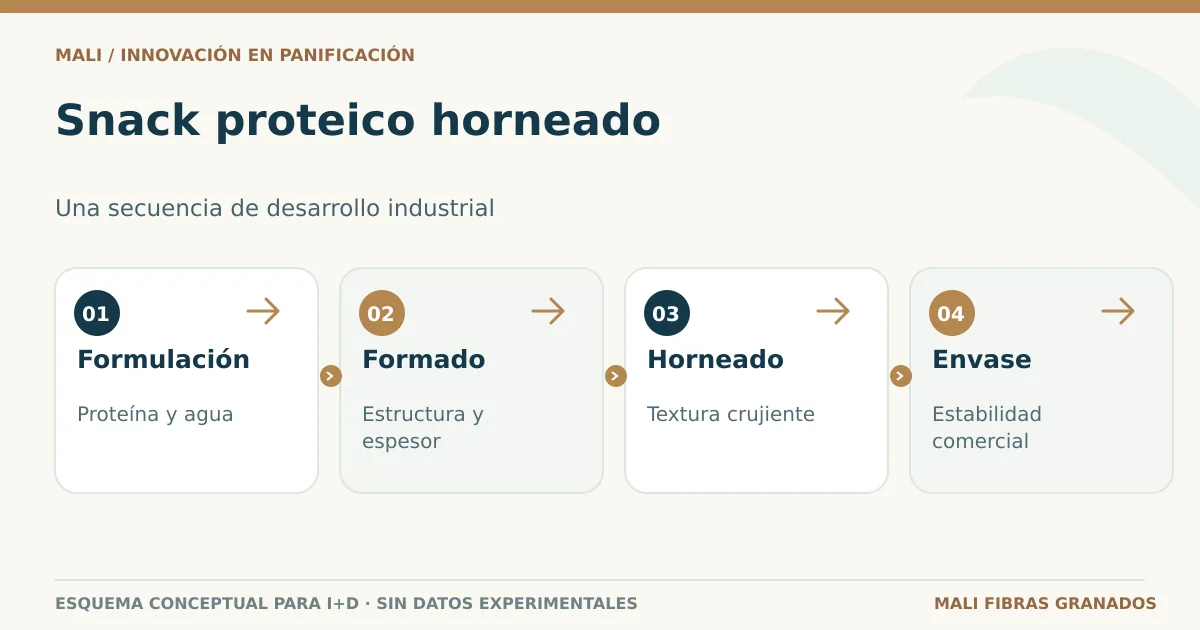
From Concept to Launch
- audienceNecessity and occasion
- OutputTaste, texture and claim
- FeasibilityChannel, cost and factory
- LaunchApprove and measure
Each phase needs evidence; the claim alone does not show acceptance.
4. Verify claim in finished product
In the EU, 'high protein content' requires that at least 20% of the energy value comes from protein. The criterion is not simply a quantity of grams per 100 g. The final food and the information accompanying the declaration must be reviewed.
If fibre or other attribute is added, it is checked separately. An ingredient or mix does not automatically transfer all of its possible statements to any application.
5. Connect price, channel and industrial cost
Use explicit assumptions for price, channel margins, logistics, promotions and cost per unit. Keep taxes and units consistent in the calculation; the retail selling price is not the manufacturer’s revenue.
A small portion can raise the cost of packaging and handling. A shared bag can change conservation after opening. The format should be feasible both on the line and on the commercial channel.
6. Close a verifiable briefing
| Decision | Evidence for progress |
|---|---|
| audience and occasion | Need contrasted with the channel and the consumer |
| Proposal | Message understood without additional explanation |
| Taste and texture | Acceptance against a defined reference |
| Claim | Final composition and revised communication |
| Packaging | Protection and use according to the shelf life |
| Cost | Viable economic scenario per unit |
| Production | Repeatable industrial test |
7. Decide to launch, reformulate or stop
Before launching, assigns responsibility and approval criteria. Do not change the acceptance threshold just because time has been spent on development. If the product does not comply, specify what is missing and what new test will solve the doubt.
After launch, observe repeat purchases, incidents, returns, margin and acceptance of the channel. Initial sales per promotion alone do not demonstrate that the concept operates in a sustained manner.
Decision gates to approve the launch
The project should overcome three different decisions. An attractive concept may fail to test the product; a good prototype may not fit in cost or packaging.
| Decision | Approval question |
|---|---|
| Concept | Are audience, occasion and reason for choice defined? |
| Output | Do flavour, texture and composition comply with briefing? |
| Business | Are selling cost, supply, packaging and channel viable? |
Claims are assessed on the finished product. For formulation work, see the industrial protein snack guide. This article structures the launch; it does not replace process and stability trials.
Protein Snacks Development with Mali Fibras Granados
Protein Snacks is developed for producing high-protein baked snacks. It can be a starting point when it fits the format and objective; flavours, combinations and processing require specific validation.
Tell us your project’s audience, eating occasion and target cost or request information about Protein Snacks. Formulations and production conditions are developed directly with each manufacturer.