Protein and Bakery
Technical challenges in protein snacks: texture, crunch and stability
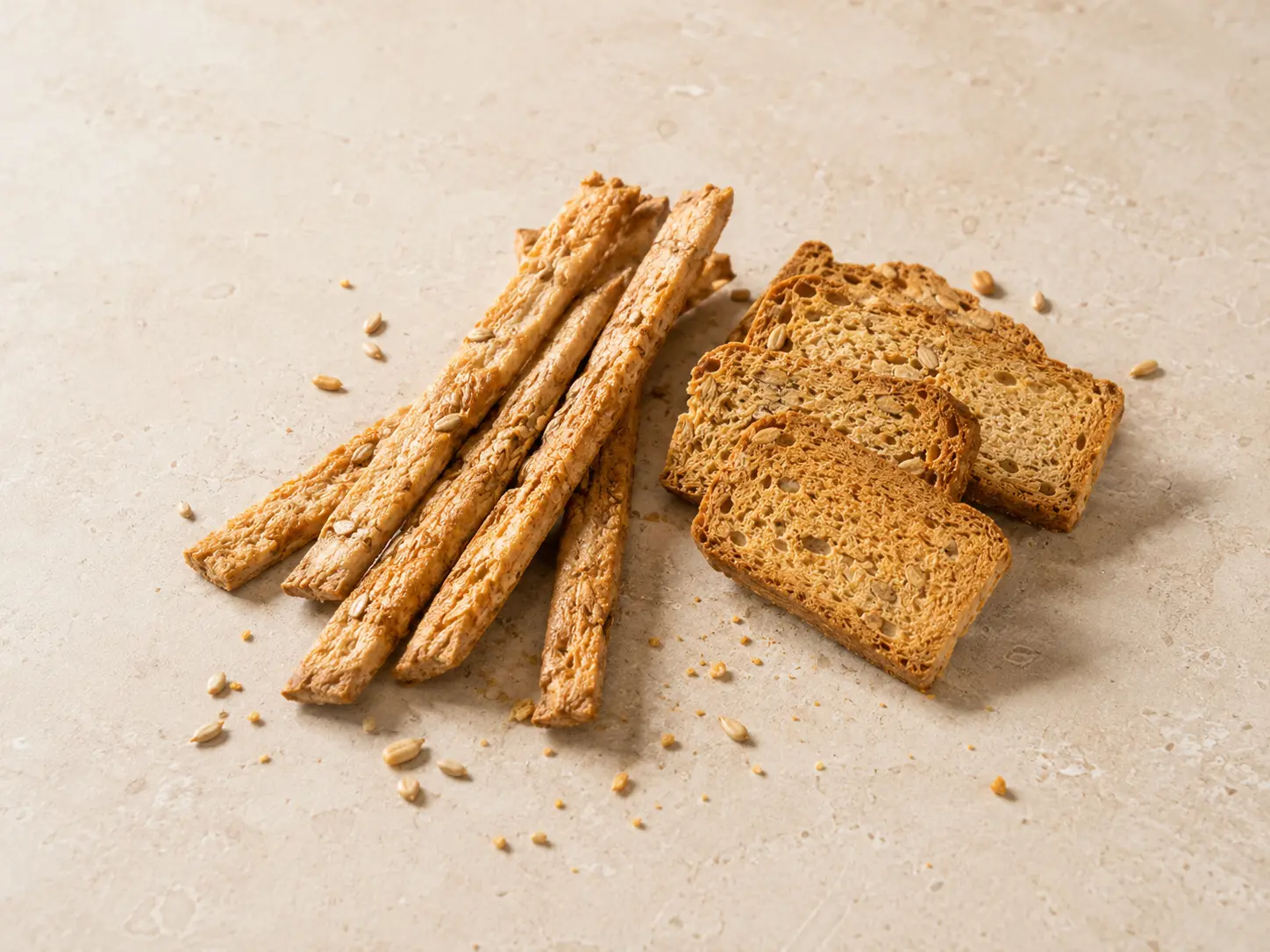
A protein snack should preserve its fracture and crunch during the shelf life. Moisture, water activity, formulation, cooling and packaging develop together.
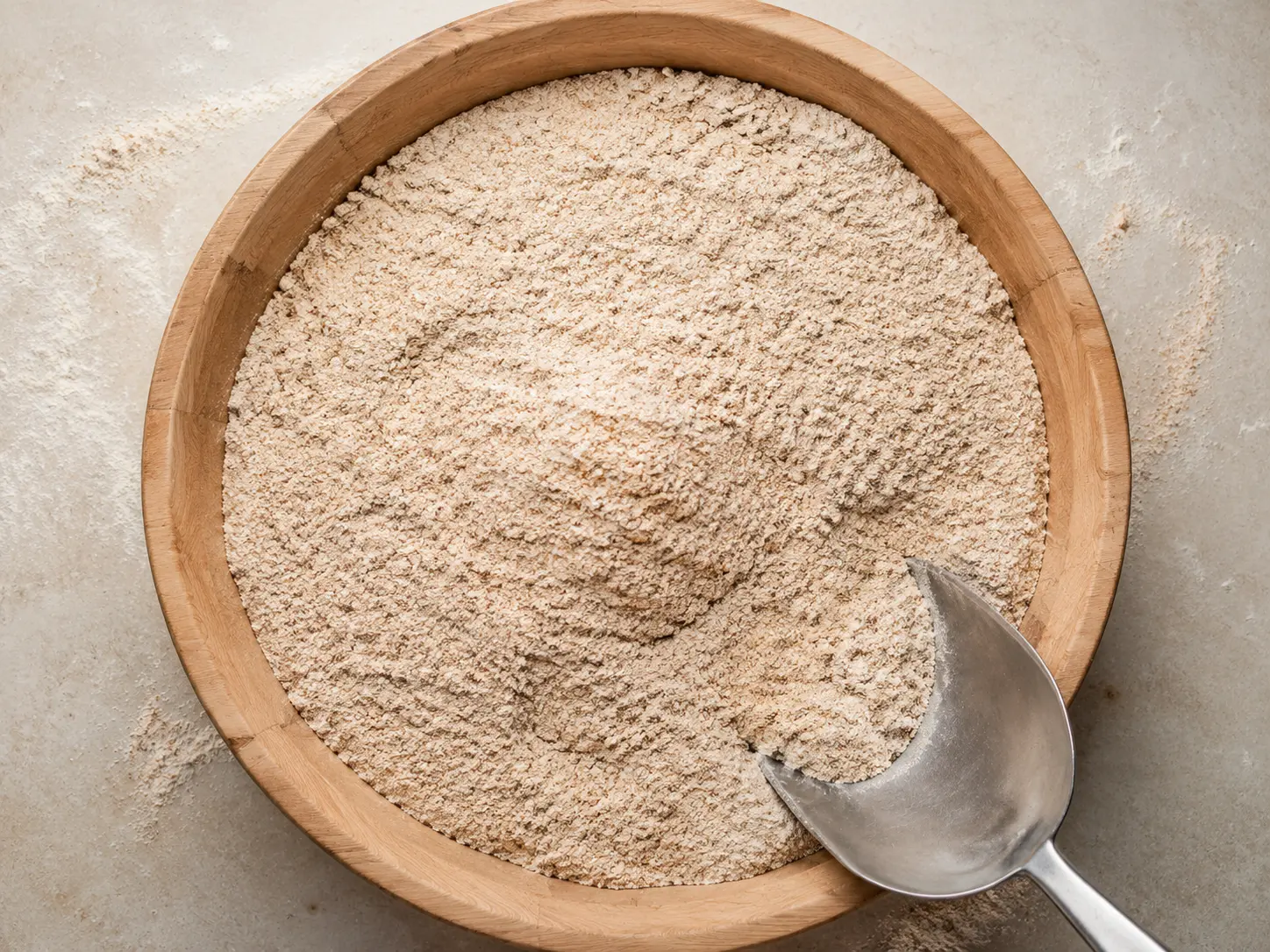
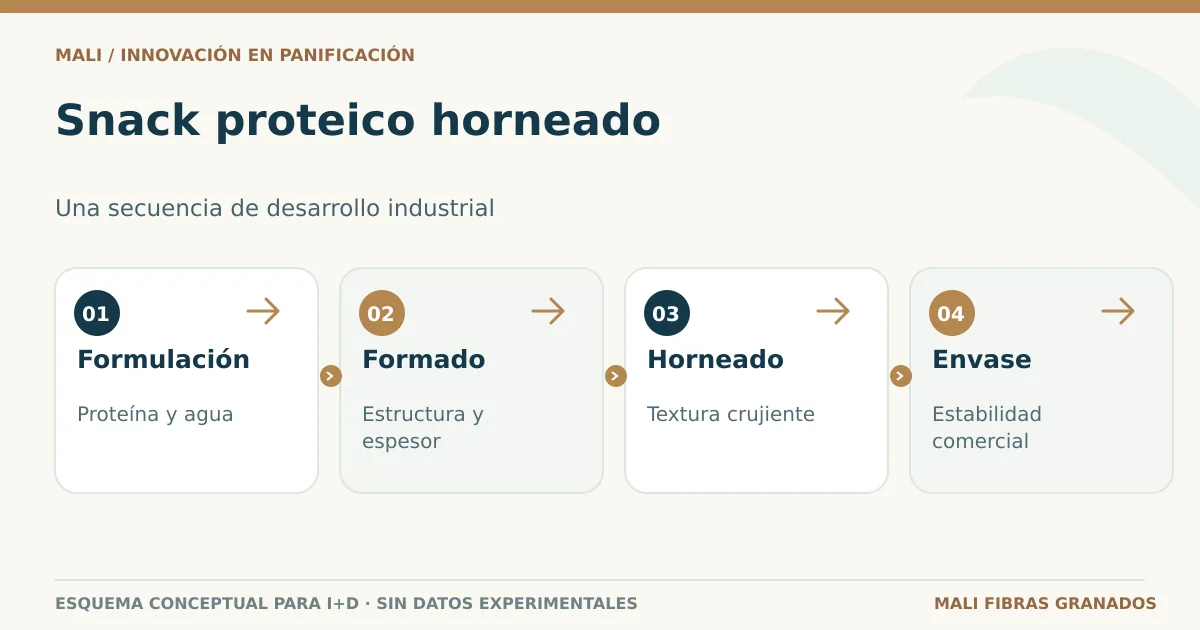
Reaching a high protein content is only part of the development of a baked snack. You also have to achieve a nice fracture and keep it after packaging. Protein, moisture, process and barrier of the container condition the crunch together.
In summary
- Protein can change water structure and behaviour.
- Crunch is not the same as hardness: fracture and sensory perception matter.
- Moisture and water activity evolve during the shelf life.
- Cooling and packaging are part of the development.
- Protein Snacks is oriented to high-protein baked snacks.
Why does protein change texture?
The protein source and its concentration can alter water absorption, cohesion, elasticity and structure during baking. The same nutritional objective does not guarantee the same thickness, expansion or breaking force in all matrices. The basis of the snack should be studied and the formulation of a protein bread should not be extrapolated directly.
Crunch is not the same as hardness
A hard product requires substantial force to bite; a chewy one deforms before breaking. Crunch is perceived through multiple fractures during chewing. It can be assessed with instrumental fracture tests and tastings. Instrumental data does not replace human evaluation, but helps track changes between batches and during storage.
Texture over time
The crunch doesn't end when it comes out of the oven
- BakedStructure and humidity
- CooledExchange with air
- PackagingBarrier to moisture
- WarehouseFracture in shelf life
No target water activity values are shown: they should be measured in each product.
The role of moisture
When a dry product absorbs moisture, its matrix can become plasticised and lose crunch. R&D should monitor final moisture content, water activity, thickness, water distribution and environmental conditions. Good results straight from the oven are not enough: performance in the pack through to the end of expected shelf life matters.
Cooling and packaging
Packing a snack while it is still hot can trap moisture; poorly controlled cooling can expose it to ambient humidity. The packaging material and its water-vapour barrier also affect stability. Formulation, process and packaging therefore form one project. A well-formulated product may lose crunch early if the pack does not suit its sensitivity.
Taste and colour
Plant proteins can contribute pulse notes, bitterness or their own colour. They also participate in browning reactions during baking. Flavour decisions must be made alongside protein selection and concentration, rather than at the end to disguise a technical defect.
| Variable | What to measure |
|---|---|
| Protein | Composition and declaration of the final product |
| Moisture | Texture at packaging and during storage |
| Water activity | Evolution and sensitivity to the environment |
| Fracture | Breakage force and sensory test |
| Thickness | Regularity of manufacture |
| Packaging | Protection against moisture exchange |
| shelf life | crunch, taste and stability |
When to change the process?
An enriched formulation may require checks on mixing, resting, sheeting, cutting, thickness, baking and cooling. For the general approach to formats and claims, read how to develop a baked protein snack; for a different food matrix, see common protein bread problems.
Stability records: distinguish moisture from breakage
To compare packaging or processes, identify batch, format, packaging, storage conditions and time elapsed. Use the same measurement method in all samples.
| Measure | What can be compared | Interpretation caution |
|---|---|---|
| Moisture | Total product water | Not equivalent to water activity on its own |
| Water activity | Water status in the matrix | Does not define a universal crunch threshold |
| Instrumental fracture | Response under a defined trial | Compare geometry, support and equivalent speed |
| Sensory evaluation | crunch, hardness and taste perceived | Maintain consistent conditions and descriptors |
| Packaging integrity | Barrier and protection during use | Also check sealing and transport |
Define at the outset which sensory change makes the product unacceptable. This record guides texture development; microbiological and shelf-life validation must reflect the food’s actual risk.
Protein Snacks
Protein Snacks is Mali Fibras Granados's mix to develop high protein baked snacks. The specific manufacturing conditions are worked with the manufacturer according to available format, texture and line.