Protein and Bakery
Developing industrial baked protein snacks: protein, crunch and stability
A baked protein snack should combine nutritional profile, crunch, flavour and shelf life. Moisture, water activity, process and packaging are evaluated as a system.
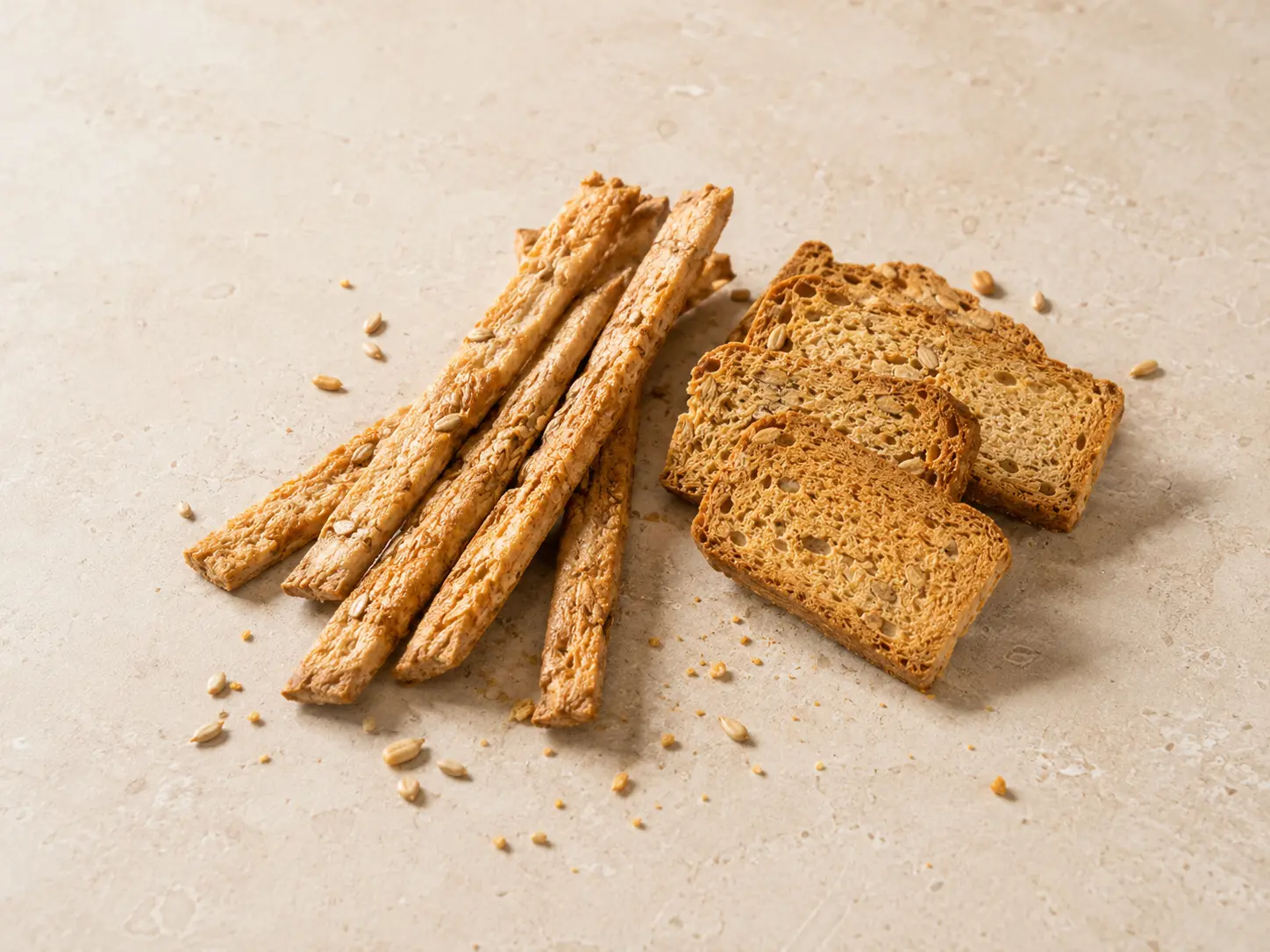
Protein is moving beyond bars into other snacking formats. For a manufacturer, a baked product can combine protein, convenience and savoury eating occasions, but structure, crunch, flavour and shelf life must be addressed together.
Protein Snacks is Mali Fibras Granados's solution to develop high-protein baked snacks. Each application requires checking its composition and behaviour in the final product.
In summary
- Savoury baked formats expand protein eating occasions.
- In the EU, 'high protein content' requires that at least 20% of energy comes from protein.
- Adding protein can modify water, structure and texture.
- Moisture, water activity and packaging influence the maintenance of the crunch.
- The quality should be checked throughout the shelf life.
Why develop a baked protein snack?
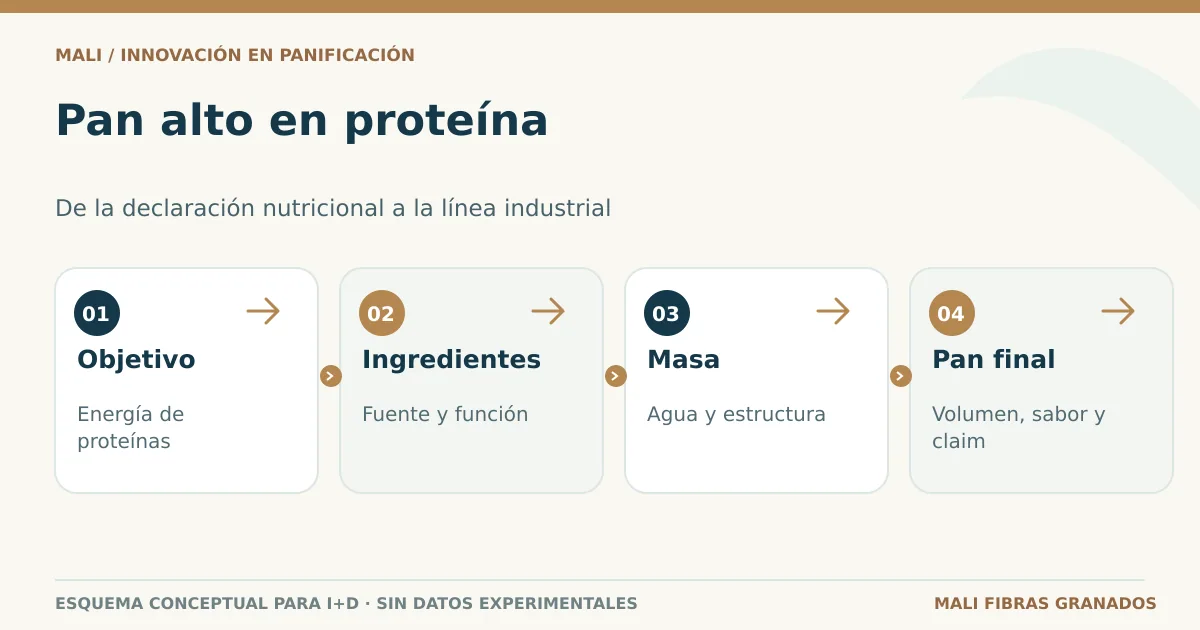
Protein can be brought into office snacks, on-the-go eating, appetisers and between-meal occasions. Breadsticks, crackers and other savoury formats offer an alternative to sweet bars. As with high-protein bread, the nutritional objective only works commercially if the product is appealing.
First challenge: increasing protein without losing structure
Changes to dough composition can alter water demand, cohesion, elasticity, expansion and final texture. The response depends on the protein source and other ingredients. R&D should assess the complete formulation and its performance during forming and baking.
From concept to retail shelf
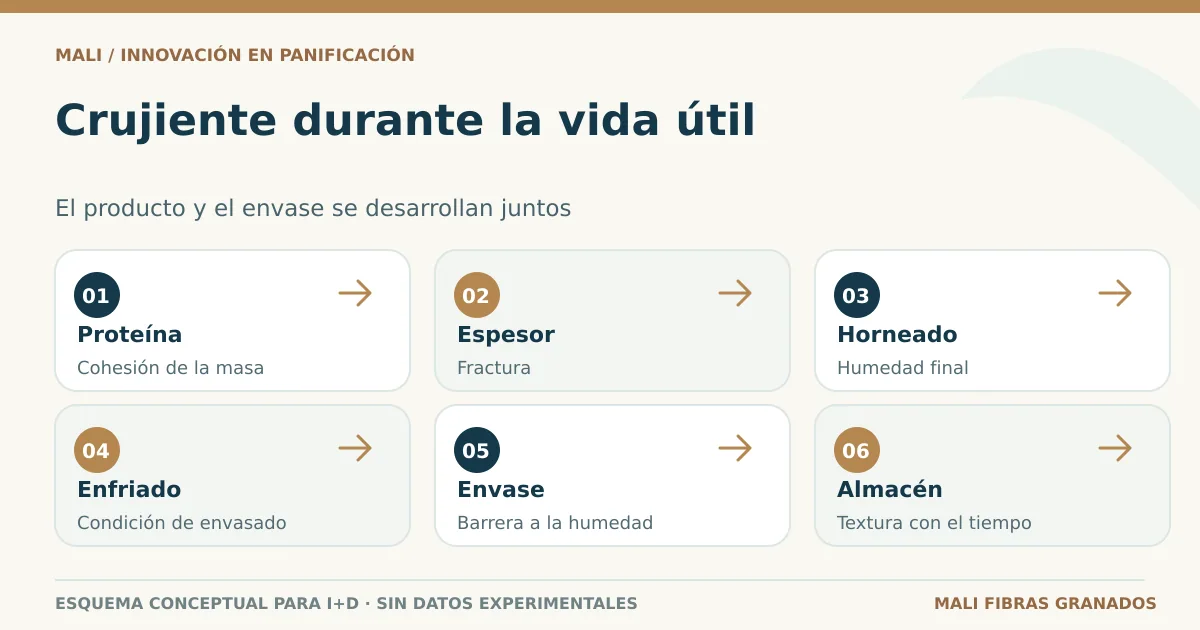
A snack develops beyond the oven
- FormulateProtein, water and cohesion
- FormThickness and geometry
- BakeFracture and humidity
- PackagingBarrier and shelf life
Water activity and moisture protection are checked in the actual product.
Second challenge: getting crunch
A snack can meet its protein target yet be too hard, chewy or insufficiently crunchy. Crunch depends on formulation, thickness, moisture, structure and process. Cooling before packaging must also be assessed.
Third challenge: keep it during the shelf life
A product can leave the oven crunchy and lose that quality weeks later. Assess it freshly made, cooled, packaged and stored. Water activity and the packaging’s moisture barrier are important variables, but there is no single universal value for every snack.
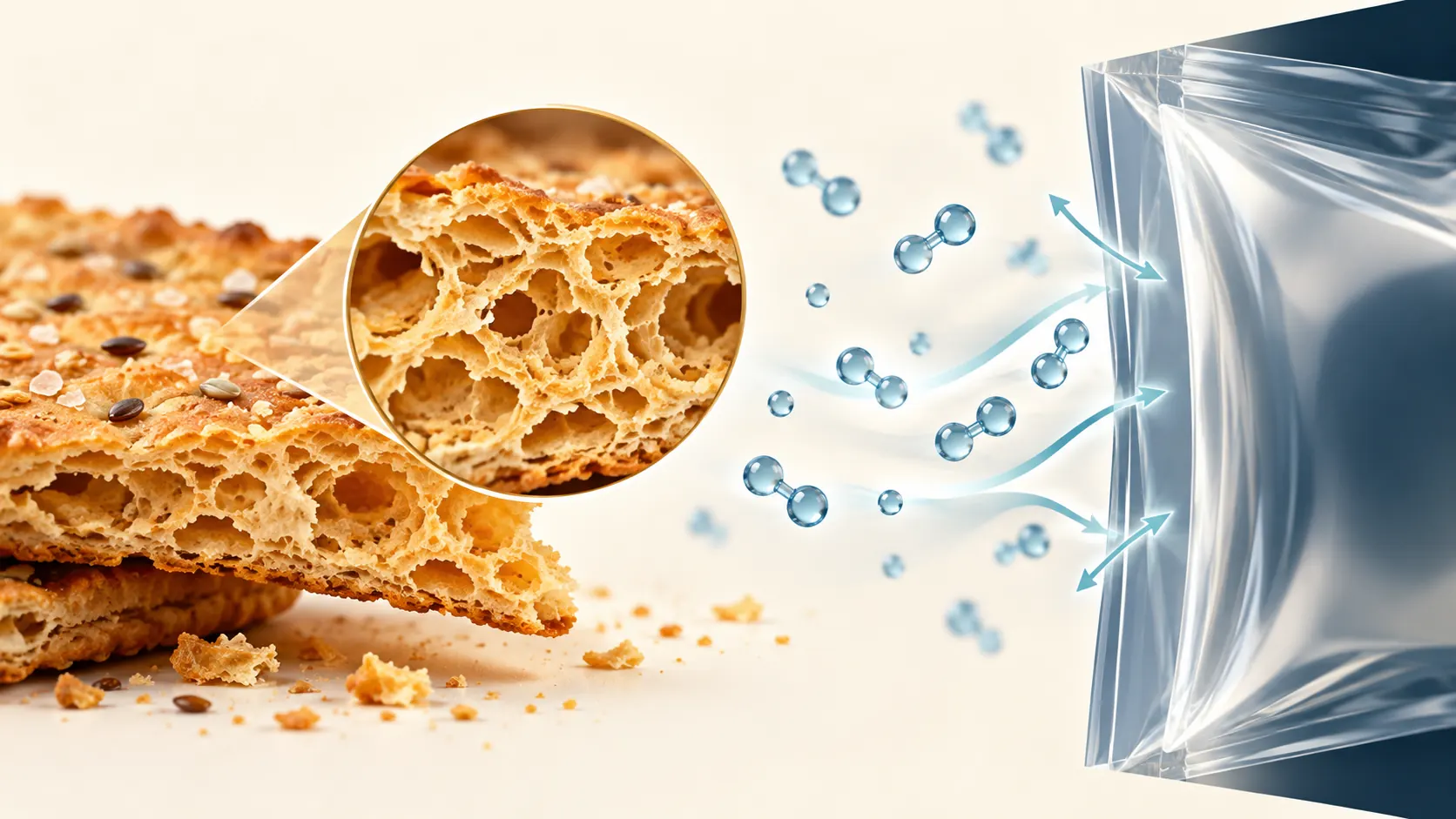
The fracture is evaluated in the already packaged snack and at the end of the expected shelf life. The drawing does not quantify permeability or replace a stability test.
Fourth challenge: integrating flavour
Some plant proteins provide own notes that can be intensified by increasing their concentration. Herbs, spices, tomato or other salty profiles may lead to different proposals; seasoning should be developed along with the protein base and evaluated with consumers.
When can a product be described as high protein?
The European “high protein” claim requires at least 20% of the food’s energy value to come from protein; “source of protein” requires 12%. This is checked on the finished product, not simply by reaching a number of grams per 100 g.
What should R&D define before starting?
| Variable | Decision or verification |
|---|---|
| Protein | Nutritional objective and source |
| Format | Breadstick, cracker or bite |
| Texture | Target crunch and hardness |
| Taste | Sensory profile |
| Portion | Eating occasion and quantity |
| Moisture | Product behaviour |
| shelf life | Stability during commercial life |
| Packaging | Moisture protection |
| Claim | Source of protein or high protein |
| Process | Compatibility with the installation |
Beyond the protein bar
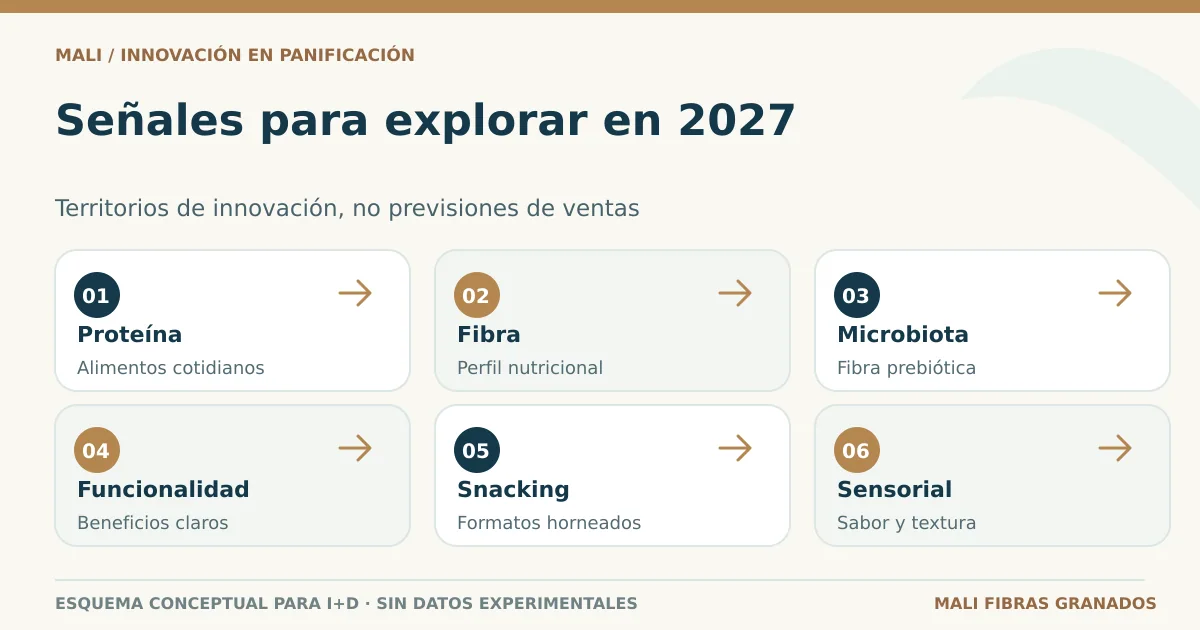
The opportunity may be to add a nutritional attribute to an existing habit: eating a savoury snack. Protein breadsticks, crackers and baked bites are options that require technical and commercial validation. See also the bakery signals for 2027.
Design a trial that includes packaging
The prototype should be evaluated in the intended format and packaging. An acceptable dough before baking does not guarantee a transport-resistant piece or a snack crunch at the end of its shelf life.
| Stage | Useful records | Decision |
|---|---|---|
| Forming | Thickness, weight and regularity | Adjust shape and dimensions before finalising baking |
| Cooling | Product conditions and development | Define when it can be packaged |
| Storage | Moisture, water activity, fracture and taste | Comparing evolution between alternatives |
| Transport | Breakage and pack condition | Review protection and tolerances |
Set the conditions and sampling frequency for the specific product. The guide to crunch and stability explores troubleshooting in more detail; the launch brief covers consumers, channels and pricing.
Protein Snacks
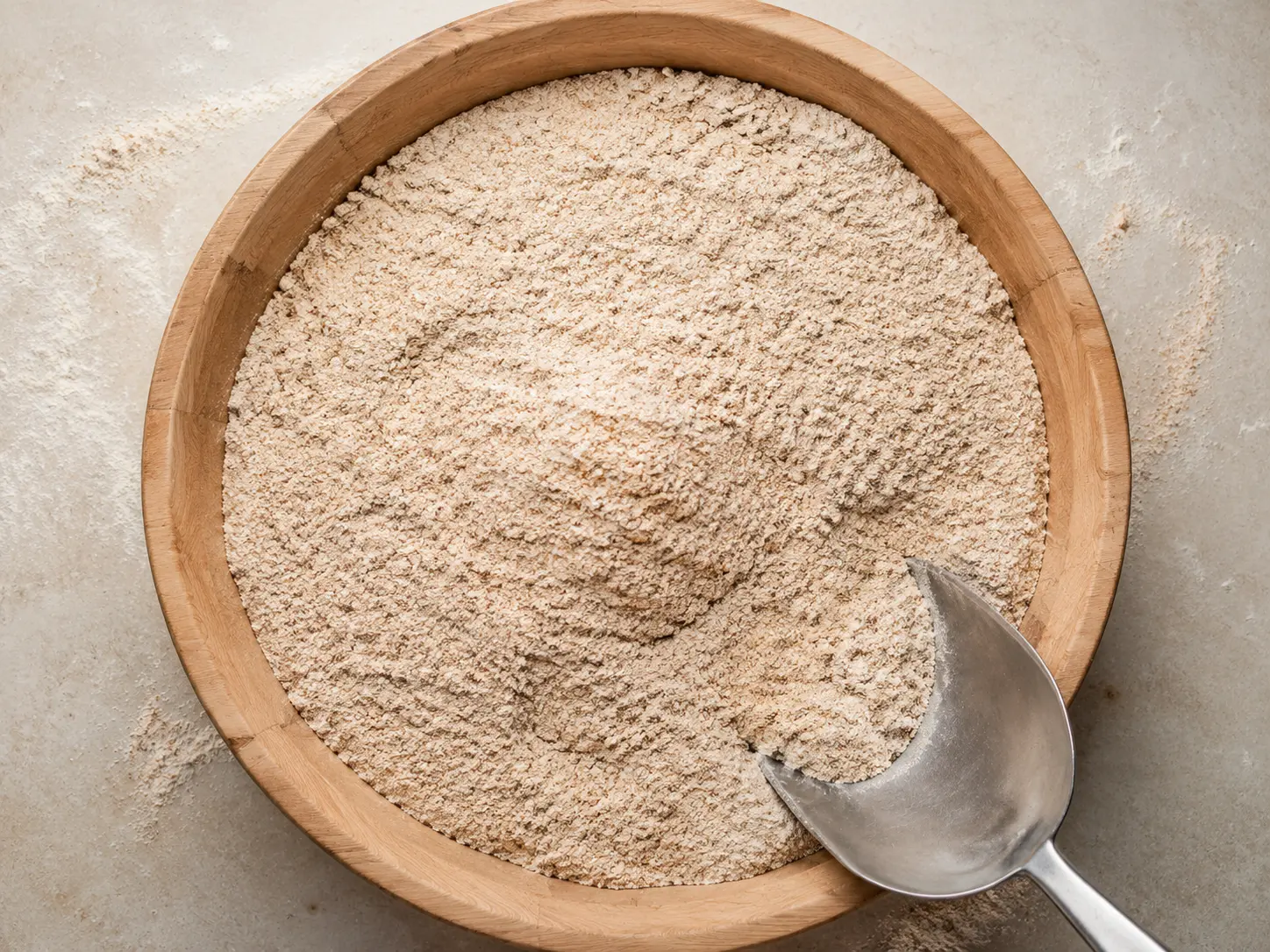
Protein Snacks is the Mali Fibras Granados mix developed to make high-protein baked snacks. formulation, dosage and process are provided directly according to the specific development.
To finalise the audience, channel, price and commercial criteria, see how to launch and position a high-protein snack.