

of plant sterols per day is the range linked to the authorised effect.
Specific functionality
Cholesterol
Plant sterols and soluble fibre in bread, with carefully defined dosage, serving size and communication.
Understanding the Benefit
From nutritional need to a functioning product
Cholesterol is not a disease: it is a substance necessary for the body. The problem arises when certain levels, especially LDL cholesterol, are associated with increased cardiovascular risk.
Cholesterol-related communication requires rigor. The ingredient, daily dose, portion and conditions of use must be aligned with the applicable regulations and the actual recipe of the product.
The body uses cholesterol to form cell membranes, bile acids, vitamin D, and certain hormones. Since it does not travel only through the blood, it is transported bound to lipoproteins; hence the usual references to LDL and HDL.
In Bakery there are different ways. Plant sterols act on the intestinal absorption of cholesterol, while oat beta-glucans belong to the territory of the soluble fibre. Ingredient, quantity and communication conditions are not interchangeable.
of plant sterols per 100 g of bread is the goal of the recipe Fibracol.
oat beta-glucan daily for the corresponding authorised claim.
Keys
What is behind this nutritional territory?
Ingredient, quantity, portion, process and eating experience must tell the same story.
LDL and HDL, not complicated
Lipoproteins carry cholesterol through the blood. A high level of LDL is one of the cardiovascular risk factors; HDL is involved in reverse transport to the liver.
Plant sterols
The European Union authorises reporting that blood cholesterol is reduced when the daily dose, labelling and other conditions of use are met.
Oats and beta-glucans
Oats open another formulation via their soluble fibre. The actual quantity should be reached in the portion and daily consumption indicated.
The portion changes the project
It is not enough to express a quantity per 100 g. Check how much product is consumed, how many portions are needed, and what instructions accompany the food.
A food, not a medicine
The proposal should be integrated into a balanced diet and an active life. Communication cannot present bread as a treatment for a disease.
Labelling from the outset
Early definition of packaging, market and message avoids reformulation at the end because it does not meet a mandatory condition of use or warning.
From Knowledge to Bakery
Breads to bring this objective to the product
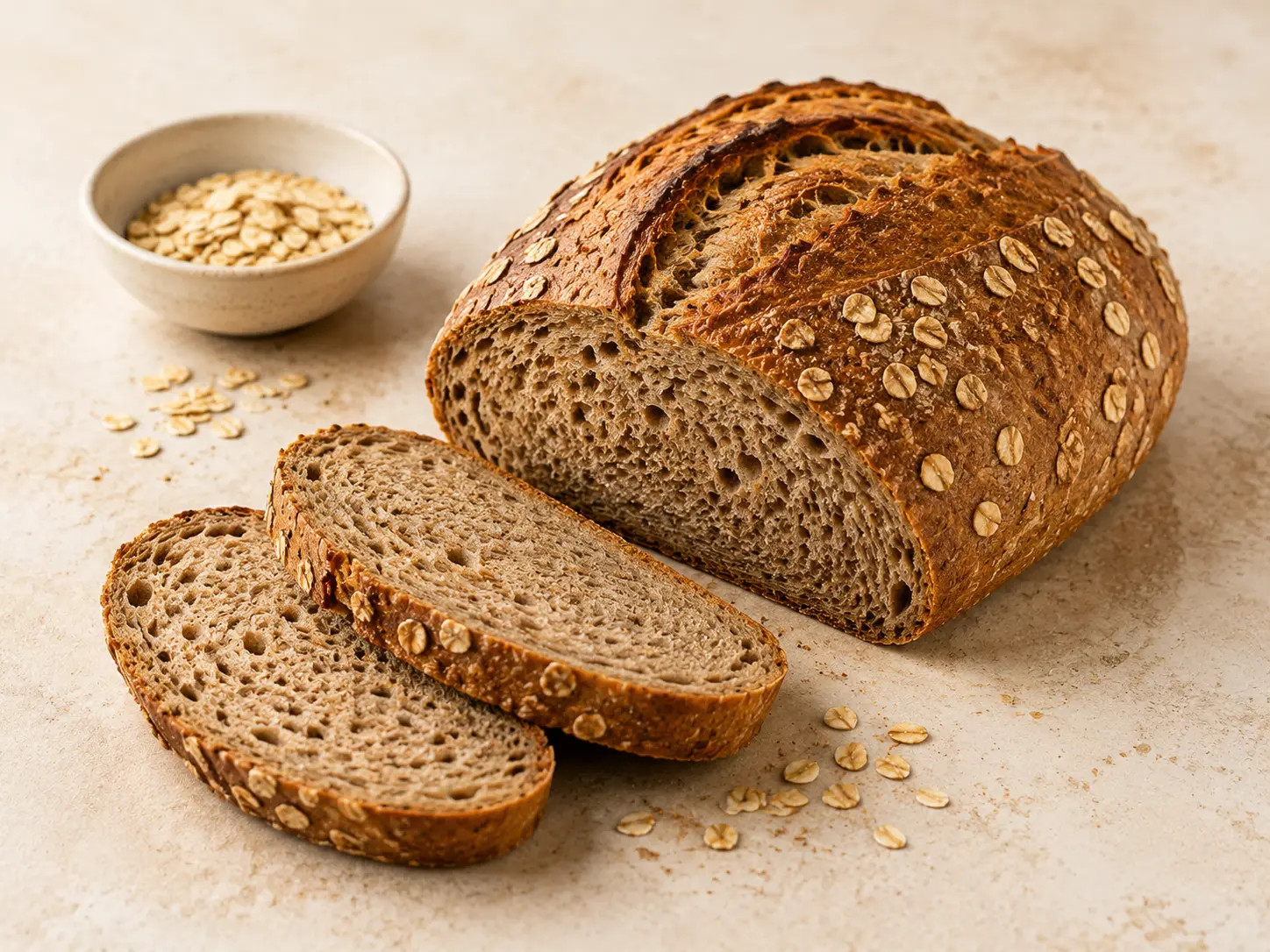
Fibracol uses plant sterols, while Avenamix uses oats and soluble fibre: two different approaches to bread development in this area.
To really understand it
From body to finished product
We explore the benefit, its ingredients and the formulation decisions that bring it into a bakery application.
01
Basic concepts
What cholesterol is and why the body needs it
Cholesterol is a lipid present in cells and needed for various bodily functions. Some comes from the diet, while the body produces the rest, mainly in the liver.
The health focus is not "having cholesterol", but the lipid profile and overall risk of each person. That is why we avoid simplifications and explain the territory in understandable language, without turning the page into clinical advice.
- Cell membranes
- Bile acids and vitamin D
- Synthesis of certain hormones
02
Blood transport
LDL and HDL: two lipoproteins with different functions
The LDL particles carry cholesterol from the liver to the tissues. When their concentration is high, the probability of arterial wall deposition increases. HDLs are involved in transport back to the liver.
These concepts help explain the benefit, but interpreting an individual’s blood test results is a healthcare professional’s role and depends on more than a single figure.
- LDL: transport to tissues
- HDL: return transport
- The risk is assessed individually
03
Plant sterols
A functional route with very specific doses and labelling
Plant sterols have a structure similar to cholesterol and reduce its intestinal absorption. Communicating their effect requires compliance with the daily intake, consumption instructions and mandatory information set out in the regulations.
Fibracol brings this approach into an everyday bread. During development, we define the concentration, portion size and complete recipe before validating the message.
- Defined daily dose
- Portion and frequency of consumption
- Warnings and target audience
04
Soluble fibre
Oat Beta-glucans: another ingredient, another logic
Beta-glucans are a soluble fibre present in oats and barley. The authorised claim linked to cholesterol requires that a specific daily amount be reached and that the consumer be informed about it.
Avenamix focuses on oats and soluble fibre. It is not a version of Fibracol: the functional ingredient, required quantity, sensory positioning and recipe approach differ.
- Cereal profile and soluble fibre
- Verifiable daily amount
- Differentiated recipe and communication
How we develop it
From Target to Final Recipe
- 01
We choose the functional pathway: plant sterols, beta-glucans or a soluble fibre proposal.
- 02
We define portion, frequency of consumption and nutritional objective.
- 03
We formulate bread taking care of volume, crumb, taste and process.
- 04
We review labelling and claim conditions before launch.
The figures and conditions on this page provide a development framework. Any nutrition or health claim must be validated against the final recipe, portion, process and target market.
Frequently Asked Questions
The essential, clearly explained
Can one simply say that a bread reduces cholesterol?
Only when the final recipe, daily dose, portion and labelling comply with the conditions of the authorised claim. Each project must be validated before being marketed.
Do Fibracol and Avenamix address cholesterol in the same way?
No. Fibracol is formulated with plant sterols; Avenamix focuses on oats and their soluble fibre. The ingredient, dosage and communication differ.
Does Mali Fibras Granados help with documentation?
Yes. We support formulation and provide the technical information customers need to review their product and communication.
What should be defined before formulating?
The consumer, the market, the real portion, the frequency of consumption, the desired message and the manufacturing process. These data condition dosage and labelling.
Is the product intended for the whole population?
Not necessarily. Plant sterols foods have specific labelling conditions and target audiences. The proposal should be reviewed before launch.
Can bread be developed with another cereal or format?
Yes. We can adapt the cereal, format, flavour and process, provided the final product maintains the dosage and conditions required for the intended communication.
Sources and regulations
Content prepared using European legislation and official sources. The final application must be reviewed for each product.
Do you have a project?