phytosterols and cholesterol
Phytosterols in breadmaking: evidence, cholesterol and conditions of use
Fibracol helps lower cholesterol thanks to the plant sterols. In order to prepare and communicate bread with added phytosterols, approved category, portion, composition and labelling should be validated.
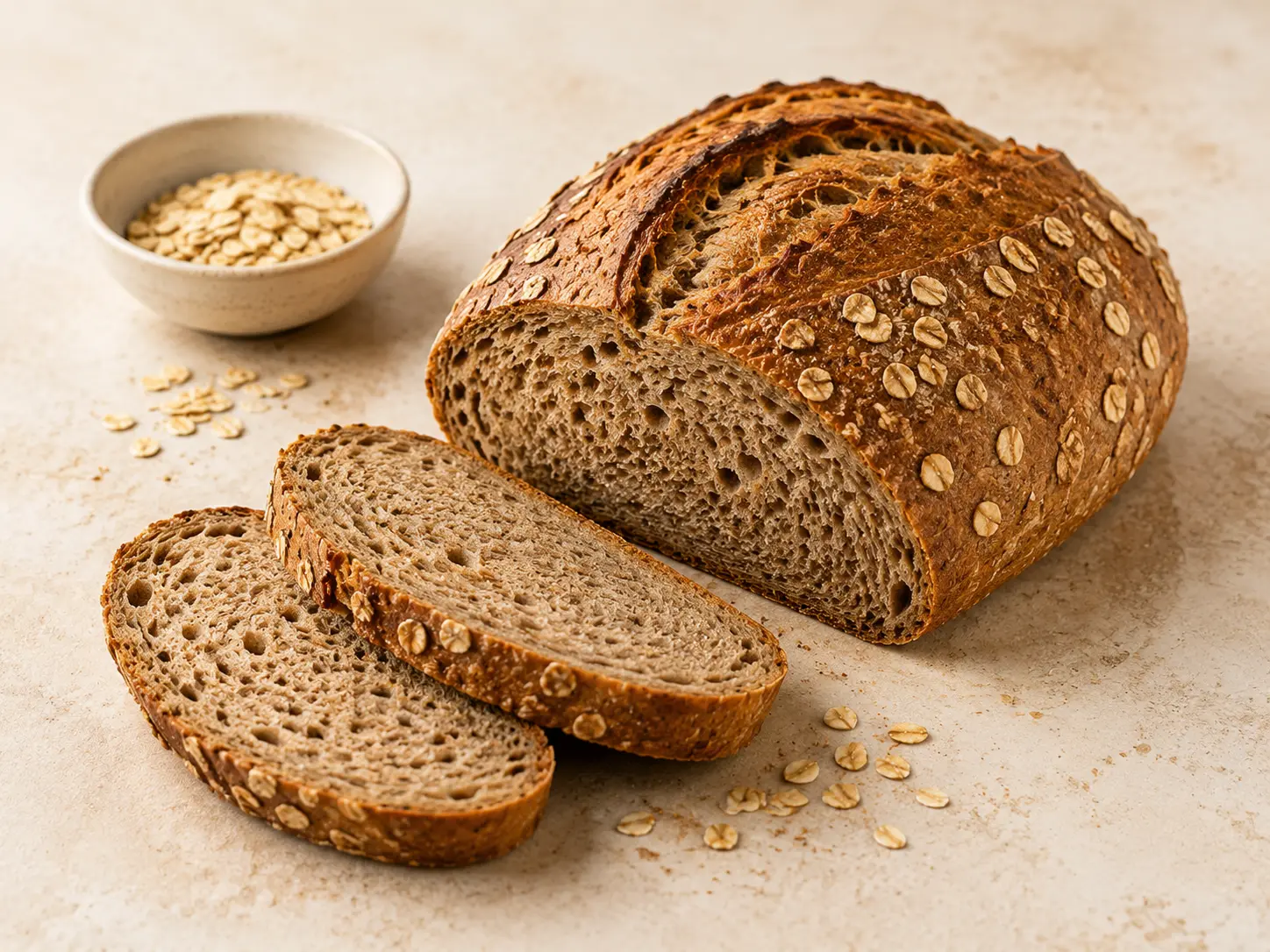
Plant sterols have been shown to reduce blood cholesterol. Fibracol helps reduce cholesterol thanks to these ingredients when the finished bread and its communication meet the corresponding conditions.
This development requires coordination between R&D, Quality and Marketing: in addition to the formulation and process, the category of food authorised for added phytosterols, portion, labelling and declaration used must be verified.
In summary
- Fibracol helps to reduce cholesterol thanks to its content in phytosterols, under the applicable conditions of use.
- Plant sterols have been shown to reduce blood cholesterol.
- High cholesterol is a risk factor for coronary heart disease.
- The statement requires reporting a daily intake of 1.5 to 3 g of plant sterols.
- The authorisation of the ingredient in bakery is limited to specific categories and conditions: it is not valid for any bread.
What are phytosterols?
They are naturally present compounds in plant foods. In the intestine they compete with cholesterol during absorption, which explains their blood cholesterol reduction effect. They are also incorporated into certain functional foods within the authorised categories.
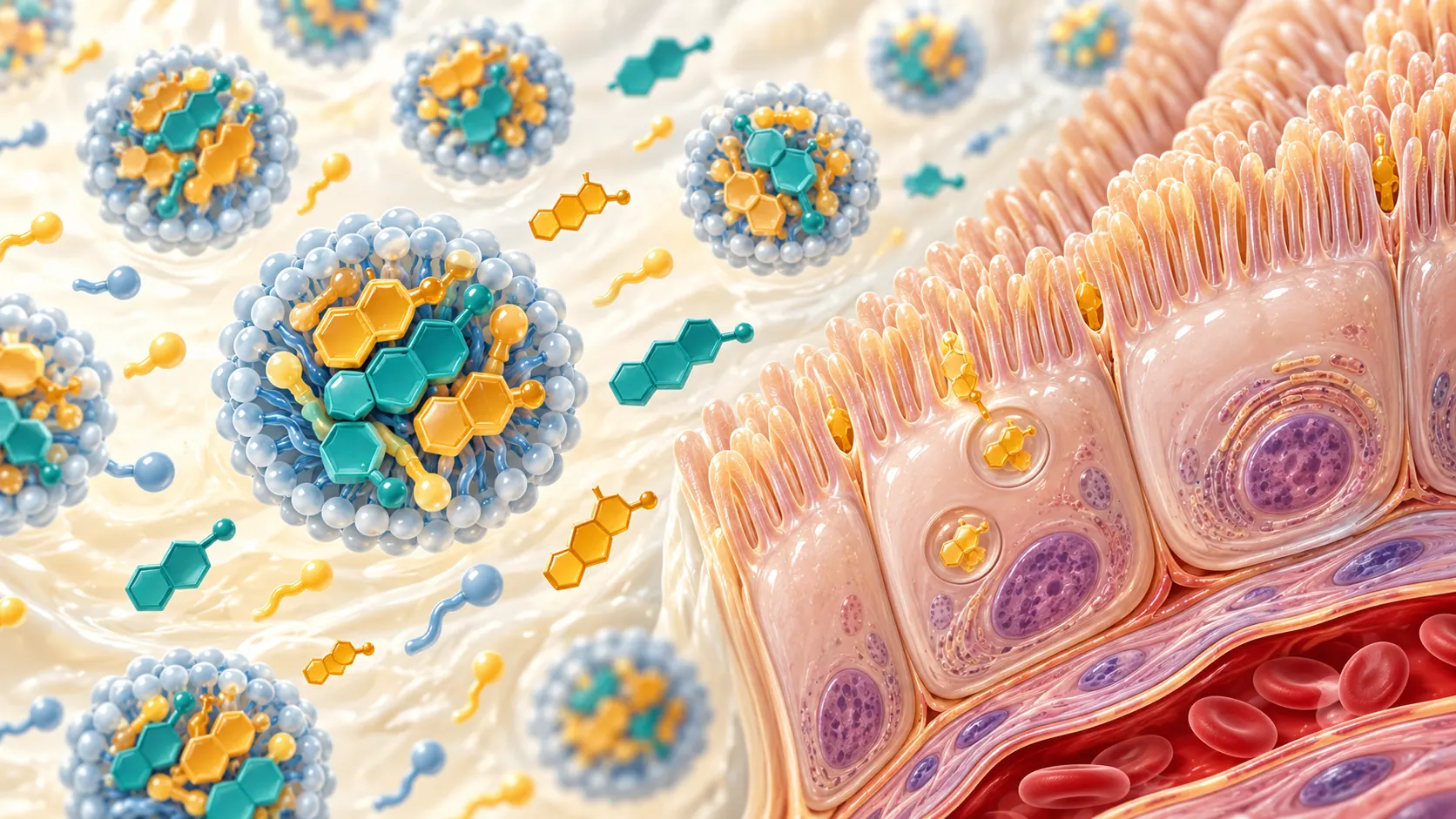
Competition for incorporation into micelles is one of the mechanisms described. The illustration does not indicate how much a serving would lower cholesterol: communicating a food benefit requires checking composition, permitted food category and the conditions of the authorised claim.
Phytosterols and cholesterol: the authorised claim
The European Union authorises reporting that plant sterols have been shown to reduce blood cholesterol and that high cholesterol is a risk factor for the development of coronary heart disease. Conditions include reporting that the beneficial effect is obtained with a daily intake of 1.5 to 3 g of plant sterols. The statement has a normative basis, but should be applied to the final food and accompanied by the required information.
Regulatory development
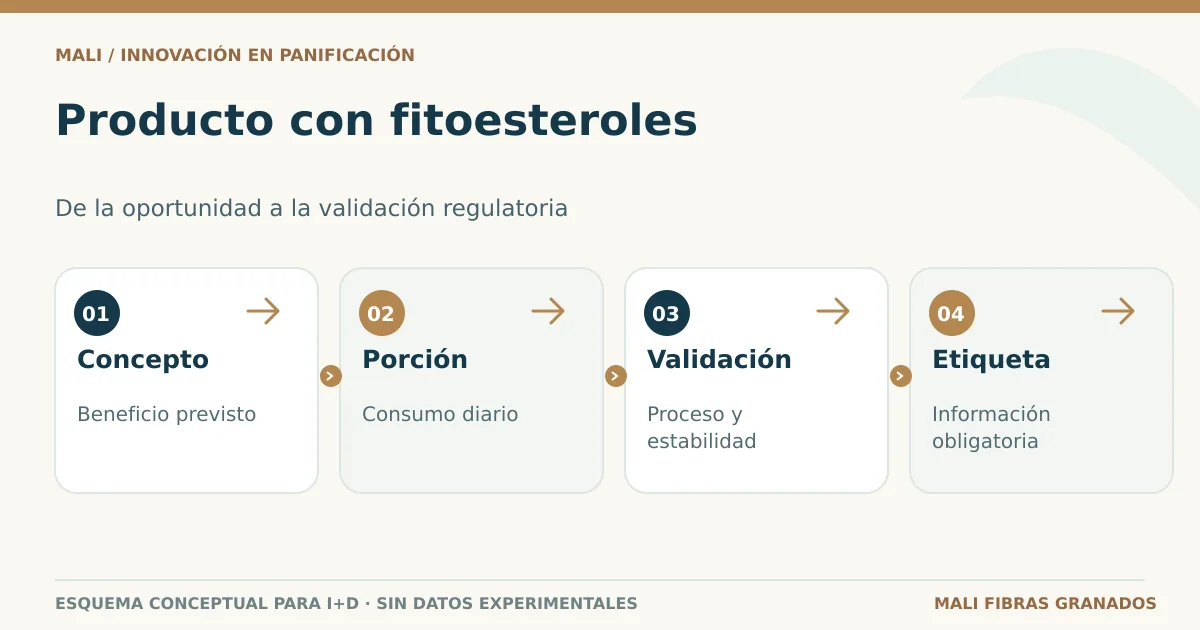
The benefit needs a consistent portion and label
The authorisation of the ingredient and the conditions of the declaration are reviewed for the specific category.
Can phytosterols be added to any bread?
No. In addition to the health claim, added phytosterols are regulated as a novel food and have specific use categories. The Union list includes a specific type of rye bread subject to compositional requirements, including proportions of rye and wheat flour, added sugar limit and absence of added fat. The manufacturer must verify that its completed formulation falls within the applicable category and complies with the conditions in force. Authorisation should not be generalised to all breads or to any bakery product.
What should R&D study?
Distribution and portion
The incorporation must be homogeneous to relate composition, portion content, consumption pattern and labelling.
Process and stability
What happens during the thermal process and the shelf life in the particular matrix should be validated. It cannot be assumed that the baking removes the sterols or that they remain identical in any condition.
Sensory experience
Taste, aroma and texture remain relevant to make the functional food attractive.
Does baking destroy phytosterols?
There is no universal answer. Oxidation and stability depend on temperature, time, food matrix and oxygen exposure. A study of enriched bread found low levels of oxidation products under the baking and toasting conditions examined; it does not replace validation of the specific industrial process.
Specific labelling
Foods with added phytosterols have additional information requirements. Review their presence and added quantity, target audience, warnings concerning cholesterol-lowering medication, pregnancy, breastfeeding and children under five, a balanced diet, the instruction not to exceed 3 g daily, and the quantity per serving. Quality must be involved from the outset.
A clarification about communication
The authorised relationship between plant sterols and cholesterol reduction can be communicated if the conditions are met. A specific figure such as ‘reduces cholesterol by 7–10 %’ has additional food category restrictions and should not be automatically transferred to bread. The central message of Fibracol is clear: helps to reduce cholesterol within the applicable framework.
R&D, Quality and Marketing must work together
The objective, the authorised category, the formulation, the validation of the final product, the labelling and the communication form a single development decision. Checking them from the beginning avoids designing a reference whose portion or message has to be redone later.
Three checks not to be confused
For a project with Fibracol, it is appropriate to separate the evidence on sterols, the authorisation of use of the ingredient and the conditions of communication of the finished food.
| Layer | Quality Question | Working paper |
|---|---|---|
| Evidence | What effect and conditions do sources support? | Scientific reference and authorised claim |
| Food use | Do the specific ingredient and food category comply? | Specification and conditions of the list of novel foods |
| Final product | Do the content, portion and label comply? | Food validation and approval of the text |
An authorised claim does not automatically extend an ingredient’s permitted food categories. See the development sequence for phytosterols to structure the project and the launch checklist to review market readiness.
Fibracol: helps lower cholesterol
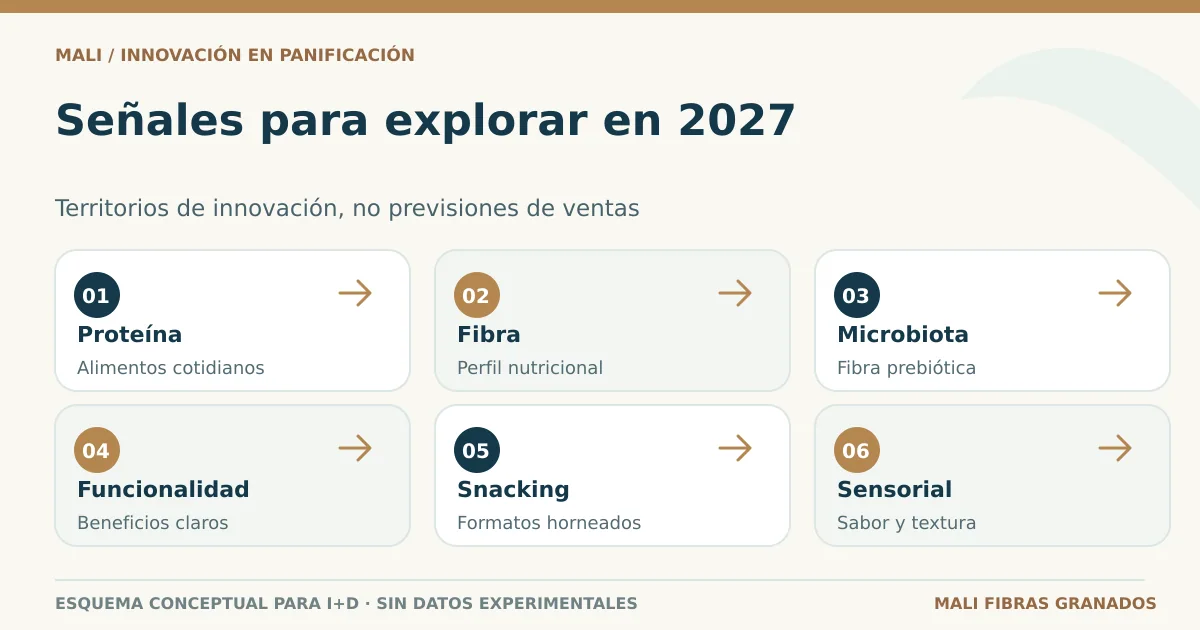
Fibracol is the Mali Fibras Granados mix developed for breads that help lower cholesterol thanks to phytosterols. Dosage, production and labelling documentation is provided directly to manufacturers for developments that meet the applicable requirements. See also which functional product areas could grow in 2027.
Sources and references
- Regulation (EC) 983/2009 and amendments: declaration on sterols and cholesterol
- Union list of novel foods: categories authorised for phytosterols
- Regulation (EU) 1169/2011, Annex III: mandatory information for sterol-added food
- Study of phytosterol oxidative stability in bread during baking and toasting
- Review of intestinal mechanisms of phytosterols