phytosterols and cholesterol
A launch checklist for bakery products with phytosterols
What evidence should close R&D, Quality, Marketing and procurement before launch: authorised use, portion, validation, label and communication.
Before launching a bakery product with phytosterols, the team needs to close three related files: the use of the ingredient in the specific category, the validation of the product and its communication. An authorised health claim alone does not demonstrate that any recipe or category can incorporate the ingredient.
This checklist organises the evidence and assigns responsibility for the launch decision. It complements the phytosterol development guide and the article on evidence and conditions of use. It does not replace a review of the specific dossier with the Quality team.
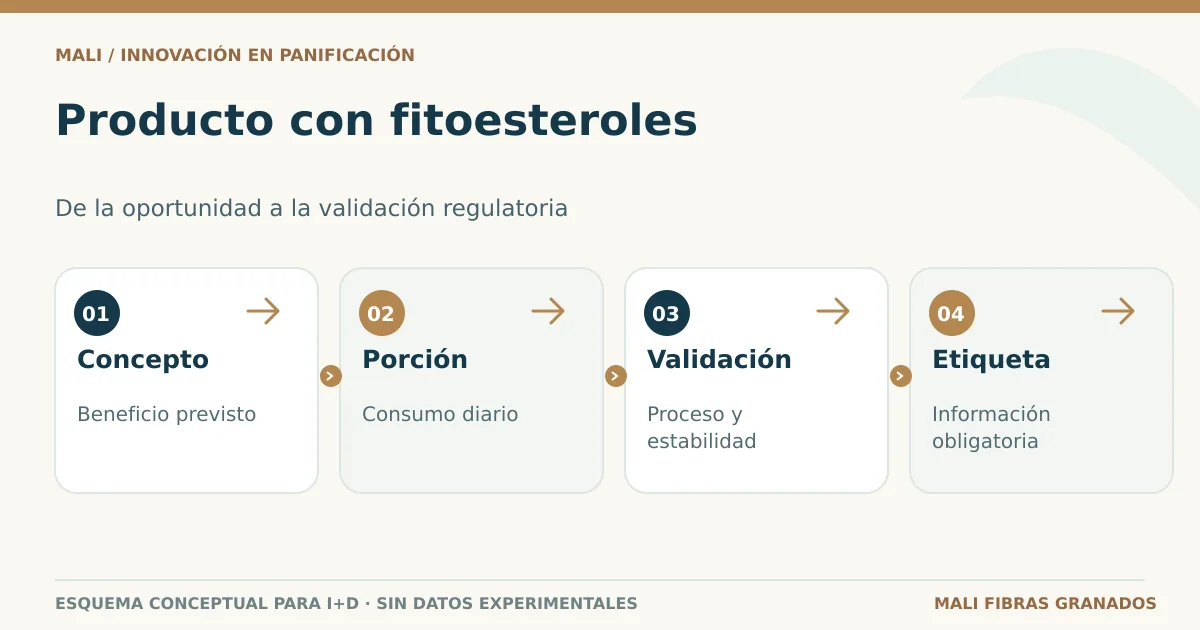
1. Define the concept, audience and consumption format
- Product and category defined.
- Documented audience and channel.
- Identifiable portion and expected consumption described.
- Main benefit and proposed message agreed upon.
- A responsible person assigned to each approval.
The portion should not be fixed at the end to make a formula fit. It should allow to relate composition, sales unit and consumption instructions in an understandable way.
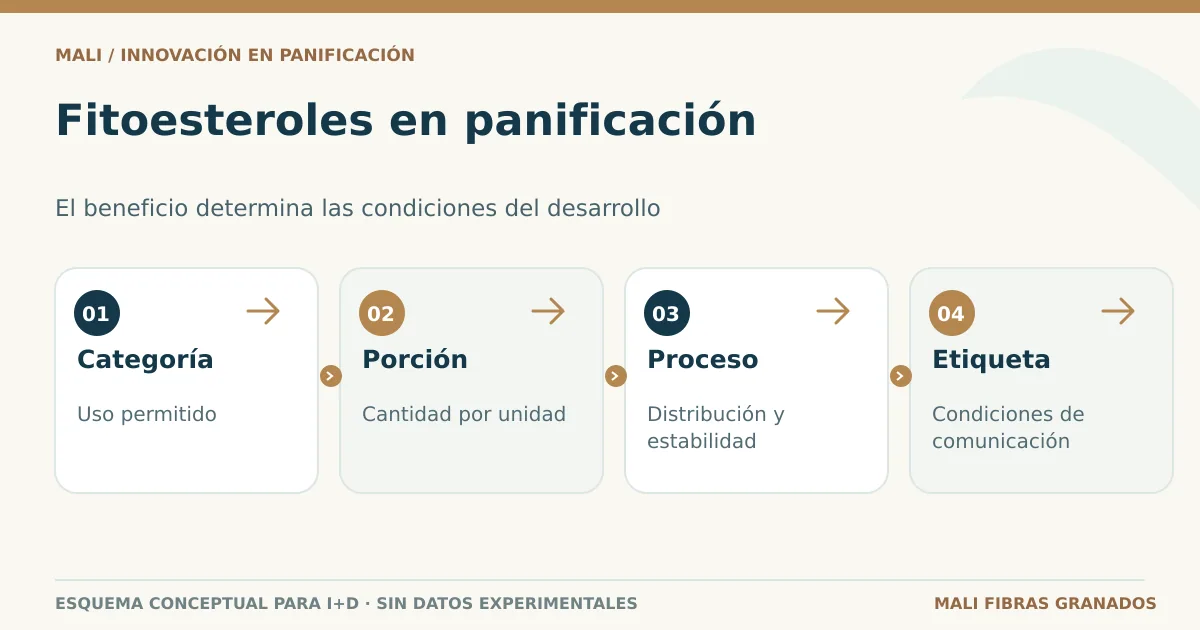
2. Check authorised use before approving the recipe
Quality must verify identity and specification of the ingredient, food category, conditions of use and applicable requirements for novel foods. The existence of precedents in a bread category does not automatically authorize any bakery product.
Retain the regulatory reference and version consulted in the dossier. Resolve any uncertainty about the category or conditions before scale-up or packaging approval. The Union list and its amendments are the reference for authorised uses.
3. Reconciling quantity, portion and communication
The cholesterol reduction declaration has specific conditions; the information for use includes a daily intake of 1.5 to 3 g of plant sterols. This regulatory data is not a dosage of the mix or a recipe.
Do not extrapolate cholesterol-reduction percentages authorised for specific categories to bread. Quality must identify the exact claim, its conditions and accompanying statements. Risk-factor reduction claims also require review of information about other risk factors.
Project control
Three files before launch
- UseIngredient and category
- OutputComposition and validation
- CommunicationLabel and materials
Review list, not automatic conformity certification.
4. Review the evidence of the final product
| Area | Document or result to close |
|---|---|
| Incorporation | Evidence of homogeneity between units and lots |
| Composition | Final quantity according to the validation criterion |
| Process | Instructions and testing on the planned line |
| sensory | Acceptance of flavour, aroma and texture |
| Storage | Justified stability and shelf life |
| Quality | Approved release specifications |
The dossier must correspond to the product actually placed on the market. A change of raw material, portion or process requires an assessment of which verifications should be repeated. The laboratory results of an earlier recipe should not be reused without checking its applicability.
5. Review specific labelling
Annex III to Regulation 1169/2011 includes additional information for foods with added sterols or stanols. As a checklist, check:
- Identification of the addition and quantity declared.
- Recipients: is not intended for people who do not need to control their cholesterol.
- Use under medical supervision when taking cholesterol-lowering medication.
- Information concerning pregnancy, breastfeeding and children under five.
- A varied diet with fruit and vegetables, and reference to carotenoids.
- Warning to avoid exceeding 3 g daily sterols or stanols added.
- Portion and corresponding quantity; location and visibility required.
This is a summary to organise review, not text ready to copy onto packaging. Quality must check the complete wording, fields of vision and all general and specific obligations.
6. Approve all commercial communication
Check packaging, website, trade sheet, sales presentation and advertising as parts of the same file. The message should not be transformed into a promise of disease treatment or extend the scope of the authorised benefit.
Use an approved version and set who can modify it. This prevents a correct tab from coexisting with an exaggerated phrase on another channel.
7. Prepare Purchases and Production
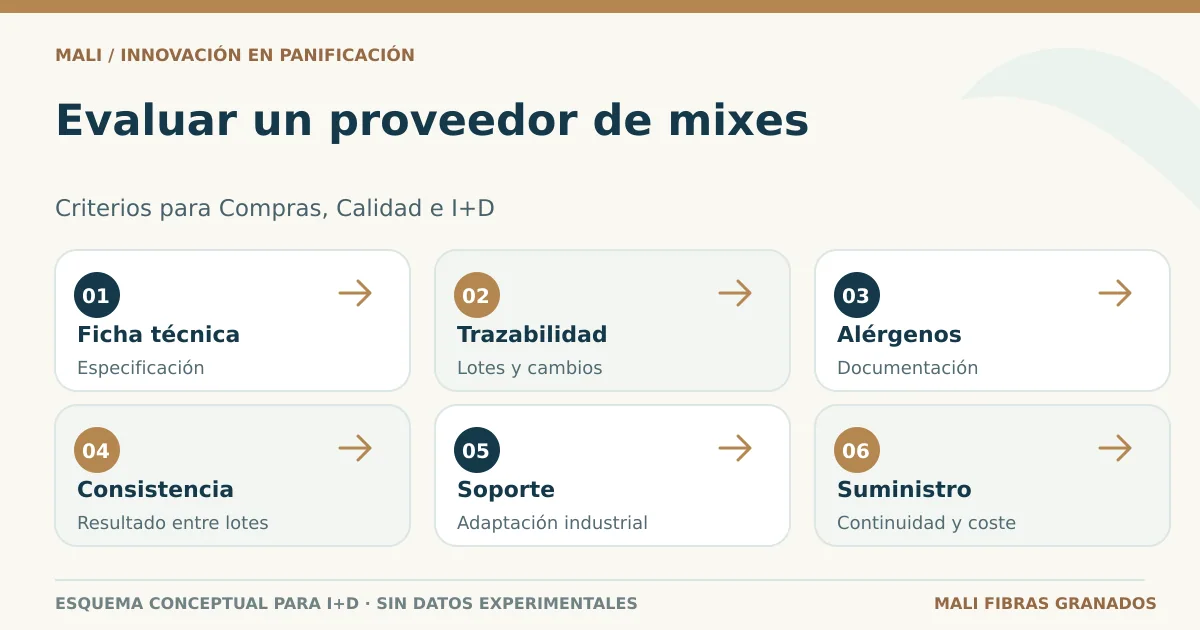
Before releasing the launch, confirm approved supplier, current specification, traceability, reception, storage and instructions for use. Defines how changes and incidents are managed and who decides whether they affect the product or its communication.
Final Approval Checklist
| Team | Closing question |
|---|---|
| R&D | Does the product and process comply with the validated briefing? |
| Quality | Are use, composition, portion and communication documented? |
| Marketing | Do all materials match the approved version? |
| Purchases | Does raw material and supply meet specifications? |
| Production | Is manufacturing repeatable and documented? |
An outstanding point must become an action with responsible and necessary evidence. The checklist does not prove compliance by simply ticking boxes.
Maintain traceability between formula and communication
Before releasing a reference, identify which version of the product supports each material. A correct label may be misaligned if the portion or ingredient changes afterwards.
| Evidence | Identification to be retained |
|---|---|
| Specification of the ingredient | Supplier, product reference and revision |
| Validated product | Internal formula, process and test lots |
| Content per serving | Method and result applicable |
| Approved label | Version, date and responsible for approval |
| Web and commercial documentation | Correspondence with the same reference |
The checklist helps identify outstanding actions; it is not a marketing authorisation. Specific limits and wording must be checked against current regulations for the category and ingredient used.
Fibracol
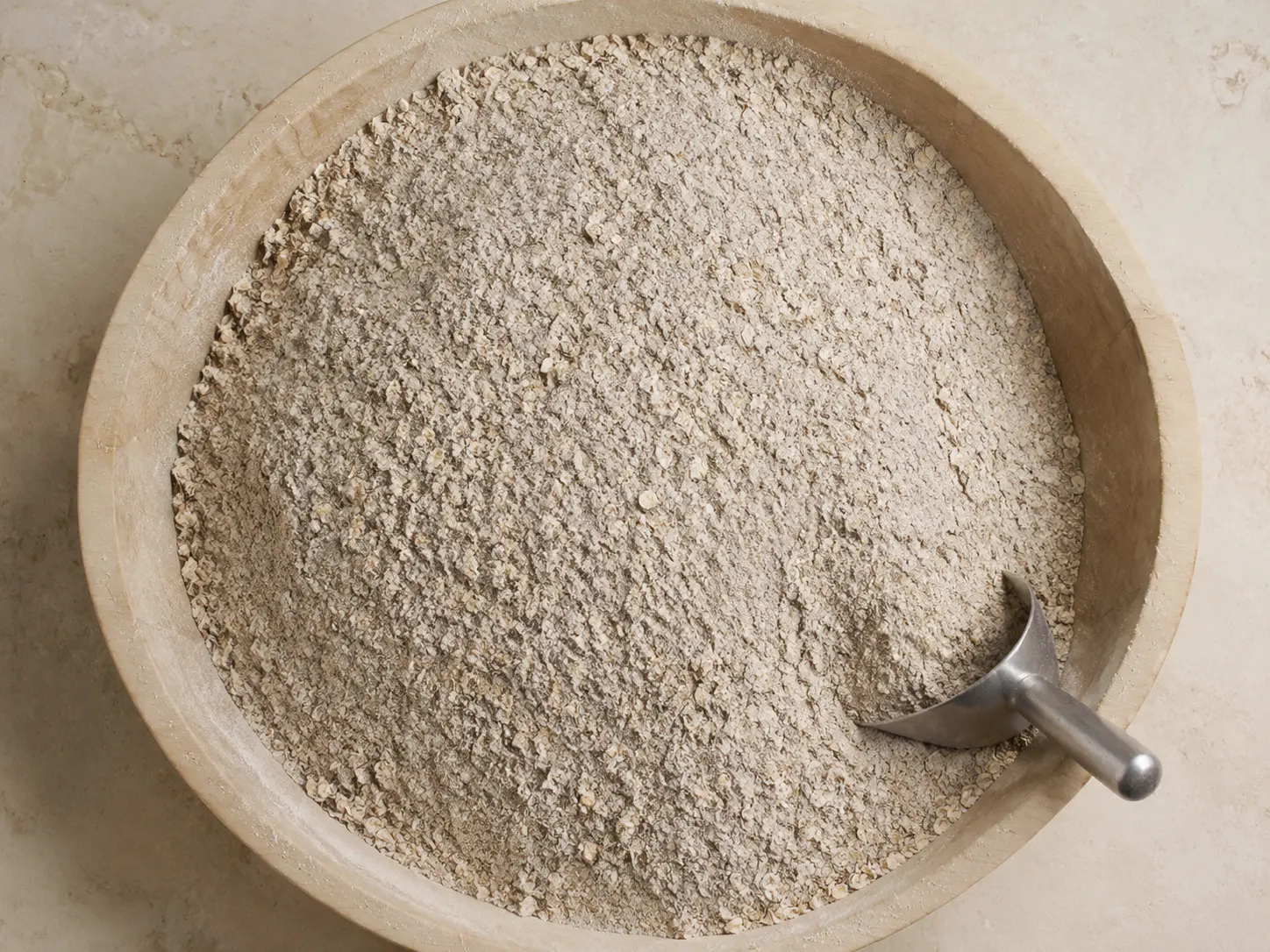
Fibracol is the Mali Fibras Granados mix for bakery products that help reduce cholesterol thanks to their phytosterols, when the finished food meets the applicable conditions. The specific application and documentation are assessed with the manufacturer.
Request technical information about Fibracol to define the project, product category and conditions of use.
Sources and references
- Regulation (EU) 1169/2011, consolidated text: Annex III, additional information
- Regulation (EU) 686/2014: sterol and cholesterol declaration conditions
- Regulation (EC) 1924/2006: nutrition and health claims, Article 14
- Implementing Regulation (EU) 2017/2470: list of novel foods; consult current version