phytosterols and cholesterol
Developing a bakery product with phytosterols: from concept to finished product
Phytosterols help reduce cholesterol, but development requires validation of authorised category, portion, final content, process, stability, and specific labelling.
Developing a food with phytosterols is not just about adding an ingredient: it is necessary to relate portion, daily intake, benefit, authorised category and labelling. Phytosterols have been shown to reduce blood cholesterol. R&D, Quality and Marketing must define the product together before closing their formula.
In summary
- Phytosterols help reduce cholesterol, subject to conditions of use.
- Portion and daily intake are central variables.
- The homogeneous distribution must be verified in the finished product.
- Thermal process, stability and labelling need validation.
- Not any Bakery product is an authorised category for added sterols.
- Fibracol is Mali Fibras Granados's solution for developments in line with the applicable framework.
Step 1: define category and benefit
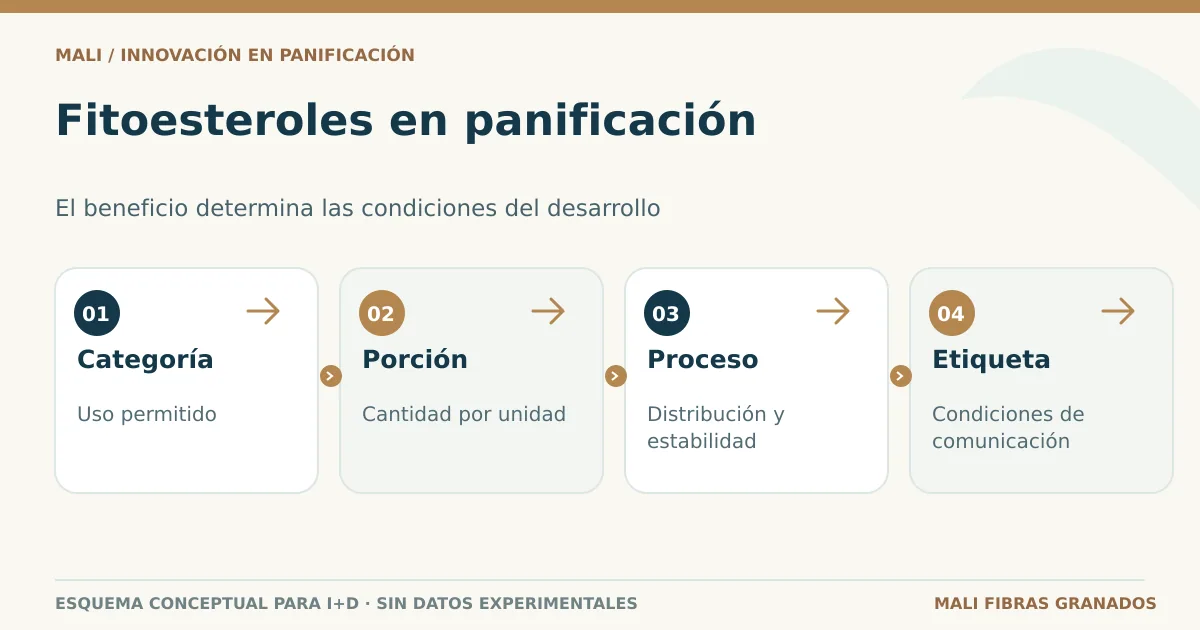
Before formulating, check whether the intended food fits one of the categories allowed by the European list of novel foods for added phytosterols. These include a specific type of rye bread with composition limits; it does not amount to a generic authorisation for any bread. Then it is decided which health claim can be communicated in the final product and under what conditions.
Step 2: define portion and daily consumption
The authorised claim of cholesterol reduction states that it should be reported that the beneficial effect is obtained with a daily intake of 1.5 to 3 g of plant sterols. Additional labelling requires indicating the quantity per serving and warning that 3 g daily of added sterols or stanols are not exceeded. The weight of the unit and the consumption pattern condition the development, but it is not appropriate to publish an applicable mix dosage without validating the recipe.
Validation path
The portion conditions all development
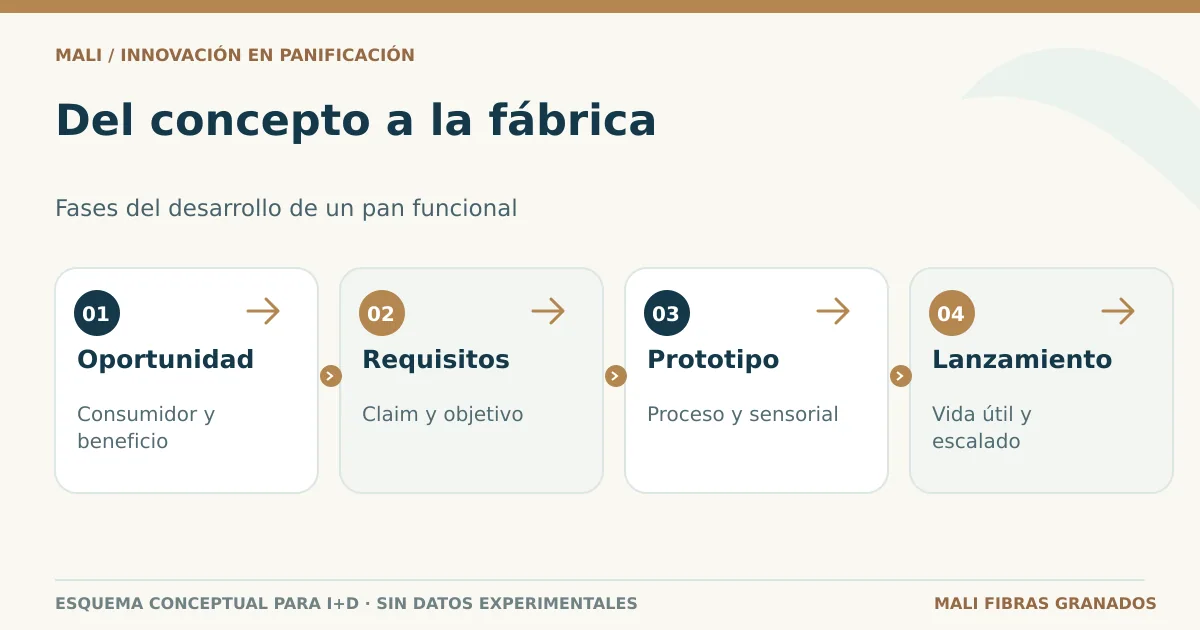
- BenefitDefining communication
- PortionLink quantity and consumption
- trialCheck homogeneity and process
- LabelReview specific obligations
Category, authorised use and warnings are verified prior to launch.
Step 3: Check homogeneity
Knowing the quantity added to a batch does not guarantee that every portion delivers the intended amount. Review premixing, incorporation order, timing and dividing. Define representative analytical checks for variation between units and batches.
Step 4: evaluate baking and stability
Phytosterols can oxidise, but this does not mean baking destroys them. A specific bread study found low levels of oxidation products under its experimental conditions. Actual content and performance must be verified for the manufacturer’s food matrix, process and shelf life.
Step 5: validate the finished food
| Area | Verification |
|---|---|
| Regulatory | Authorized category, conditions of use and declaration |
| Nutrition | Final content and quantity per serving |
| Manufacture | Homogeneity and repeatability between lots |
| Process | Retention of the ingredient after baking |
| sensory | Taste, aroma, volume and texture |
| shelf life | Stability of food and content |
Step 6: Prepare labelling
European legislation requires specific indications for foods with added phytosterols: presence and quantity, target population, warnings regarding medication to reduce cholesterol, pregnancy, lactation, children under five years of age, varied diet and daily consumption limit. Quality should review the current standard and the specific label, not only based on an editorial summary.
Step 7: communicate accurately
The authorised claim links plant sterols to reduced blood cholesterol and recognises high cholesterol as a risk factor for coronary heart disease. A percentage reduction must not be applied to bread without verification: specific conditions govern quantification of the effect. Phytosterols in bakery applications explains the ingredient and claim; the complete process for developing a functional bread places validation within the R&D project.
Deliverables between R&D and Quality
A project with phytosterols needs documented decisions between phases. There is no need to publish the formulation to agree on what evidence allows progress.
| Phase | Deliverable | Condition for moving forward |
|---|---|---|
| Feasibility | Category and applicable conditions | Regulatory suitability confirmed |
| Prototype | Portion size and content target | Understandable relationship with the intended consumption |
| Process | Results of homogeneity and stability | Repeatable product in the actual matrix |
| Validation | Specification of the finished food | Results compatible with the project |
| Launch | Label and commercial materials | Joint Quality and Marketing Review |
The launch checklist helps you review the final materials without repeating all the regulations here.
Fibracol
Fibracol helps reduce cholesterol thanks to its phytosterols when used in a final food that meets the applicable category and conditions. Mali Fibras Granados directly provides the specifications for formulation, production and labelling to the manufacturer.
Before approving the launch, use the documentation and approvals checklist for products with phytosterols.