Protein and Bakery
How to develop high-protein bread at industrial scale
The plant protein changes water, structure, volume, texture and flavour. The industrial challenge is to reach the high-protein threshold and preserve an attractive and viable bread.
Increasing the protein of a bread may seem simple: incorporate protein-rich ingredients to reach the nutritional goal. In industrial production we also have to solve hydration, structure, volume, texture and taste.
The goal is to get a really high protein bread that continues to function like bread. Protein Pan is the Mali Fibras Granados solution developed for such projects.
In summary
- In the EU, “high protein” requires that at least 20% of the food's energy comes from protein.
- Plant protein sources have different technological behaviors.
- The hydration and structural network must be adjusted to the entire system.
- Volume, texture and flavour are as important for commercial viability as the nutritional data.
When can a product be described as high protein?
“Source of protein” means that at least 12% of the energy value comes from protein; “high protein” requires at least 20%. It does not depend solely on reaching a certain number of grams of protein per 100 g. Calculate it for the finished product using verified energy and composition values.
What happens when the protein is increased?
Soya, wheat, pea and other pulses differ in composition, water absorption and functional properties. Incorporating them can alter viscosity, elasticity, gluten development, gas retention, volume, colour, texture and flavour. Replacing flour with protein without adjusting the rest of the formulation rarely produces an optimised bread automatically.
Declaration criterion
Protein is measured as energy, not just in grams.
12 %Threshold for “source of protein”
In factoryAlso check hydration, volume, taste and repeatability
The calculation corresponds to the final product, according to the European conditions of the declaration.
Hydration changes
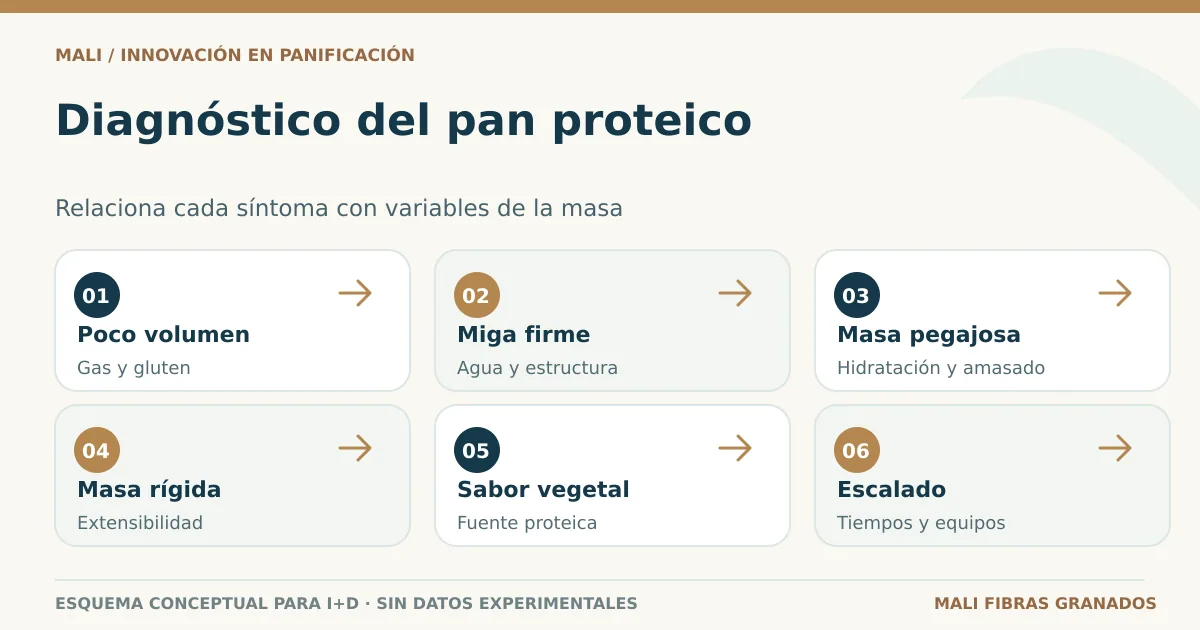
Many protein raw materials interact intensely with water. By increasing its proportion it changes the available water for gluten, starch and other ingredients. If the system becomes unbalanced, the dough can be rigid, unextensible or difficult to form. Evaluation should follow the whole process and not stop at consistency after kneading.
Protein and structure
In wheat bread, the gluten network retains much of the gas produced during fermentation. Other proteins modify that matrix. Their type and quantity matter: a soya formulation may respond differently from one using pea, wheat or a combination.
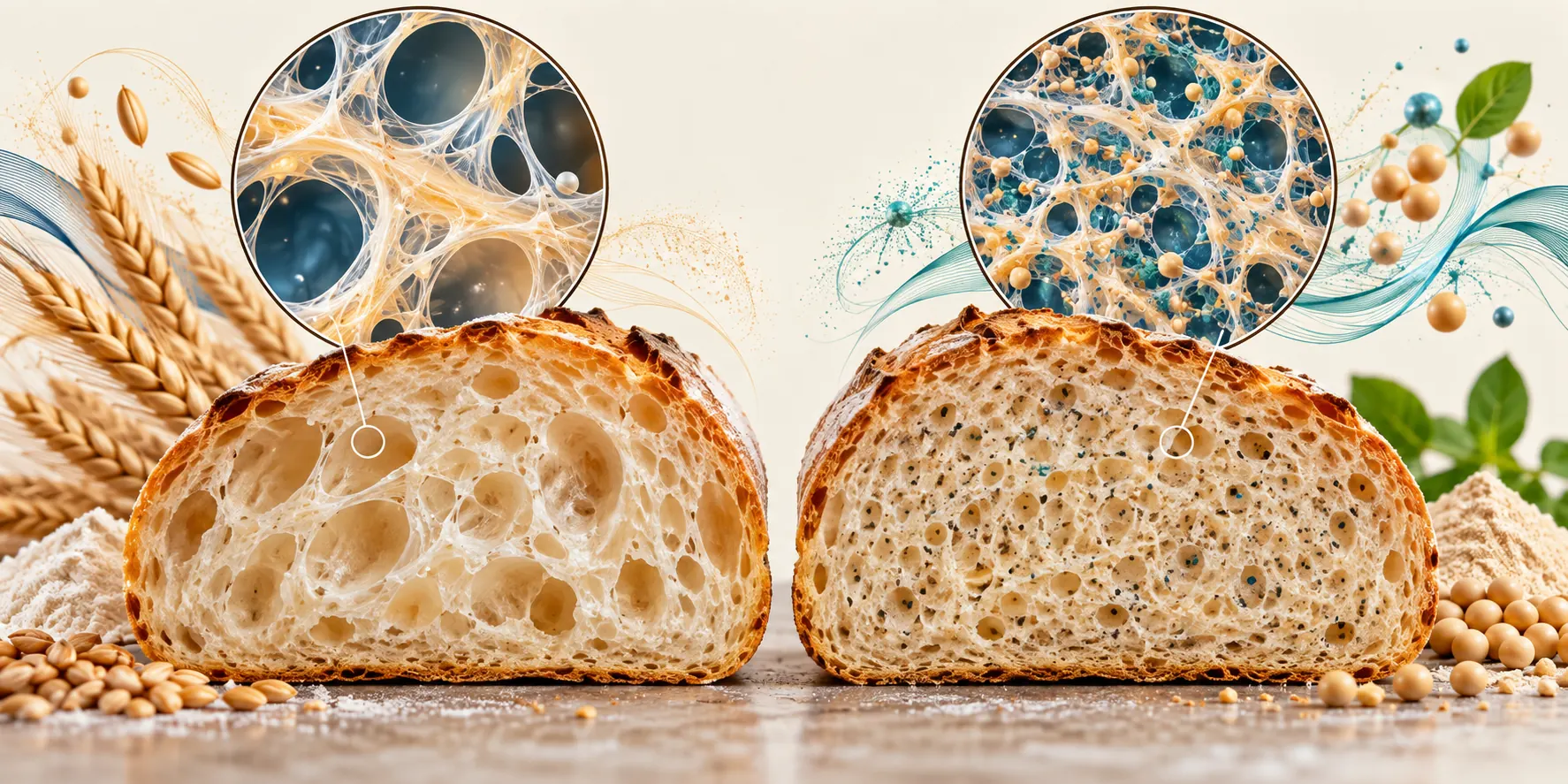
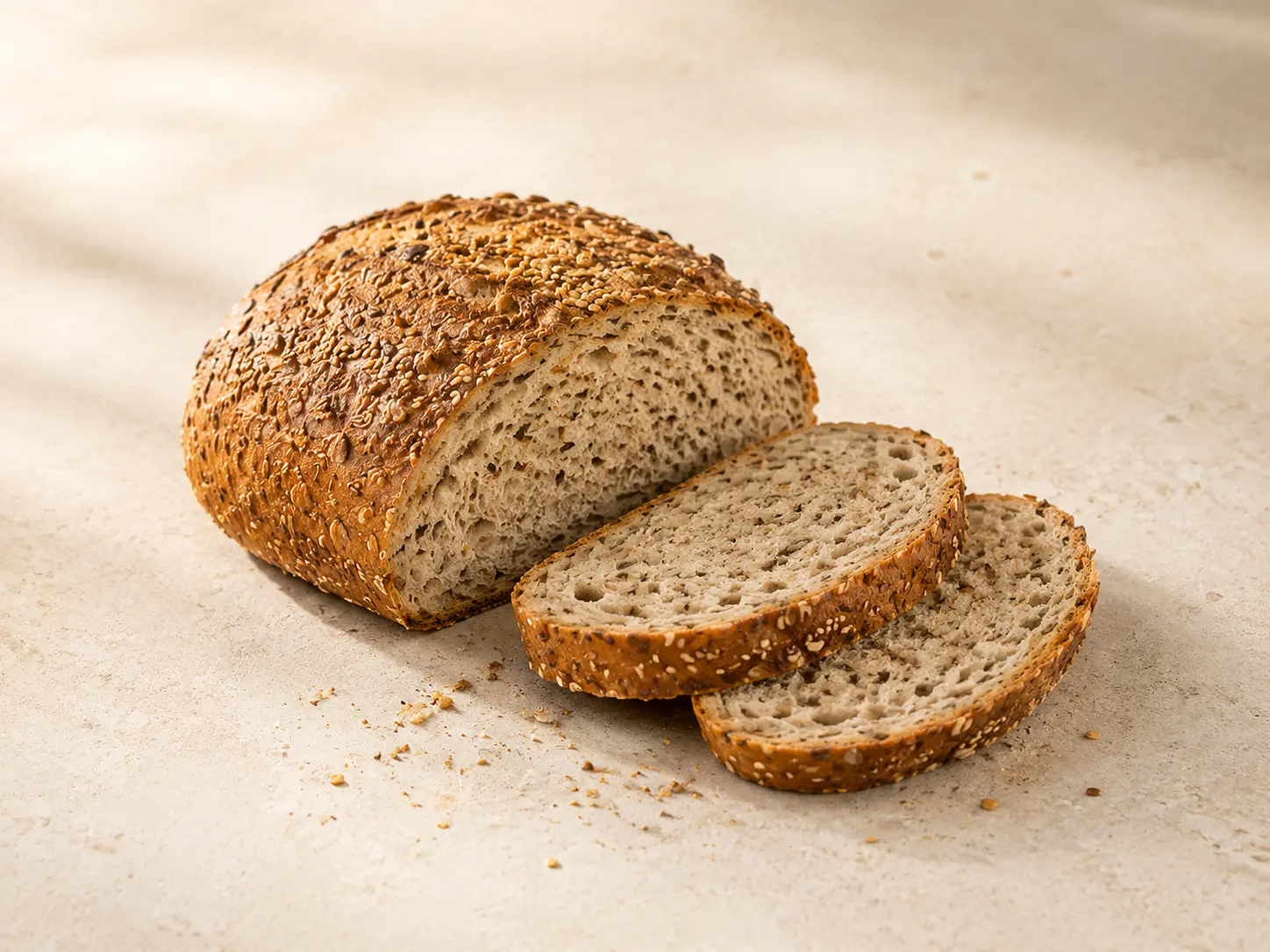
The images show why R&D should assess crumb cell structure as well as protein percentage. A denser crumb is not inevitable: the result depends on protein source, water and process.
Why are some protein breads compact?
The problem may combine increased water demand, a less extensible network, insufficient gas retention, fermentation changes and different setting behaviour in the oven. If volume is low, review the complete system before attributing it to a single ingredient.
The flavour also matters
By increasing some plant proteins, characteristic notes, firmness, or dryness may appear. A nutritionally solid bread can fail if the consumption experience does not convince. Sensory tests should accompany measurements of volume and texture.
What plant proteins can be used?
Soya
It offers a high concentration of protein and functional properties to be tested in the concrete formulation.
Wheat
Its proteins are involved in bread dough structure, although the response depends on the ingredient combination.
pea and other legumes
They allow the development of new nutritional profiles, with their own technological and sensory effects.
Combinations
Sharing functions between various sources can be more effective than asking a single ingredient to solve nutrition, volume and taste.
The protein bread is no longer just for athletes.
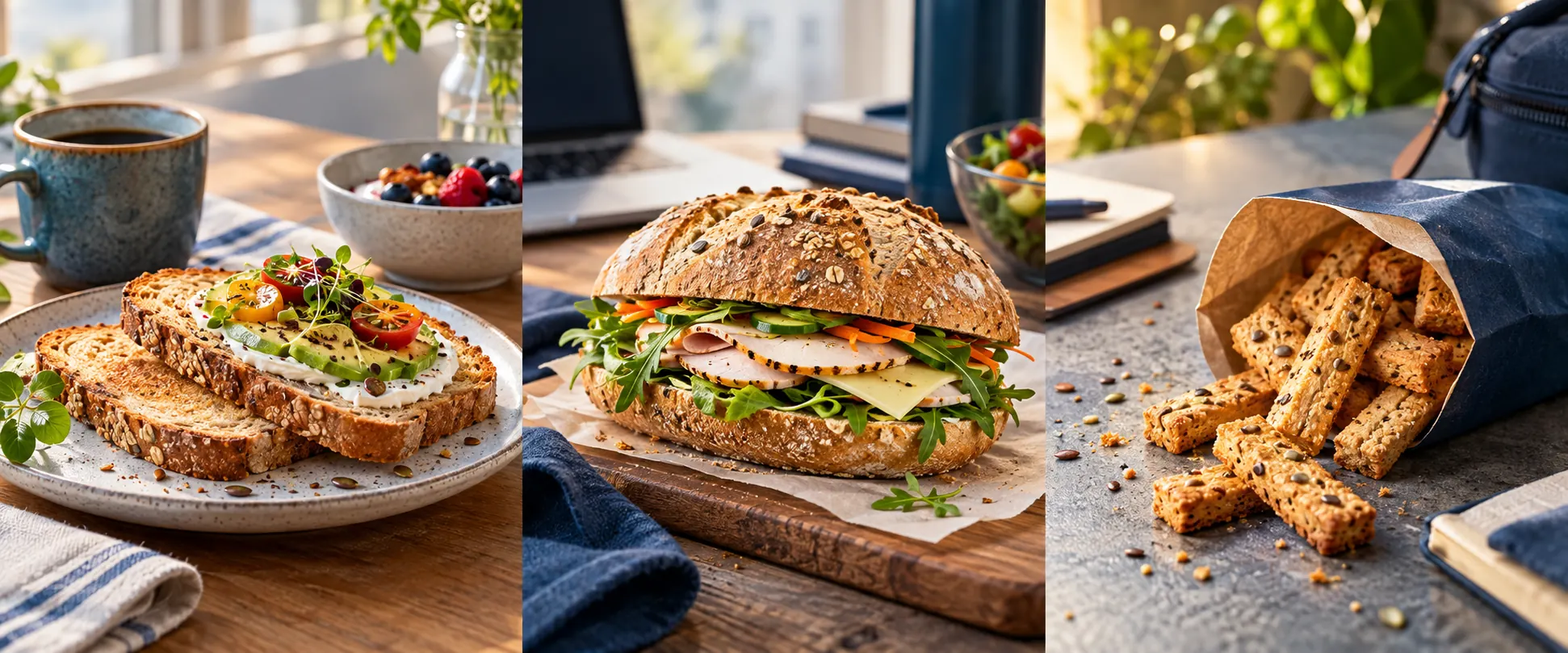
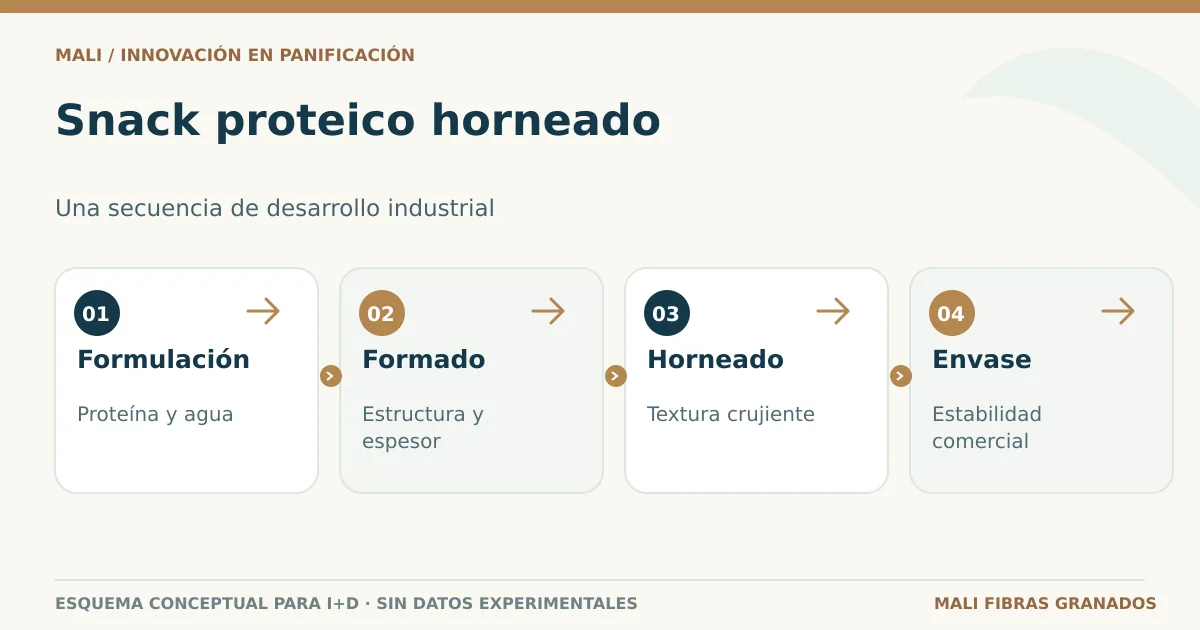
In its 2026 global bakery analysis, Innova Market Insights reports that three in five surveyed consumers incorporate protein into their diet, while 31% say protein content influences their choice of bread. This creates opportunities in breakfast, everyday consumption and convenience, provided the product is appealing. For audiences, messages and formats, see protein bakery beyond sport; applications in a different food matrix are covered in baked protein snacks.
When to move from prototype to industrial testing
Progress when the prototype simultaneously meets the nutritional objective, agreed sensory profile and reproducible process conditions. Protein content alone is not enough to approve development.
| Milestone | Evidence to be kept |
|---|---|
| Briefing closed | Format, consumer, portion size, target cost and claim |
| Prototype accepted | Volume, texture and sensory evaluation results |
| Repeat | Batch identification and variability check |
| Production-line trial | Performance during mixing, dividing, shaping and baking |
| Release | Nutritional validation, shelf life and final specifications |
If the product is dense or dry, use the protein bread troubleshooting guide. If you are still selecting raw materials, compare the sources of plant protein.
The shelf-life evaluation guide helps structure the assessment of finished bread. For a cakes and pastries project, see developing protein cakes and muffins: cake batter requires different criteria from bread dough.
Protein Pan
Protein Pan is the Mali Fibras Granados mix developed to make breads with high protein content. Industrial adaptation, process and formulation specifications are provided directly to each manufacturer.
See Protein Pan, a mix for high-protein bread, to assess its application in your bakery or production line.