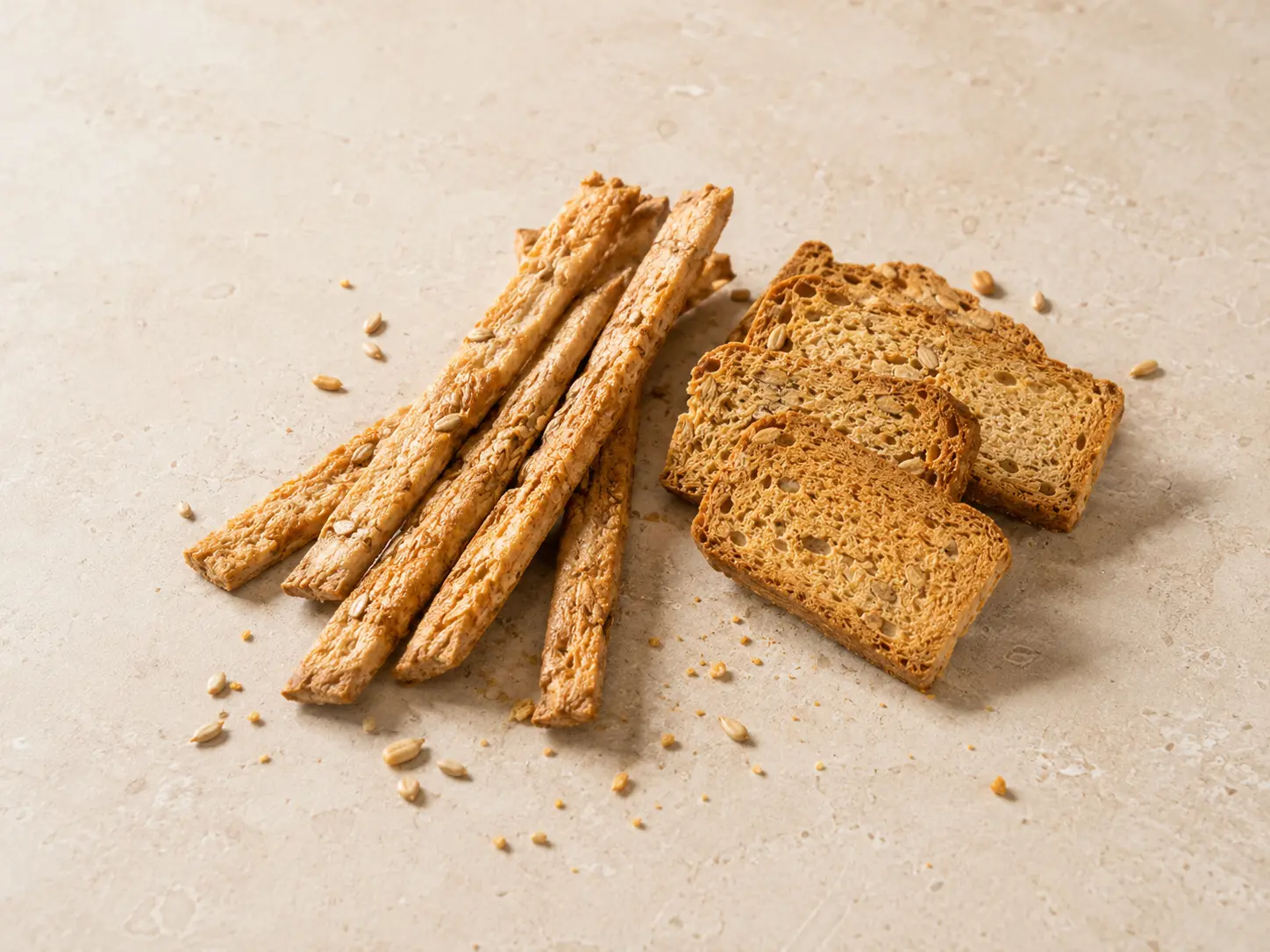
Product trends and development
GLP-1 and bakery: how the market is changing and the opportunities for fibre
What purchasing data show, why fibre deserves attention and the opportunities bread and snack manufacturers can explore in Spain and Portugal.
GLP-1-related medicines are changing food purchasing in the markets studied. For bakery businesses, the opportunity lies in understanding what shoppers value and responding with breads and snacks that combine composition, flavour and an appropriate format. Reports identify interest in fibre, but do not yet establish that these treatments are increasing sales of fibre-containing bread in Spain or Portugal.
This analysis by Mali Fibras Granados connects those signals with product range decisions for manufacturers, bakeries and brands. It distinguishes observed results from hypotheses that should be tested before investing.
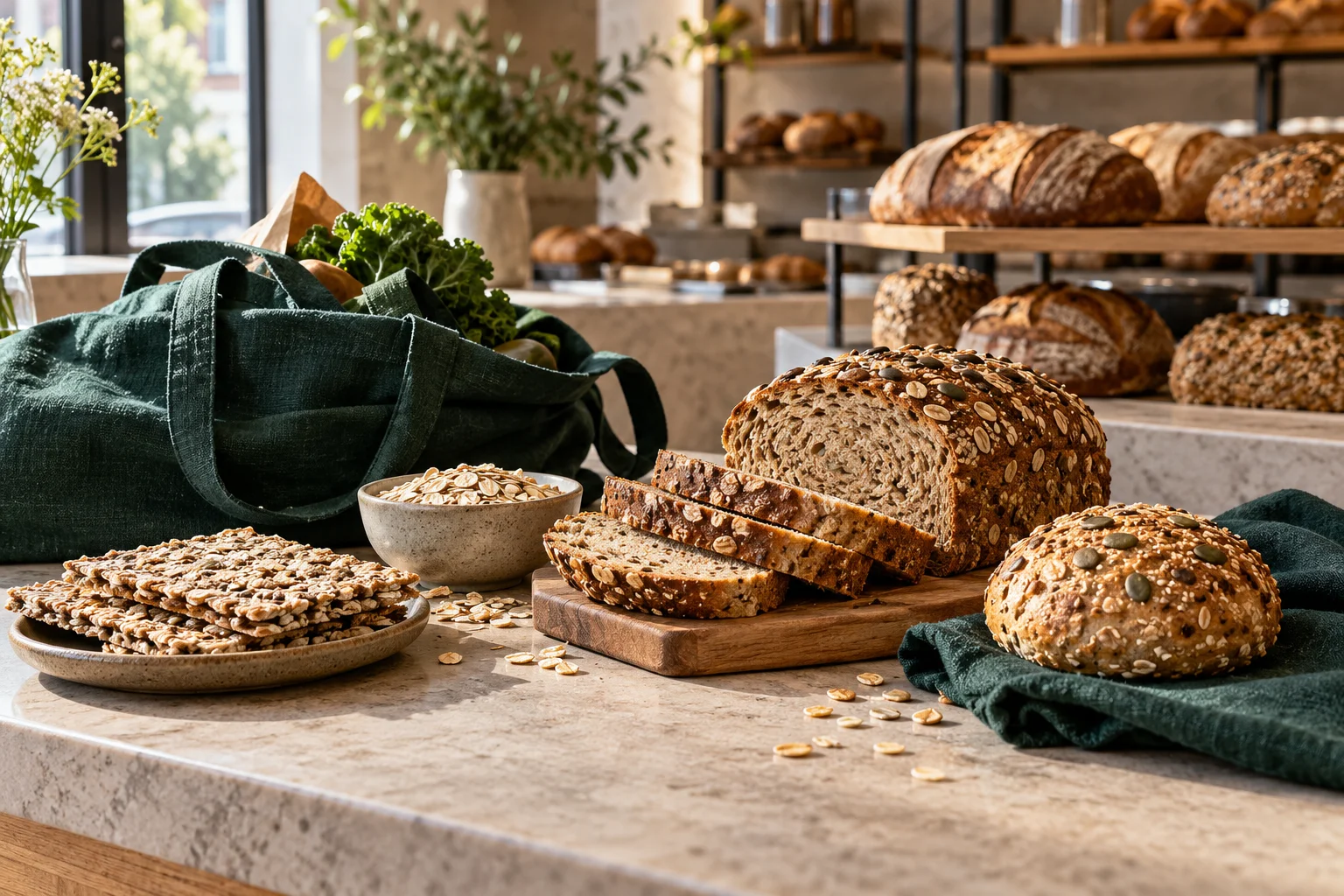
What are GLP-1 medicines and why do they matter to the food industry?
GLP-1 is a hormone involved in appetite regulation. Medicines such as semaglutide mimic its action; tirzepatide acts on GLP-1 and GIP receptors. Here, we use “GLP-1” as shorthand for the group covered by the market studies. [1]
For a food business, the relevant question is how shopping baskets, pack sizes, consumption occasions and the value attached to each product are evolving. The household also deserves consideration: a shopper may choose food for several people with different preferences.
Manufacturers can use this context to review their existing ranges. The starting point is a specific commercial need: breakfast, a sandwich, a meal accompaniment or a snack. Formulation follows once the target customer, sales channel and reason for repeat purchase have been defined.
What the data say about food purchasing
A study by Hristakeva, Liaukonytė and Feler, published online in December 2025, associated the start of GLP-1 use with a 5.3% reduction in US household spending on food for home consumption over six months. It measures household purchases, not individual intake. [2]
Cornell’s account includes declines in bread, baked goods and biscuits. The authors caution that the analysis cannot fully separate the effects of the medicine from other lifestyle changes. [3]
When interpreting the sources, it is useful to distinguish three types of information:
| Evidence | Source and scope | How to use it |
|---|---|---|
| Recorded purchases | US study; first published in 2025 | Distinguish the amount spent from the quantity consumed |
| Shopper preferences | Circana, United States, 2025 | Identify attributes that warrant commercial research |
| Stated intentions | BCG, survey across nine markets, 2026 | Develop scenarios without counting them as completed sales |
This distinction matters when allocating an innovation budget. A preference may justify buyer interviews or a concept test. An industrial investment also requires evidence on acceptance, price, cost, manufacturing capacity and the sales channel. The depth of each assessment should reflect the scale of the launch.
GLP-1 and fibre: why it deserves attention
Circana reports that these users seek products with more fibre and protein. BCG records an intention to spend more on fibre-rich and wholegrain foods. These are commercial signals; they do not quantify growth in fibre-containing bread. [4] [5]
For manufacturers, this raises a useful question: can a product with fibre provide a clear reason to buy for an everyday occasion? Answering it means comparing the benefit consumers understand with the flavour, appearance, size and price they are willing to accept.
Interest in fibre has other contexts, such as fibermaxxing in bakery and snacks. Examining both trends broadens the perspective, but does not allow all interest in fibre to be attributed to a medicine. A range should stand on its usefulness to the chosen audience, even if media attention shifts.
From a clinical perspective, the 2025 joint advisory from four scientific societies highlights nutritional adequacy, tolerance and professional follow-up. It does not validate a bread or fibre for everyone receiving treatment. [6]
What could change for bread, pastries and snacks?
Each category calls for a different question. Everyday bread competes for a place in household meals; a pastry also serves an occasion of enjoyment; a cracker is purchased for its texture, flavour and convenience. Sharing an ingredient does not make these propositions interchangeable.
Everyday bread: an easy-to-understand proposition
Exploring a bread with fibre can start with a product format that shoppers already know. Define what it offers compared with the product they currently buy, what it costs per occasion and whether it remains enjoyable to eat. The word “fibre” should be backed by verifiable information about the finished bread.
For consumers seeking information to help them choose bread, our bread and nutrition guides explore these criteria further. Market analysis, in turn, should connect them with the product range, channel and positioning.
Pastries and snacks: preserve the reason to buy
One working hypothesis is to compare formats and sizes that preserve enjoyment at an understandable price. Making a piece smaller can change its perceived value; enriching it can alter flavour and texture. It therefore makes sense to test the whole concept, including packaging and occasion, before deciding which attribute will lead the communication.
For crackers and breadsticks, repeat purchase will depend on the actual eating experience. The fibre target should be considered alongside crispness, shelf life and cost per saleable bag. These are proposed commercial development decisions, not winning formats demonstrated by the cited studies.
Four product range decisions a manufacturer can explore
The following matrix is a proposed analysis from Mali Fibras Granados. It links opportunities with specific checks; it does not present sales forecasts or the results of completed trials.
| Decision | Possible application | Evidence needed to proceed |
|---|---|---|
| Strengthen an everyday range with fibre | Loaf, roll or tin bread | Understanding of the benefit, acceptance and price |
| Combine protein and fibre | Sliced wholemeal bread | Final composition, flavour and fit within the range |
| Review size and presentation | Pieces and packs suited to the occasion | Actual use, perceived value and repeat purchase |
| Develop a snack with fibre | Baked crackers or breadsticks | Texture during storage and cost per saleable bag |
Choose between an existing product and bespoke development
An existing product can offer a starting point when its composition and appearance fit the project. Bespoke development allows a different combination of ingredients, format or flavour profile to be explored. In both cases, it helps to work towards one main objective and check that the other attributes support the proposition.
Our fibre solutions for breads and snacks help you compare these routes. Fibra Verde combines different sources of fibre and plant ingredients; Prebiomix incorporates chicory root fibre. The choice depends on the intended product, its recipe and its production process.
When a project brings together both nutritional objectives, Protein & Fibra Integral is another product to consider. Its product information gives indicative values for finished bread, which must be checked in the final application. These references describe bakery possibilities without attributing a therapeutic function to the mixes.
For ingredient selection and trial preparation, the guide to choosing fibres for bakery applications explains the technical criteria. The commercial opportunity must remain aligned with what the factory can produce consistently.
How to interpret the opportunity in Spain and Portugal
International data can guide questions, but the magnitude of the findings should not be transferred directly to Spain or Portugal. The sources used in this article do not provide a specific estimate of growth in fibre-containing bread attributable to GLP-1 in these two countries.
Before defining a product, we propose assessing the channel and shopper separately in each market. The same concept may require a different format, name, presentation or price. Translating the packaging does not, by itself, demonstrate that the proposition has the same commercial value.
Research can begin with professional buyer interviews and concept tests with consumers in the chosen channel. Ask which product the new line would replace, for which occasion it would be purchased, which benefit is understood and what price seems reasonable. A subsequent commercial pilot can track sales rate and repeat purchase under defined conditions.
It is also useful to distinguish volume from value: a product may sell fewer units at a higher price, or gain a stronger position within a shrinking category. To interpret the result, record units, weight, revenue and margin on a consistent basis for comparison.
From a trend to a bakery development project
A useful brief covers format, channel, consumer, nutritional target, sensory experience, price and manufacturing conditions. It should also specify which findings would justify proceeding and which results would require the concept to be revised. This gives marketing, purchasing, quality and R&D a shared basis for decisions.
We propose a sequence of work: check buyer interest, choose a starting point, run application trials and assess the product against a comparable reference. Before launch, review the overall composition, communication, shelf life and economic viability.
The article GLP-1 and bakery development decisions explores portion size, formulation and validation in more detail. This market analysis helps identify which opportunity merits reaching that stage.
To explore an application, tell Mali Fibras Granados which bread or snack you want to manufacture, the target market and your process requirements. You can learn about bespoke bakery mix development and agree a proposed trial programme with your team.
Frequently asked questions about GLP-1, fibre and bakery
How are GLP-1 medicines affecting the bakery market?
The cited studies show changes in purchasing in the markets analysed. For manufacturers, they justify reviewing the range, presentation and value proposition. The response of a particular category, country or product needs to be assessed separately.
Is there evidence of increased sales of bread with fibre?
The sources used do not demonstrate such an increase in Spain or Portugal. Distinguishing interest, purchase intention and completed sales is essential before presenting a market forecast.
What role do fibre and protein play in product development?
They can be composition targets for a new product. Their contribution to the finished food must be defined, alongside an assessment of flavour, texture, cost and communication. Their presence alone does not establish clinical suitability for someone receiving treatment.
What should a bakery manufacturer validate before launching the product?
Fit with the consumer and channel, sensory acceptance, recipe and process, final composition, shelf life, price and margin. A trend can open an opportunity; these checks help determine whether the product merits a launch.
Sources and references
- NIDDK. Medicines for weight management. — Institutional reference on mechanisms of action; this article is not a treatment guide. Back to text: 1
- Hristakeva, Liaukonytė and Feler. GLP-1 and changes in food demand. Journal of Marketing Research. — First published online: December 2025. Purchases by US households. Back to text: 1
- Cornell Chronicle. Changes in food purchases associated with GLP-1, December 2025. — Explanation of the preceding study and its limitations. Back to text: 1
- Circana. Research on shoppers using GLP-1 medicines, November 2025. — United States. This article uses the reported preferences without transferring the market forecast to Spain or Portugal. Back to text: 1
- BCG. GLP-1 and consumer behaviour, 2026. — Survey across nine markets: stated intentions, not verified future sales. Back to text: 1
- Joint advisory from four scientific societies on nutritional priorities during GLP-1 treatment, 2025. — Clinical reference defining the scope of the commercial analysis; it does not demonstrate demand for or efficacy of a bakery product. Back to text: 1