Product trends and development
Fibremaxxing: what it means for bakery and snack innovation
The tendency to increase fibre consumption opens up questions for manufacturers: what product to develop, how much a portion provides, and how to maintain flavour and texture.
Fibermaxxing is the name that receives in networks the tendency to deliberately increase fibre consumption. For an industrial bakery, a brand or a snack maker, it presents an opportunity for development: incorporate more fibre into everyday foods with a consumer experience that invites you to repeat. The first step is to turn that interest into a concrete reference and contrast it with the sales channel.
Another context worth exploring is the relationship between GLP-1, the bakery market and interest in fibre. These are related phenomena, but interest in fibre cannot be attributed entirely to medicines, nor does it demonstrate sales of a particular bread.
What is fibermaxxing and what signs are there in 2026
The Johns Hopkins Center for a Livable Future included fibre among food trends for 2026 in a February publication. In July, BENEO presented its fibermaxxing approach for manufacturers, focusing on selecting and combining fibres while maintaining sensory quality. The first source provides context; the second shows how an ingredient supplier is responding commercially.
They are signs of attention to fibre, especially in the United States. They do not quantify Spanish demand or predict the sales of bread. For a local project, you should check with distributors, buyers and customers which format, message and price fit your assortment.
What the bakery can contribute to this trend
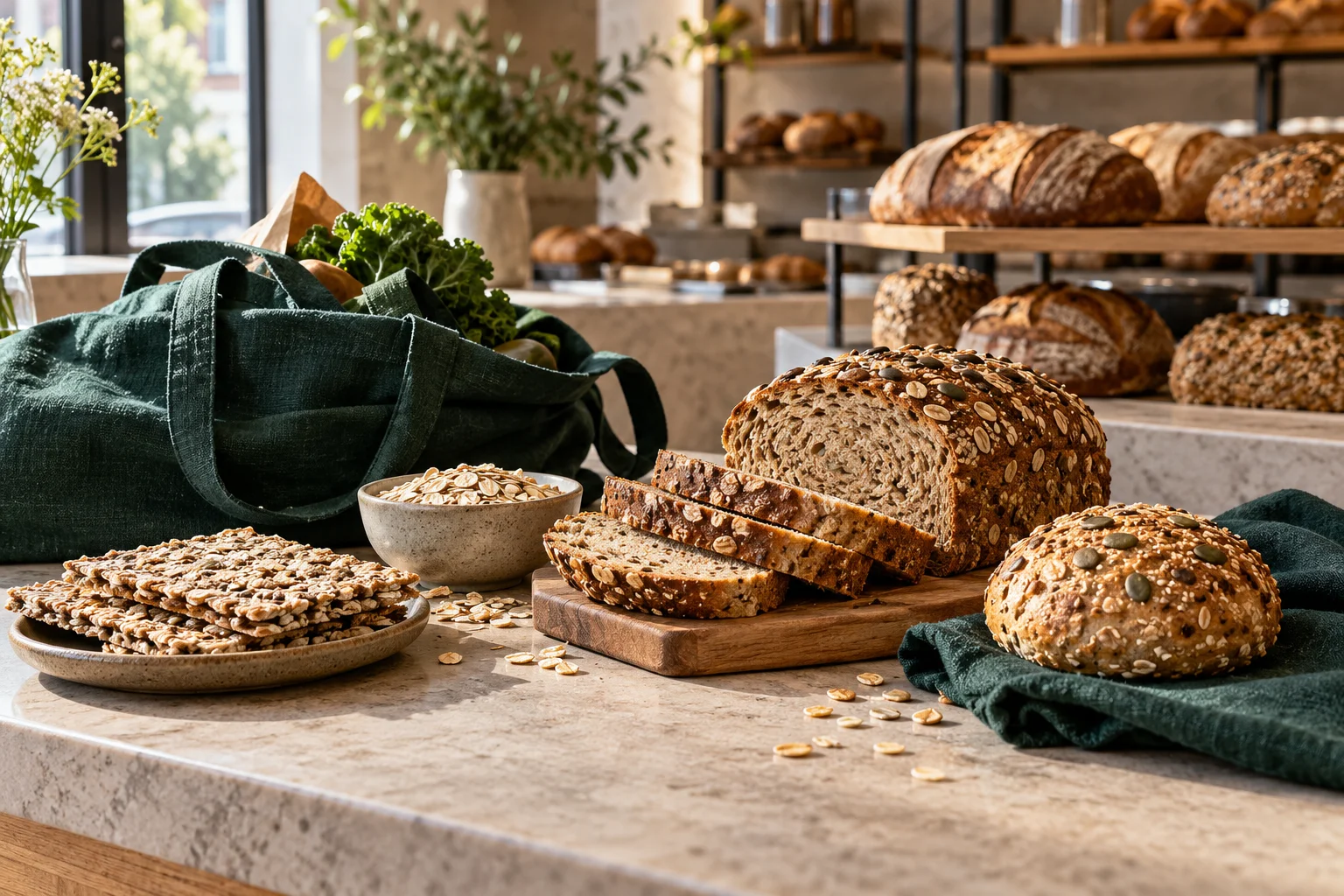
Bread, crackers and breadsticks allow us to propose changes within recognizable occasions of consumption: breakfast, sandwich and appetizer. Our development proposal is to start with one of those occasions and to choose a main attribute that can be clearly explained.
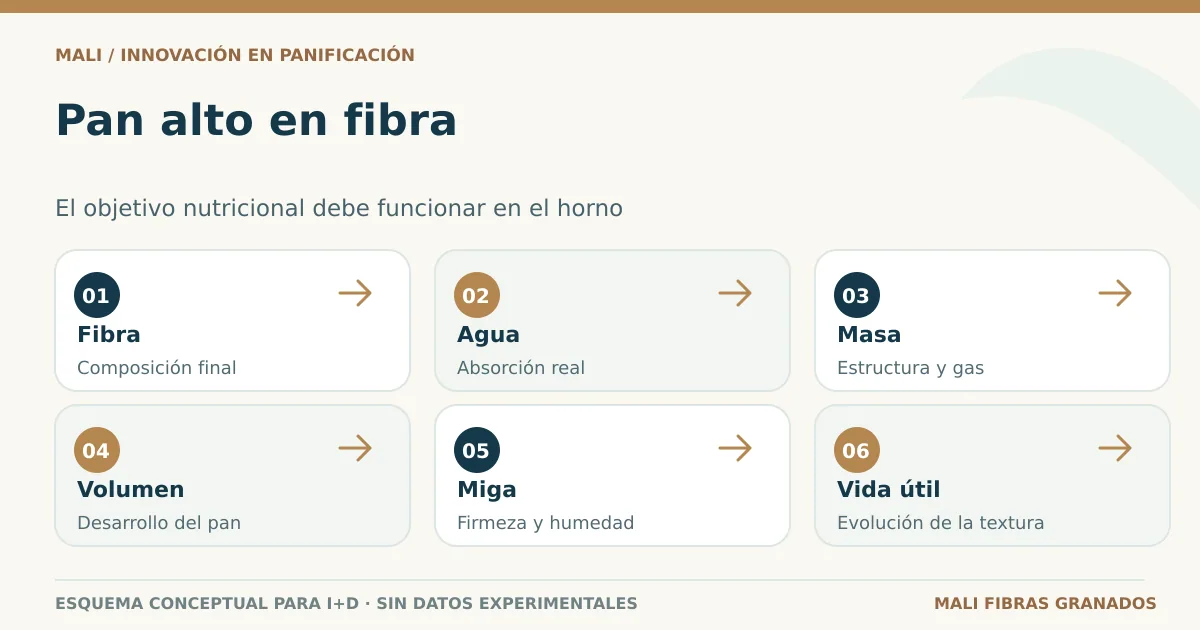
The value for the manufacturer lies in addressing composition, flavour, process and cost together. A high fibre figure loses appeal if bread is dry, a snack is hard or production creates unacceptable waste.
Four concepts a company can explore
These proposals are starting points for a trial and a commercial conversation, not a forecast of success or results of proven products.
| Concept | What to define with the buyer | Main product test |
|---|---|---|
| Daily bread high in fibre | Format and difference from the current range | Crumb, flavour and fibre of the final bread |
| Bread with chicory fibre | Identity of the ingredient and product message | bakery quality and composition after process |
| Crackers or high fibre breadsticks | Portion, flavour and occasion for consumption | crunch, breakage and stability in the container |
| Bread or snack with protein and fibre | Nutritional priority and position in the assortment | Ingredients compatibility, texture and cost |
For a sliced-bread format, see how to develop sliced bread with protein and fibre. For savoury snacks, the guide to crunchy high-fibre snacks explains the technical work.
Grams per serving and a pleasant experience
Work with the portion planned from the beginning. Illustrative example: a snack with 10 g fibre per 100 g provides 3 g in a 30 g bag. The calculation makes it possible to compare concepts with the same criterion; it does not represent a composition of Mali Fibras Granados or a consumption recommendation.
In briefing, it records grams per 100 g, weight of portion and overall composition. Includes salt, fat and other parameters relevant to the product. The formulation should consider the quantity and type of fibre within the expected consumption experience; pursuing the maximum quantity possible is not in itself a quality criterion.
Separate high fibre content and messages about gut microbiota
In Europe, “high fibre” has compositional conditions: at least 6 g per 100 g or 3 g per 100 kcal. These differ from the conditions for communicating a health benefit. The European rules for nutrition claims and applicable authorisations must be checked against the finished food.
A study of an ingredient does not allow every benefit to be transferred to bread. Nor should messages from US packaging be copied without reviewing the target market. The guide to inulin and prebiotic fibre explains how to distinguish total fibre, the ingredient and communication.
How to turn the trend into a manufacturing project
We propose this order of work to prevent the project from remaining in a marketing concept:
- Choose a reference: product, format, weight and occasion of consumption.
- Set a nutritional objective and a sensory reference that the customer can assess.
- Select fibres or a mix compatible with available ingredients and equipment.
- Compare a prototype with the reference product and record performance, texture and cost.
- Contrast proposal and price with the channel; complete composition, packaging and preservation before launch.
For procurement, compare cost per saleable unit and continuity of supply. In production, record handling and repeatability. In marketing, agree on a main message that the product can substantiate. The guide to choosing fibres for bakery applications supports technical selection.
Mali Fibras Granados Solutions to Develop fibre Products
Fibra Verde provides a basis for exploring breads with a combination of fibres, wholegrain ingredients, vegetables and seeds. Prebiomix uses chicory root fibre. For a different texture, appearance or application, we can assess a bespoke development.
The bakery fibre page brings together the options and application guides. The commercial starting point is your product: format, available ingredients, process, nutritional objective and sales channel.
Frequently Asked Questions
Is fibremaxxing a certification or a nutrition claim?
No. It's the name of a trend. The labelling and advertising of the food must be based on its composition and the conditions of the declarations used.
Do we need to develop a whole new product?
A new reference or improvement of an existing range can be considered. The decision depends on the assortment, the difference the customer seeks, and the feasibility of the change of recipe.
What information does Mali Fibras Granados need to start with?
Share the type of bread or snack, the process, the ingredients you already use, the fibre target and the flavour profile. Tell us about your fibre bakery project.
Sources and references
- Johns Hopkins Center for a Livable Future: Food Trends 2026 — Context published on February 18, 2026; it does not measure demand in Spain.
- BENEO: Fibermaxxing 2.0, July 7, 2026 — Primary commercial source about an ingredient supplier's response.
- European Commission: conditions for nutrition claims