Protein and Bakery
Developing high-protein, high-fibre sliced bread for supermarkets
From supermarket briefing to sliced bread: protein and fibre, tender crumb, sandwich resistance, shelf life, packaging and cost per unit.
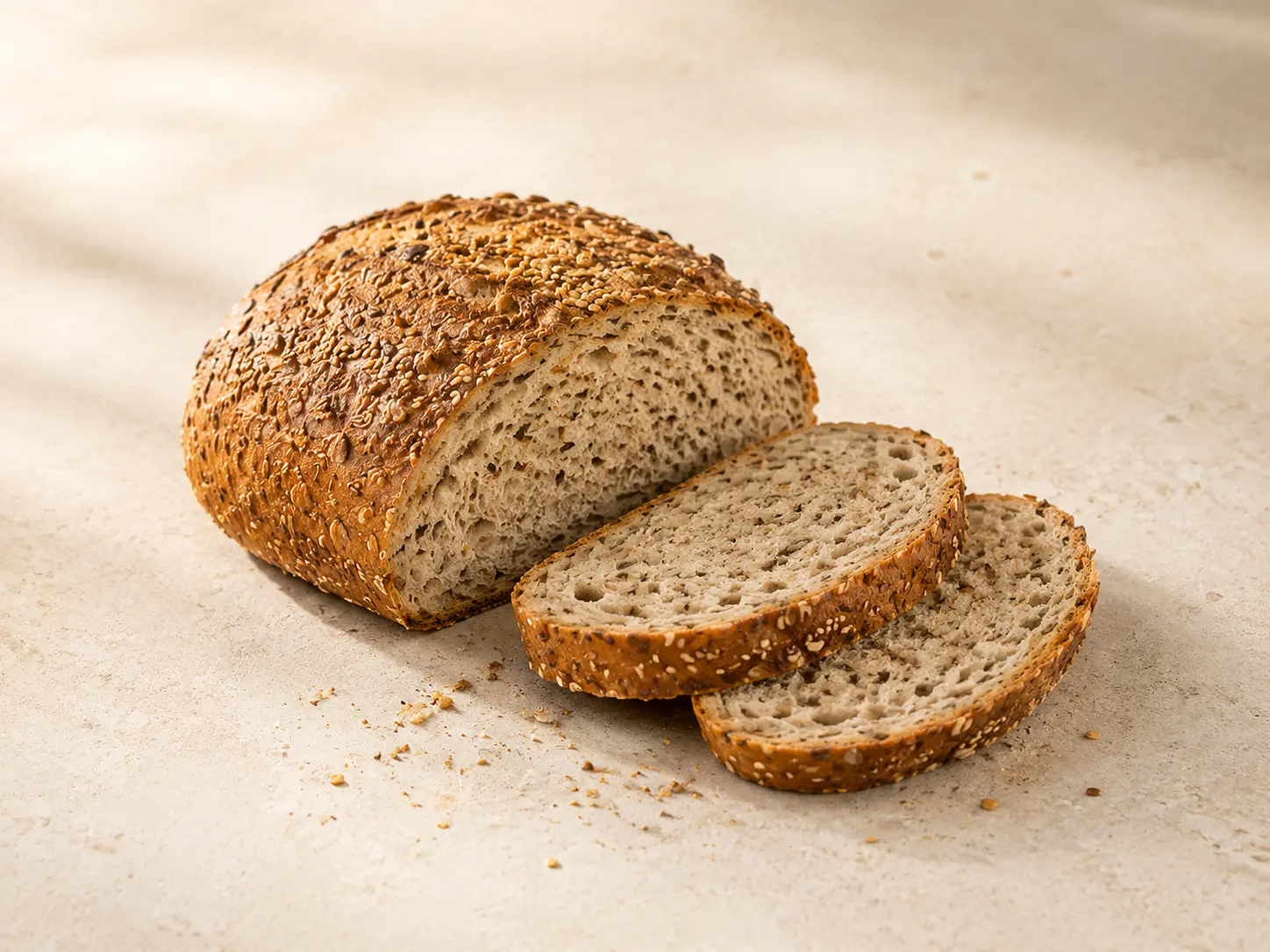
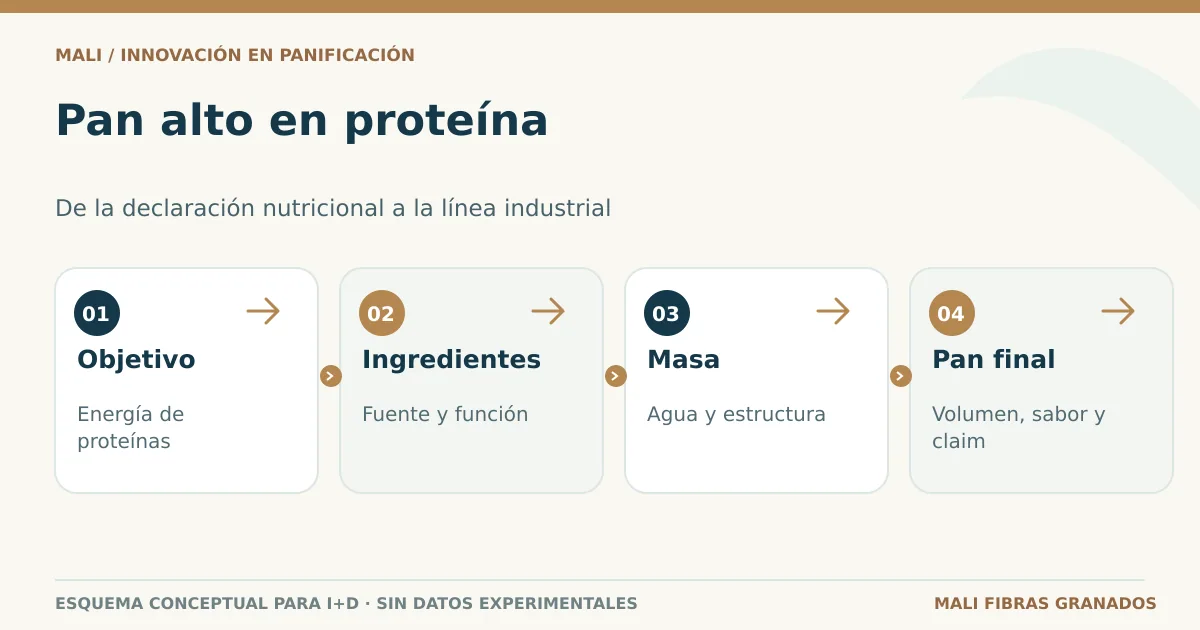
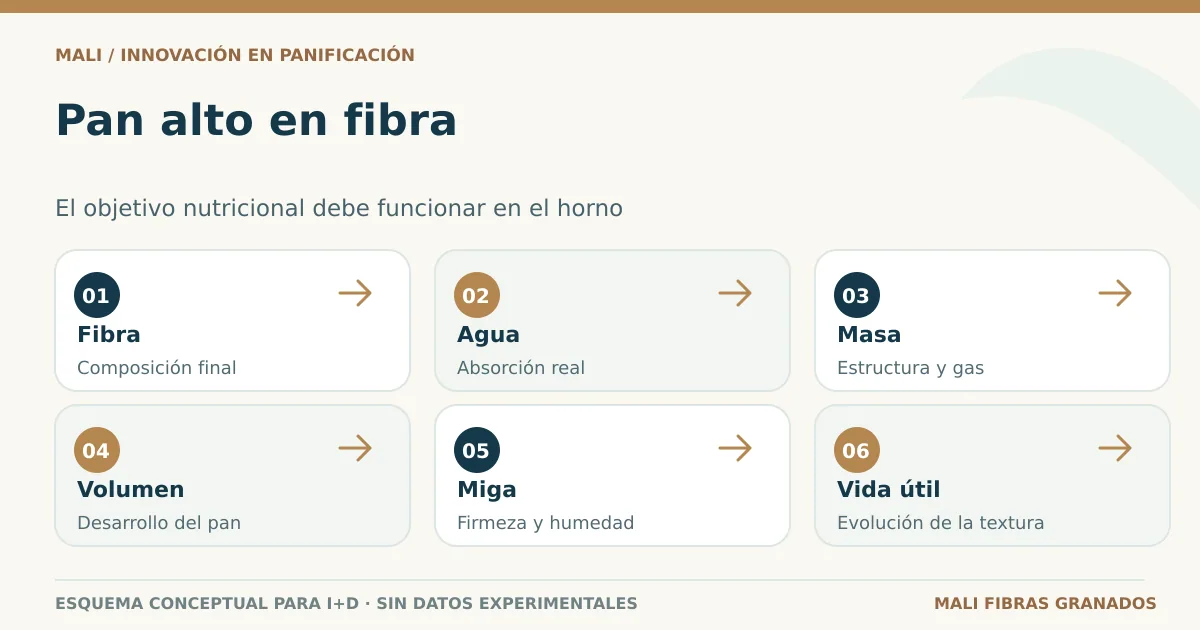
A high protein and fibre sliced bread should solve a daily purchase: make a toast or sandwich that you want to repeat. For an industrial bakery, a brand or a supermarket, the development brings together five decisions: composition, texture, slice, conservation and cost. The objective is to bring the two nutritional attributes to a recognizable and reproducible format in factory.
The combination aligns with the protein, fibre and convenience signals described by Innova in its 2026 global bakery analysis. This industry perspective supports exploring a concept; demand, acceptable price and sales turnover must be checked with the specific channel. This guide proposes development criteria for packaged sliced bread.
Define the bread the supermarket needs
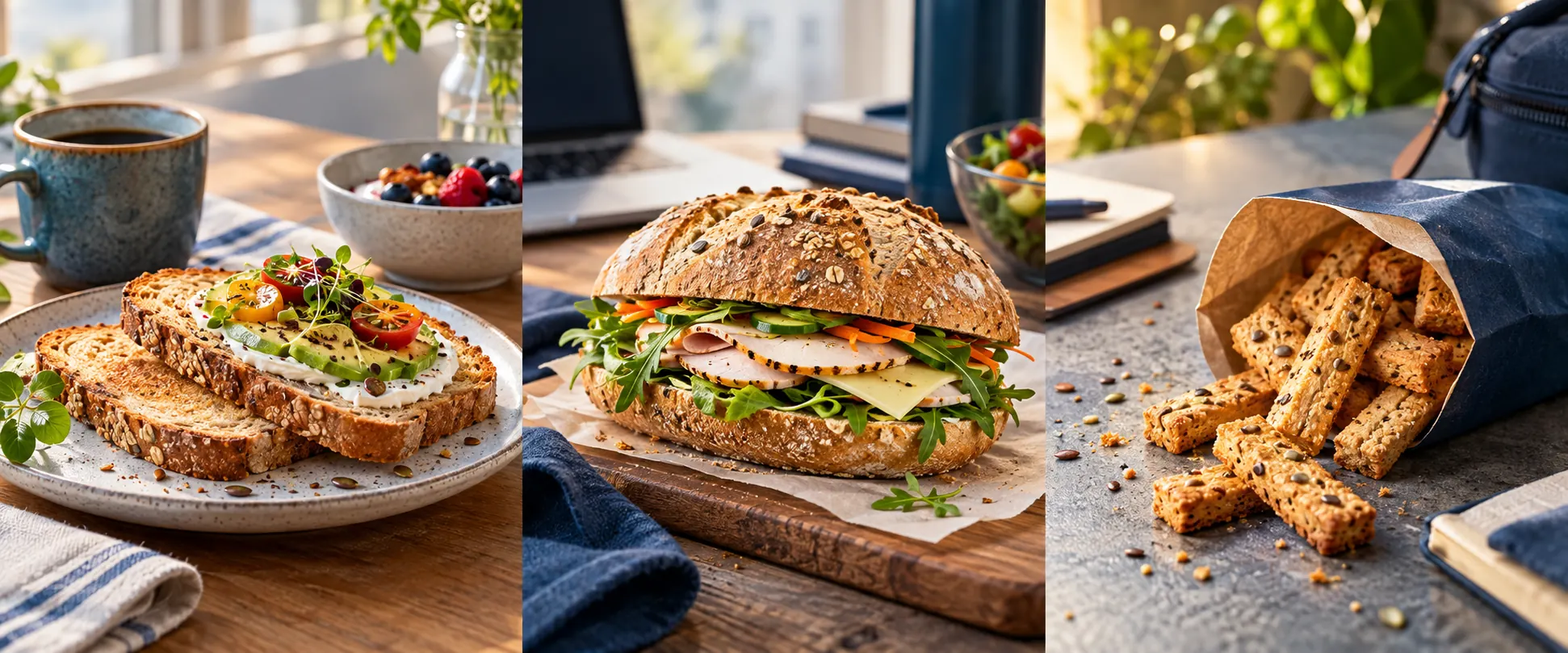
Before formulating, agree who will buy it, how it will be used and where it will be placed. A slice for sandwich requires resistance to filling; a toast can prioritize aroma and behaviour when heating. The range should also have a clear place with regard to the usual sliced bread and other special references.
| Decision of the briefing | What to agree with the customer |
|---|---|
| Main use | Sandwich, toast or both |
| Appearance | Clear or dark crumb; with or without visible seeds |
| Sales unit | Package weight, number and thickness of slices |
| Nutrition | Protein and fibre objectives of the finished bread |
| Distribution | Conservation conditions, logistics and shelf life required |
| Feasibility | Cost per pack, yield and line capacity |
If the project starts with a commercial opportunity that is still open, protein bakery for everyday consumption helps identify the eating occasion and audience.
Check the two nutritional objectives
In the EU, “high protein” requires at least 20% of the food’s energy to come from protein. “High fibre” requires at least 6 g of fibre per 100 g or 3 g per 100 kcal. Both conditions are verified on the finished bread, according to the European Commission criteria.
As an example of calculation, a bread with 15 g of protein and 250 kcal per 100 g obtains 60 kcal of protein: 60 divided by 250 equals 24 % of energy. If it also contains 6 g fibre per 100 g, it also reaches the fibre threshold. They are illustrative figures to understand the calculation, not the composition of a Mali Fibras Granados reference or a proposed formulation.
Product information can also state grams per slice using its actual weight. Quality must review nutritional information, allergens and the complete label for the version to be manufactured. Set formulation and control margins in line with process variability.
Choose the protein base and fibre function
Selection should reflect the desired result: flavour, colour, structure and nutritional profile. To compare sources, see plant proteins in bakery applications. Water requirements and dough performance are tested with the complete ingredient combination.
fibre can meet different goals. One project can simply seek high fibre content; another, incorporate chicory prebiotic fibre; another, develop a specific benefit on the intestinal transit. This priority should be defined before the solution is selected and the package message is drafted.
- Protein Pan: starting point for high protein breads.
- Protein Pan Sin Semillas: alternative when an appearance without visible seeds is of interest.
- Prebiomix: prebiotic chicory inulin fibre, linked to the gut microbiota.
- Fibra Verde: high-fibre bread that helps the intestinal transit, with a combination of fibres, integrals, brans, vegetables and seeds.
A solution that collects protein and fibre is formulated as a complete project. Choosing these starting points does not imply mixing bags directly or transferring their reference values to any recipe. Mali Fibras Granados studies the format and the line to propose the right base or development.
From briefing to retail shelf
Four decisions for a slice that invites repeat
- FormatSandwich or toast; weight, thickness and appearance
- CompositionCheck protein and fibre in the finished bread
- ExperienceTernura, resistance, slice and roasting
- Launchshelf life, packaging, repeatability and cost
Development guide: the acceptance criteria are agreed with the manufacturer and the channel.
Get a tender slice that supports the use
Define texture using a reference product and repeatable tests. “Soft” can mean different things to R&D, Marketing and the buyer. It is more useful to agree how the crumb compresses, how it recovers its shape and what happens when a slice is folded or a filling is spread.
| Proposed test of implementation | What to Observe |
|---|---|
| Slice freshly cut | Uniformity, breakage and loose crumbs |
| Prepared sandwich | Resistance to fillings and ease of biting |
| Toasted using a defined cycle | Colour, aroma, hardness and acceptance |
| Sliced during storage | Evolution of firmness and dryness |
| Package Handling | Deformation, separation and recovery of slices |
These development trials must be adapted to the intended use. Record weight, thickness, time and conditions to compare versions. The volume and texture troubleshooting guide helps organise trials if the crumb becomes dense, dry or fragile.
Transfer the prototype to the sliced-bread production line
The tin, dough weight and fermentation profile form part of the specification. During scale-up, record performance in mixing, dividing and shaping; tin filling; consistency after baking; cooling; and entry into the slicer. Conditions are defined for the specific equipment.
Repeat a satisfactory initial trial under representative conditions. Compare units from the same batch and across different batches. Check that the chosen thickness produces intact slices and that losses from end pieces, slicing and rejects fit the cost target. The industrial protein bread development guide explores formulation and process variables in more detail.
Validate shelf life and container from the beginning
The shelf life is set for the chosen recipe, process, packaging and distribution conditions. Evaluate sensory quality and microbiological safety with a quality-defined plan. Total humidity and water activity are different measures; none of them alone substitutes for product validation.
EFSA’s date-marking guidance explains that storage stability depends on food characteristics, process and expected conditions. For this project, set checks at the start, during storage and at the end of the proposed period. Include performance after opening where relevant, and check packaging closure, integrity and suitability.
There is no universal number of days that can be attributed to a sliced bread for carrying a protein mix or a specific fibre. A recipe or packaging modification requires an assessment of whether the validation is changed.
Compare cost per saleable pack
Procurement must assess formulation alongside yield, slicing, packaging and waste. Compare alternatives at the same net weight and agreed quality. A cheaper raw material can lose that advantage if it increases rejects or processing time.
Include raw materials, packaging, production and logistics items within the scope of the calculation, then divide by the number of packs produced. Use a consistent accounting basis to avoid double counting. The guide to premixes versus individual ingredients helps compare total cost in use.
Approve the launch using five pieces of evidence
| Team | Evidence to close |
|---|---|
| Marketing and Customer | Format, proposal and target price accepted |
| R&D | Composition and eating experience meet the brief |
| Production | Repeatable manufacturing and slicing |
| Quality | approved shelf life, specification and package information |
| Purchases | Viable supply and cost per package |
Develop your sliced bread with Mali Fibras Granados
Mali Fibras Granados works with industrial bakeries, manufacturers, brands and supermarkets to turn nutritional objectives into bakery products. We can assess a protein base, a fibre solution or a bespoke development to meet both requirements.
To begin, share the format, pack weight, desired appearance, nutritional objectives, production line and shelf life required by the channel. This brief allows us to define the trials and identify a suitable solution. Request information for your high-fibre, high-protein sliced bread project.