Product trends and development
Functional bakery ingredients: options for new products
Protein, different types of fibre and plant sterols open up product opportunities. A guide to choosing ingredients for benefit, technological feasibility and communication conditions.
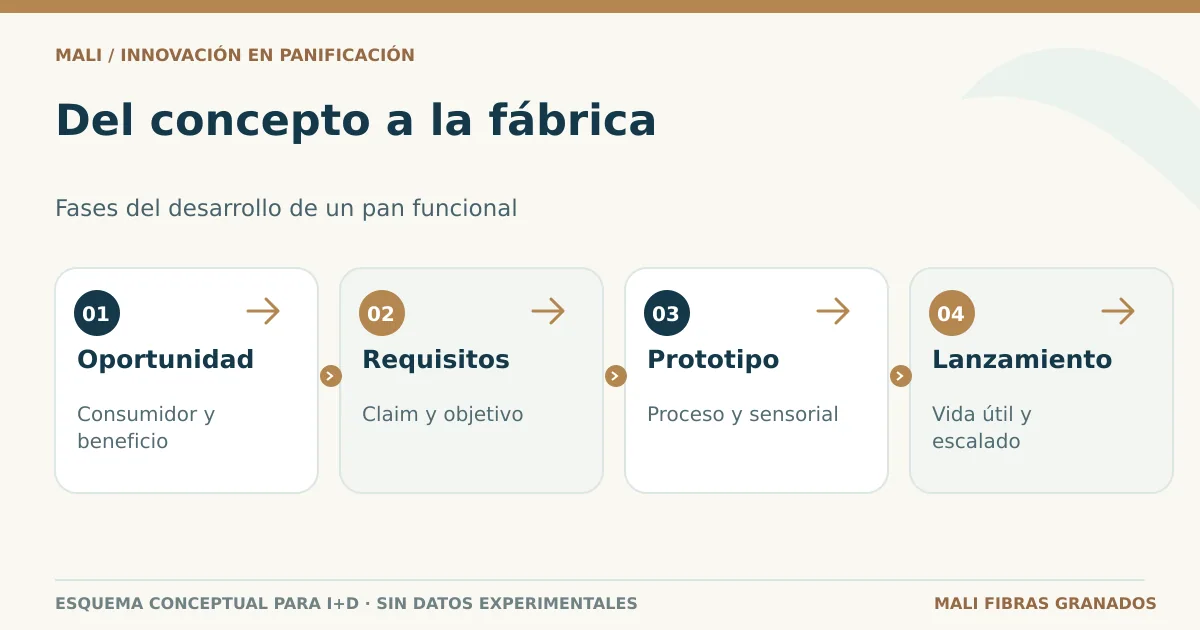
Protein, fibre and plant sterols enable the development of breads and snacks with different nutritional profiles. For R&D and procurement, the question is which benefit is sought and which ingredient can provide it without compromising the process, flavour or texture. This map compares options; the method for turning an opportunity into an industrial product is explained in how to develop a new functional bread.
In summary
- Plant protein, insoluble fibre, soluble fibre, inulin, beta-glucans and phytosterols respond to different objectives.
- The technological function of the ingredient matters as much as its nutritional record.
- A statement about the finished food requires fulfilling its conditions; it is not deduced from the presence of the ingredient.
- You should first choose the benefit, the format and the process and then compare raw materials.
Plant protein: enrich breads and snacks
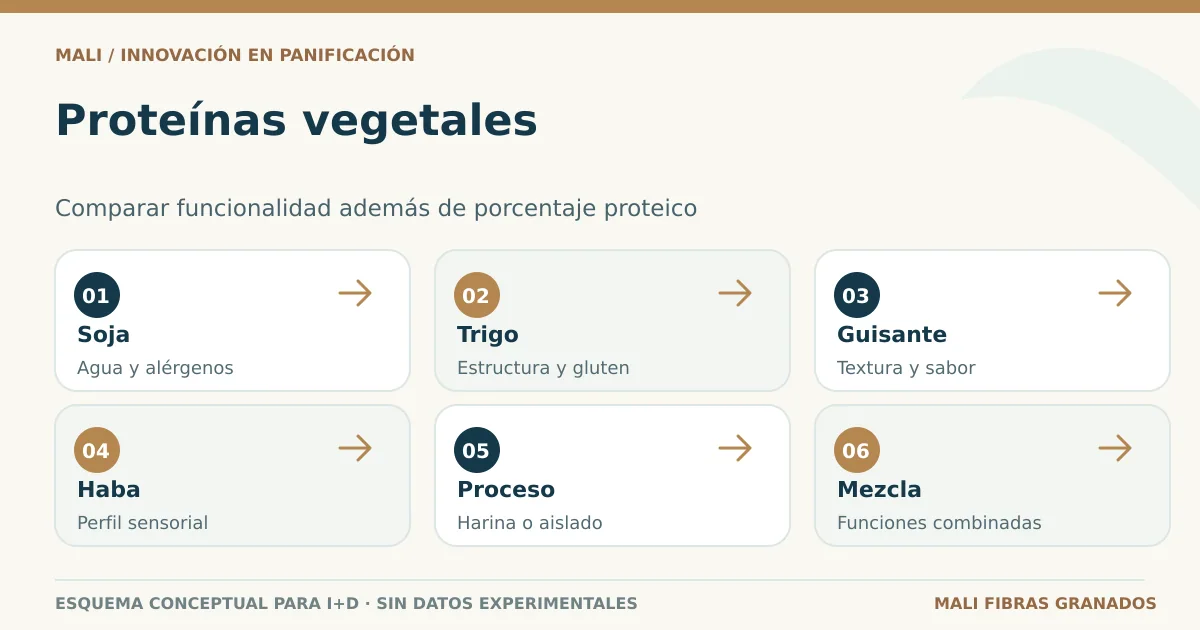
Soya, wheat, pea, bean and other sources can increase the proportion of energy from protein. According to Regulation (EC) 1924/2006, “high protein” requires that at least 20 % of the energy value of the food comes from protein. Measuring grams of protein per 100 g is not enough.
Each ingredient can affect hydration, gluten, volume and flavour. Pea protein isolate and wheat gluten are not interchangeable simply because they have similar nutritional values. The comparison of plant proteins addresses ingredient selection; how to develop high-protein bread covers the finished product. Protein Pan relates to protein bread, while Protein Snacks is designed for convenient baked formats.
Fibra Verde: combination of fibres and intestinal transit
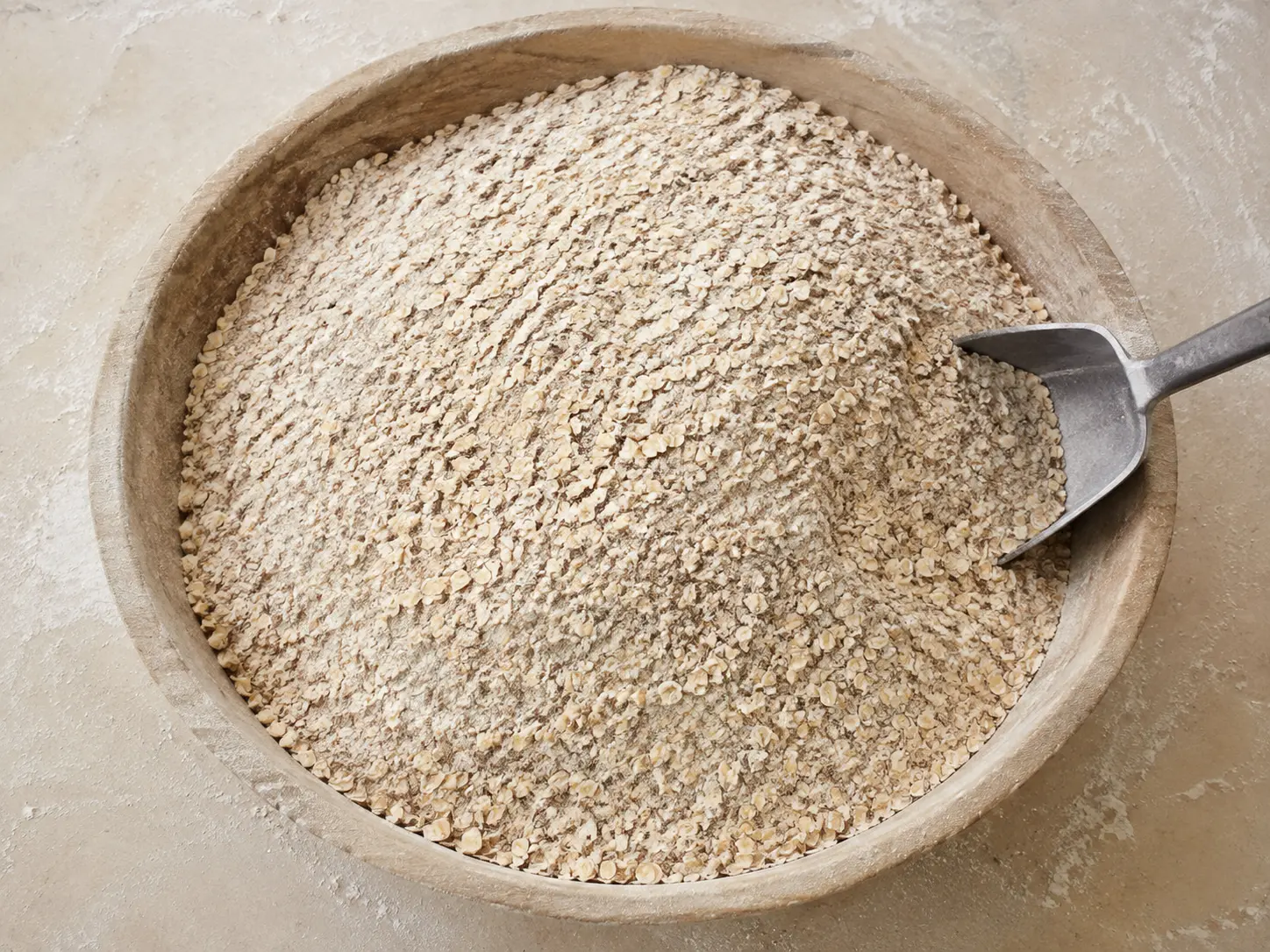
Transit-oriented development does not have to be built around a single raw material. Fibra Verde combines soluble and insoluble fibres, wholemeal flours, different brans, dehydrated vegetables and seeds. This architecture allows working together fibre content, water, structure, taste, colour and product identity.
Fibra Verde supports intestinal transit and brings together a wide range of fibres and plant ingredients. The complete combination provides its nutritional profile, baking performance and product identity. To explore one of its components, see the role of bran within a complete solution. A fibre-rich raw material alone does not automatically make any bread “high fibre” or reproduce Fibra Verde.
Atlas of solutions
Choose by function, not fashion
- ProteinsComposition and dough
- Fibra VerdeCombination and transit
- inulinPrebiotic fibre
- Beta-glucanosViscosity
- phytosterolsCholesterol
- IntegralCereal and flavour
Each solution requires assessing nutritional objective, technological compatibility and communication.
Soluble fibre, inulin and gut microbiota
‘soluble fibre’ groups different materials. Its viscosity, interaction with water and technological effect depend on composition and treatment. The chicory inulin is especially interesting for its application in products with prebiotic fibre. Prebiomix contains this fibre and is linked to the study of gut microbiota.
The concept of a prebiotic and the claims that can be communicated are not equivalent. Inulin and prebiotic fibre in bakery applications explores this distinction and the effects on dough. Formulation work must verify both baking performance and the fibre content of the finished product.
Oat and barley beta-glucans
Beta-glucans are polysaccharides found in oats and barley, among other sources. Their molecular mass and solubility influence viscosity and performance during mixing, fermentation and baking. Research also describes structural changes during processing. If a nutrition or health claim is intended, check the raw material, final quantity and specific legal conditions; this article does not attribute beta-glucans to any Mali Fibras Granados mix.
phytosterols: a different functional objective
Plant sterols are used for a cholesterol-reduction concept, rather than primarily to increase fibre or protein. A European claim is authorised under specific conditions. Food category, daily dose, portion size and labelling should be defined before formulation. Phytosterols in bakery applications sets out the technical and regulatory framework; Fibracol is the related Mali Fibras Granados solution.
Whole cereals, seeds and other vegetables
They can provide texture, flavour, fibre, colour and differentiation. Fibra Verde integrates them through wholemeal flours, seeds and dehydrated vegetables into a solution with a defined objective, rather than treating them as decorative additions. Not every advantage becomes a nutrition claim: “wholemeal”, “source of fibre” and a health claim describe different things. The finished product and target-market rules determine what can be said.
How to narrow the selection
| Question | Project decision |
|---|---|
| What main benefit do we want? | fibre, protein, gut microbiota or cholesterol |
| What food will be sold? | Baked bread, cracker or snack |
| What communication do we want to use? | Verify claim and applicable conditions |
| What line exists? | Hydration, kneading, fermentation and oven |
| What does the consumer accept? | Volume, texture, taste and portion |
| What does procurement need? | Specification, allergens, supply and total cost |
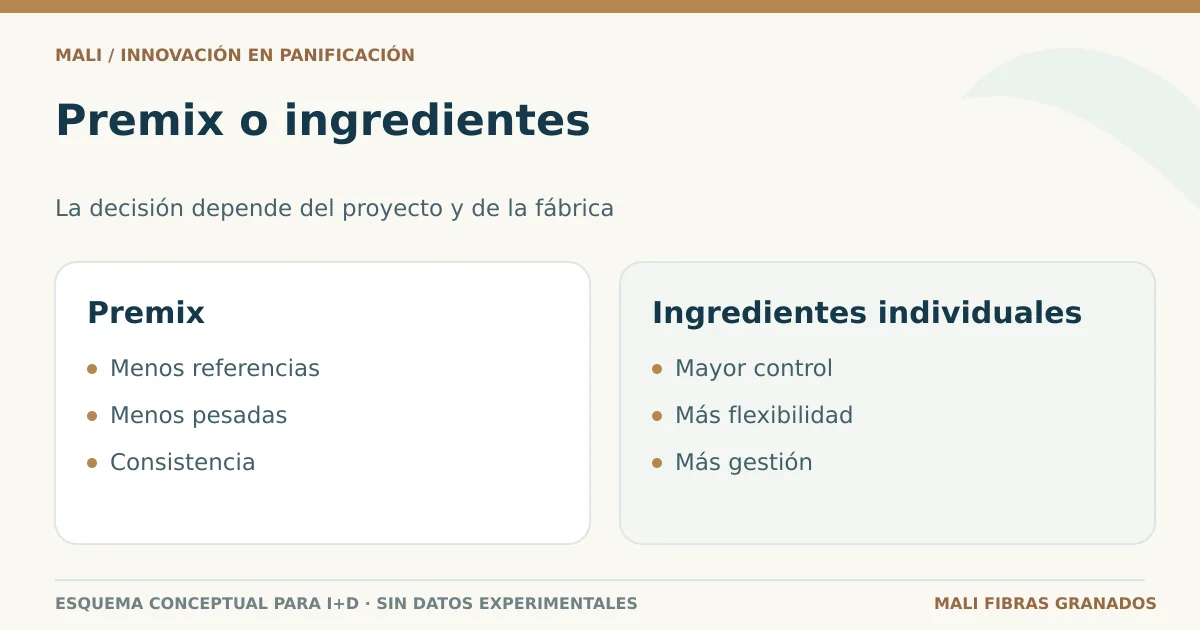
Once the ingredient family has been chosen, decide whether to formulate with individual ingredients or a premix. Mali Fibras Granados works across five areas: Prebiomix for prebiotic fibre, Fibra Verde as a system of fibres and plant ingredients focused on intestinal transit, Fibracol for phytosterols, Protein Pan for protein bread and Protein Snacks for baked protein snacks. Specific developments are assessed with each manufacturer.
Selection by function, not fashion
The first selection should be reduced to those families that can solve the target. Then their behaviour is contrasted with the installation and positioning of the client.
| Project objective | Family or system to be studied | Decisive check |
|---|---|---|
| Protein bread | Protein system for bakery | Protein energy and sensory quality |
| High-fibre bread | Combining fibres and whole ingredients | Final fibre, water, volume and texture |
| Prebiotic territory | inulin and other characterised fibres | Evidence of the ingredient and applicable communication |
| Cholesterol | Functional ingredient with specific conditions | Category, content, portion and labelling |
| Differential ingredient | Legume, cereal or co-product | Safety, supply and actual application |
This map helps you choose a function. The ingredient guide for 2027 then helps prioritise the evaluation work.
Set priorities for your next product range
This guide compares the functions of ingredient families. To decide which samples to request and which trials to include in your next plan, see ingredients for bakery innovation in 2027.