Product trends and development
Bread shelf life: what bakeries should validate when developing or reformulating a product
What an industrial bakery should check for safety, texture and preservation of a new or reformulated bread, with a trial tracking template.
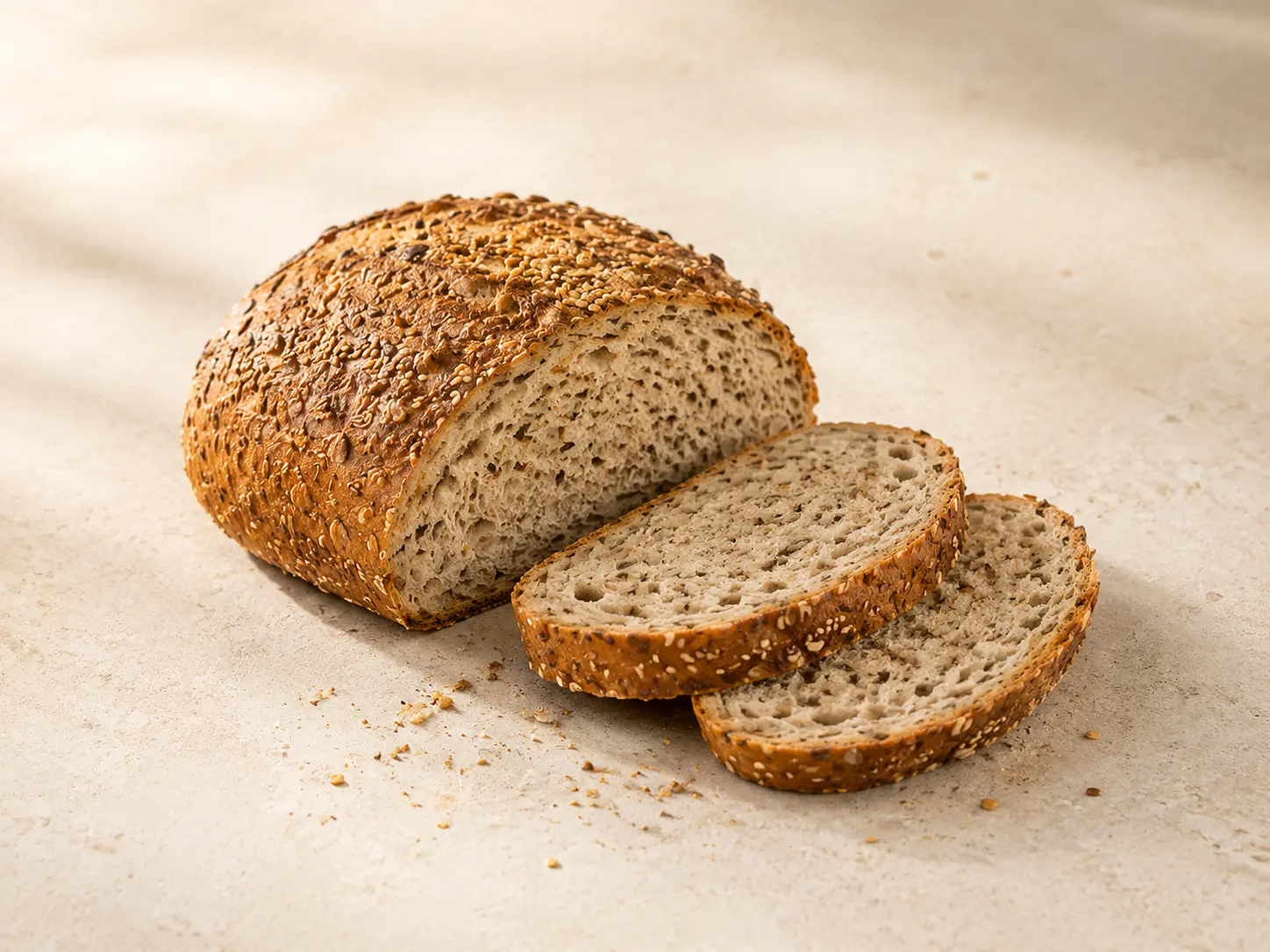
Bread shelf life is not determined by a single ingredient. It is established for a specific product, process, packaging and storage conditions. Evaluation must consider both safety and quality: bread may remain soft while becoming unsafe, or lose consumer acceptance because of texture before visible spoilage appears. [1] [2]
For R&D and Quality, the question is not just "how many days does it last?" It's what limits the duration of the product and what to check before setting its marketing period and the appropriate date marking.
This guide proposes a framework for organising that assessment. It focuses on finished bread, rather than storage of the bagged mix.
What Shelf Life Means in Bakery
It is appropriate to separate these dimensions, which are often grouped under the word 'freshness':
| Dimension | What are we evaluating? | What does not allow us to conclude alone |
|---|---|---|
| Microbiological safety | The hazards relevant to that food and its evolution under the envisaged conditions. | That bread without visible mould is necessarily safe. |
| Microbiological spoilage | Deterioration by micro-organisms that may limit food acceptance. | That deterioration and health hazard are interchangeable concepts. |
| Texture quality | Firmness, elasticity, crumbliness, crust and chewing experience. | That a soft crumb guarantees safety. |
| Sensory and commercial quality | Taste, aroma, appearance and acceptance for the intended use. | That a good first-day assessment will hold through the end of distribution. |
Not all breads have the same limiting factor. Define the format, recipe and marketing conditions before deciding what to measure. Validation means obtaining and documenting evidence of product performance, rather than copying the shelf life of a similar product. [1]
Why bread can harden even if it is packed
Bread staling is not simply a matter of “losing water”. During storage, starch organisation also changes and water is redistributed within the structure. Research on white bread has observed differences in firmness and starch recrystallisation associated with this redistribution between crumb and crust. [3]
Therefore, increasing moisture or changing the bag alone does not guarantee a more pleasant crumb. An improvement should be contrasted with the reference product and with a constant evaluation method.
Investigate the actual defect first: firming, loss of crunch, crumbling and microbiological spoilage are different problems and do not necessarily require the same response.
Moisture and water activity: two different data
Moisture content expresses the amount of water in a food. Water activity (a_w) is the ratio between the vapour pressure of water in the food and that of pure water, measured at the same temperature and at equilibrium. It helps assess the availability of water for processes such as microbial growth; it is not a moisture percentage. Two products with similar moisture content can have different water activity. [4]
The a_w measurement must be interpreted alongside factors such as pH, formulation, processing, packaging atmosphere and storage. On its own, it does not replace a safety assessment. It should not be inferred from perceived moistness or fibre percentage either. [2] [4]
For the development team, the practical consequence is simple: assess composition, texture and stability separately, rather than treating them as interchangeable indicators.
Evaluation map
Safety and quality: evaluating the whole
The variables are related. This map organizes the evaluation; it is not a causal formula nor does it guarantee a duration.
What variables should be recorded in a test?
We propose a record that reconstructs what was made and how it was assessed. The industrial bakery’s internal parameters do not need to be made public.
| Block | Information we propose to register |
|---|---|
| Output | Format, weight, slice or whole, added ingredients and intended use. |
| formulation | Code and recipe version; changes with respect to the reference product. |
| Process | Batch identification and internal record of production, cooling and handling. |
| Packaging | Material, closure and, where appropriate, atmosphere system used. |
| Storage | Conditions tested and corresponding to the planned distribution and sale. |
| Evaluation | Methods, moments of control, acceptance criteria and responsible. |
The formulation includes every component, including the mix. Technological results should not be attributed to a single ingredient, preservative or package without assessing the whole system. This does not remove the food business operator’s responsibility to substantiate the safety and shelf life of the marketed product. [1]
The role of packaging and preservatives
Bread research has shown that different packaging solutions can produce different storage results. Those results apply to the tested materials, products and conditions; they do not support promising the same shelf life for every bread. [5]
Similarly, using a preservative requires checking that it is authorised for the food category and applicable conditions of use, as well as assessing its performance in that product. [9] A preservation system does not replace hygienic practices, and good microbiological control does not necessarily prevent crumb firming. [1] [3]
Our recommendation is to compare alternatives with a defined goal, instead of changing both recipe, process and packaging without a design that allows interpreting the result.
What changes when you incorporate protein or fibre
When a rich bread is developed, it is not advisable to inherit automatically the date of the previous recipe. The result of the new product needs to be reviewed.
A study of psyllium in gluten-free bread observed changes in firmness and texture development during storage. It illustrates how reformulation can alter product performance, rather than proving an effect for all fibres: the same result cannot be attributed to inulin, bran or a Mali Fibras Granados mix in wheat bread. [6]
For a protein bread or fibre project, we propose to compare:
The initial product. Have volume, firmness, crumb cell structure or acceptance changed?
Its development over time. Does the difference persist, increase or reverse during storage?
The full result. Are the nutritional objective, the expected quality and the safety criteria defined reached simultaneously?
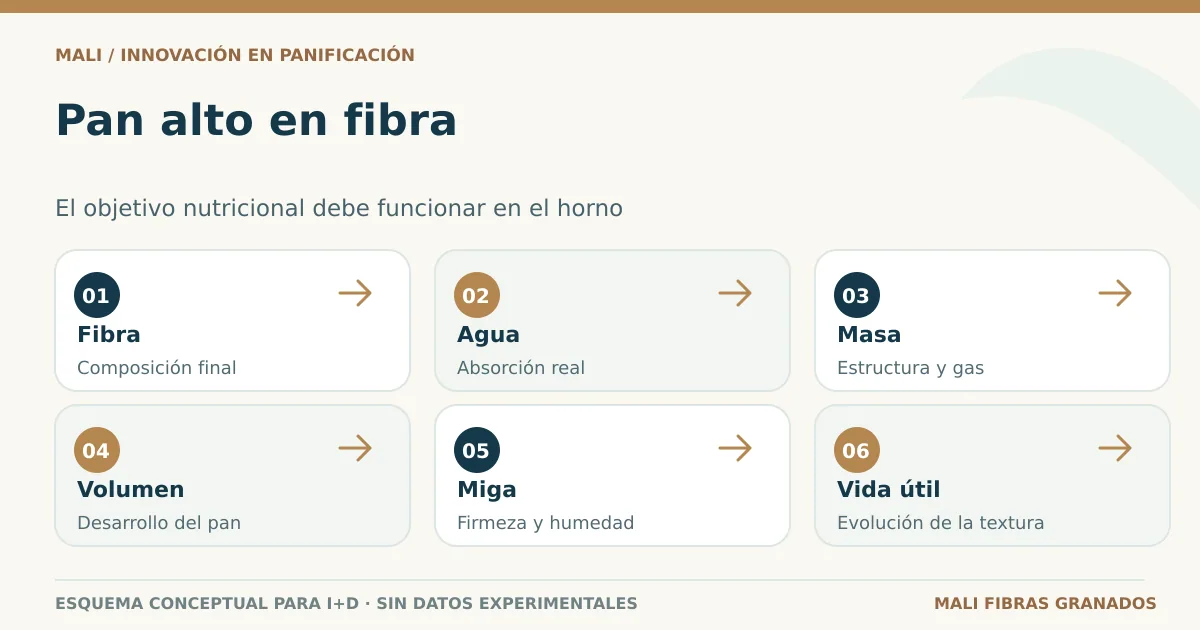
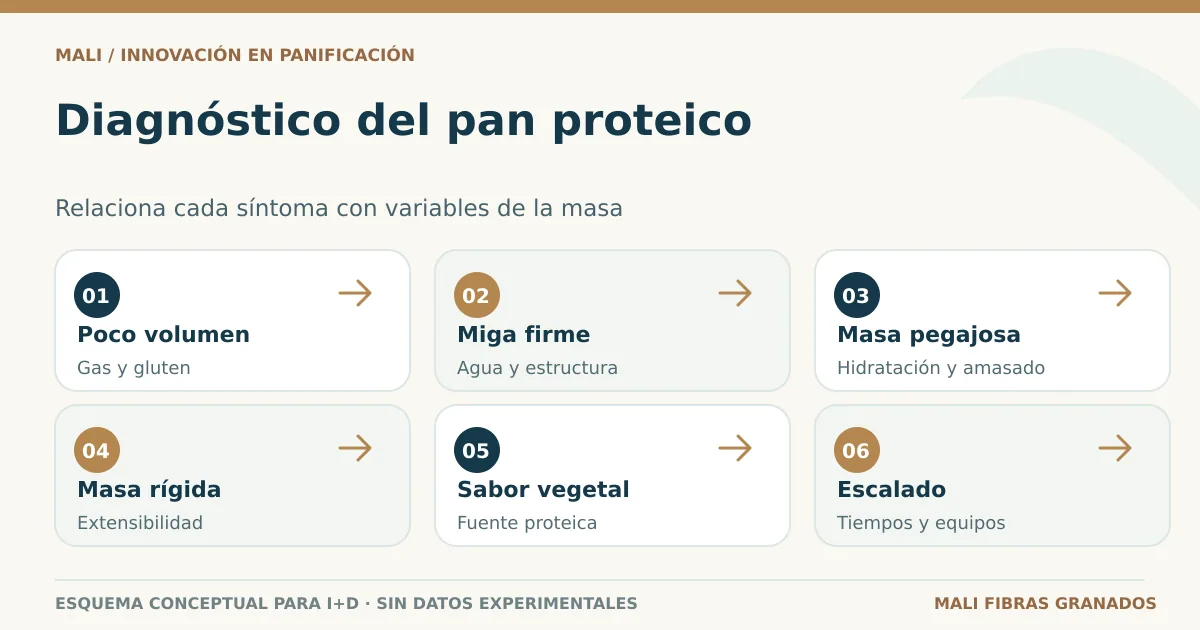
The high-fibre bread development guide explores the formulation approach in more detail. For a dense or low-volume protein bread, first review the texture troubleshooting guide.
How to Organize a Shelf Life Assessment
Start with a defined product and a plan agreed by the responsible team. FSAI notes that no generic method is valid for establishing the shelf life of every food. [1]
As an organization of the project, we propose this sequence:
Define what you intend to sell. Specify the format, channel, packaging, storage and use. Conditions after opening or thawing, where relevant, require separate consideration. [7] [10]
Agree criteria before trial. Identify what results will allow the product to be accepted and what methods to use. The selection of microbiological analyses corresponds to the competent team, depending on the food and its risks.
Compare representative samples. Identify a control, record changes and account for production variability. One especially good piece does not represent regular production. Tasting must be limited to samples whose suitability for consumption has been established by the responsible team; tasting is not a safety test.
Evaluate over the planned period. Choose control moments according to the objective of the study. There is no universal calendar of days applicable to all breads.
Document and decide. Relate each conclusion to the product and the conditions actually tested. Review validation when a change of recipe, process, or packaging may affect the outcome.
Monitoring Template for R&D and Quality
| Field | Information to be collected by the team |
|---|---|
| Identification | Product, batch, recipe version and date of production. |
| Trial Question | Which difference you want to investigate against the control. |
| Conditions | Process identified, packaging and storage. |
| Planned controls | Time of evaluation, methods and number of samples defined in the plan. |
| Physical quality and sensory | Firmness, elasticity, crumbliness, appearance and acceptance, as appropriate. |
| Safety | Analysis and criteria established by Quality and the competent laboratory. |
| Incidents | Deviations from production, packaging, handling or storage. |
| Conclusion | Result, limits, responsibility and next step decision. |
This template organises information; it does not replace a microbiological protocol or automatically validate a consumption date.
Use-by and best-before dates are not interchangeable
A use-by date applies to foods that are highly perishable from a microbiological perspective and may pose an immediate health danger after a short period. A best-before date indicates how long the food retains its specific properties under appropriate conditions. The decision must be assessed for each product; it is not made for commercial convenience. [2] [8]
Not all breads need a best-before date. Annex X to Regulation (EU) 1169/2011 provides an exemption for bakery or pastry products that, by their nature, are normally consumed within 24 hours of manufacture. This is a date-marking exemption, not permission to sell unsafe food or a standard 24-hour shelf life for every bread. [8]
Storage information must be consistent with validation. Also consider the instructions needed after opening the packaging or thawing when these situations form part of the intended use. [7] [10]
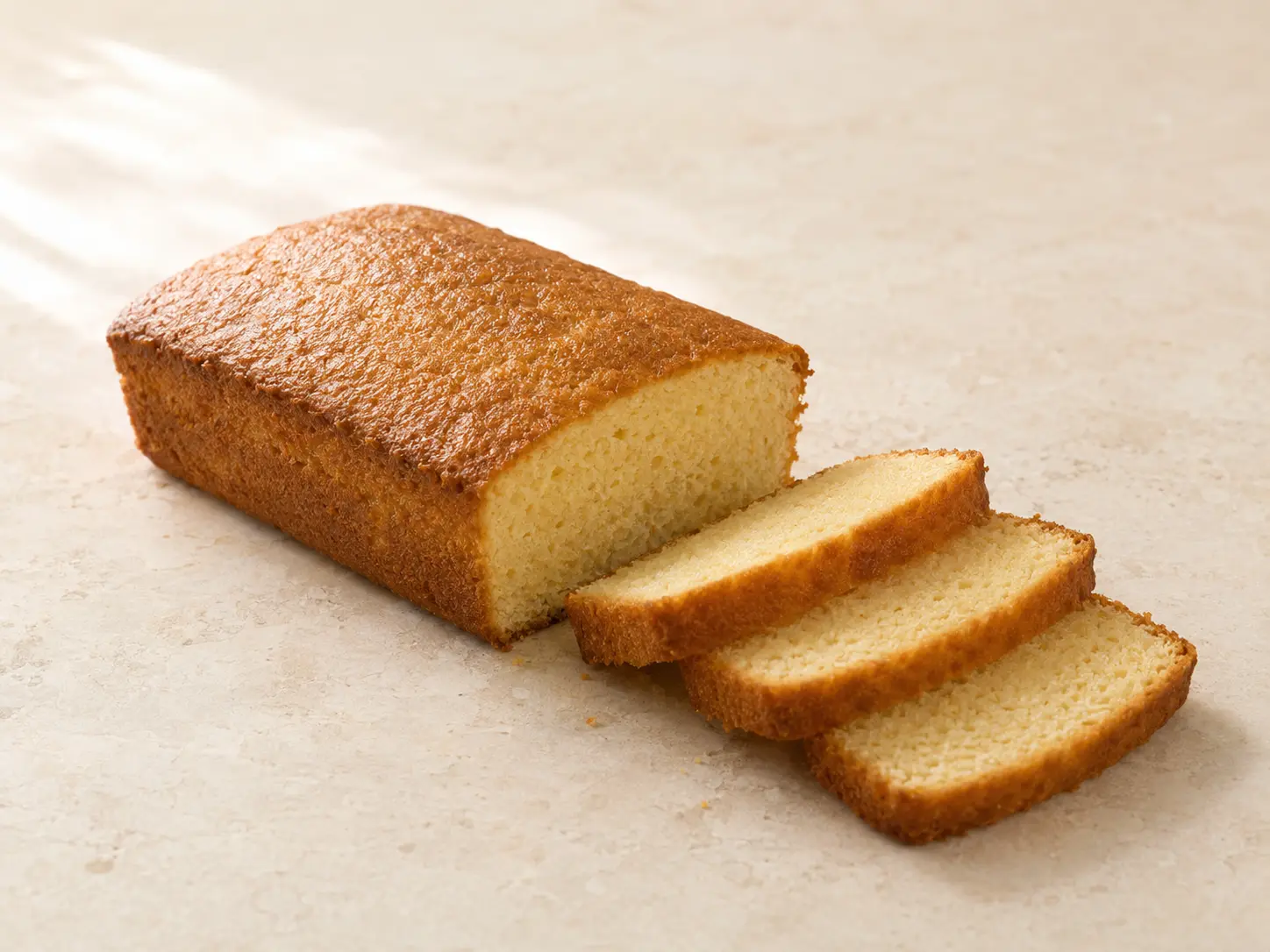
For a different food matrix, the guide to developing protein cakes and pastries covers cakes and muffins: their storage stability requires its own assessment.
What Mali Fibras Granados Can Contribute to Development
Mali Fibras Granados develops mixes for bakery projects with nutritional and product objectives. Protein Pan, Fibra Verde and Prebiomix offer different starting points within the range; their suitability is assessed for each application.
Incorporating one of these mixes does not amount to incorporating a preservative nor does it allow a fixed duration to be attributed to bread. The evaluation is carried out on formulation, process, packaging and final conditions.
When the objective requires changes to the mix, a bespoke development can be considered. The useful discussion starts with the product you want to achieve and the problem you need to solve.
Are you developing a bread with protein or fibre?
Tell us your format, nutritional objective and process. We will assess how our mixes fit your project.
Sources and references
- Food Safety Authority of Ireland. Guidance Note 18: Validation of Product Shelf-life (2022) — General validation framework; does not prescribe a universal duration. Back to text: 12345
- EFSA BIOHAZ Panel. Guidance on date marking and related food information: part 1 (2020), amended 14 July 2021) — Hazard assessment, food characteristics and storage conditions. It's not a specific protocol for every bread. Back to text: 123
- Baik and Chinachoti. Moisture Redistribution and Phase Transitions During Bread Staling (2000) — Experimental research on white bread and water redistribution. Back to text: 12
- FDA. Water Activity (a_w) in Foods — Reference for the concept of water activity; US legal thresholds are not moved here. Back to text: 12
- Packaging to prolong shelf life of preservative-free white bread (2018) — Packaging study under specific conditions; does not demonstrate results of Mali Fibras Granados products. Back to text: 1
- Psyllium Improves the Quality and Shelf Life of Gluten-Free Bread (2021) — Study in a gluten-free matrix; not extrapolable directly to other ingredients or formulations. Back to text: 1
- FSAI. Shelf-life: Best before and Use by Dates — Guidance on the difference between best-before and use-by dates; reference 10 covers opening and thawing. Back to text: 12
- Regulation (EU) 1169/2011, Article 24 and Annex X — EUR-Lex file with access to the consolidated version: date type and marking exceptions. Official publication in Spanish at the BOE. Back to text: 12
- Regulation (EC) 1333/2008 on food additives — Check the applicable version for food categories and authorised conditions; this guide does not prescribe preservatives or dosages. Back to text: 1
- EFSA BIOHAZ Panel. Guidance on date marking and related food information: part 2 (2021) — Specific guidance for opened and thawed foods; each product requires its own assessment. Back to text: 12