Product trends and development
Bakery premixes or individual ingredients: which approach suits your project?
Comparing a premix with individual ingredients requires calculating flexibility, consistency, number of references, R&D testing and cost of production. A hybrid solution is also possible.
When developing a functional bread, R&D can dose each ingredient separately or incorporate a prepared mix. The best choice depends on volume, the desired level of control, internal resources and product complexity. This guide compares the working methods; if you have already decided to buy a mix, continue with how to choose a bakery mix supplier.
In summary
- A premix can simplify weights and references and shorten some formulation tests.
- Individual ingredients offer independent adjustment of each component.
- Savings or overcosts are determined by dosage and actual operation, not by the price per kilo.
- A hybrid system can bring together a functional mix with flour and other ingredients chosen by the factory.
What does premix mean in bakery?
It is a mixture prepared of various ingredients to be incorporated into a formulation. A concentrated premix does not necessarily amount to a complete mix: the manufacturer can continue to provide flour, water, yeast and its own components. The scope of the solution should be included in the supplier's documentation.
When a premix adds value
When a recipe uses several raw materials in small quantities, grouping them can reduce stock items, weighing operations and opportunities for error. It can also support repeatability if mix composition and dispersion remain consistent. This is a potential advantage to verify through batch and process trials, not an automatic guarantee.
If a supplier has already researched compatibility and has a relevant application, R&D can start from a more developed base. Texture, composition and performance still need validation in the customer’s equipment.
Manufacturing decision
Two paths that can be combined
- premixLess references and heavy; assess margin of adjustment and total cost
- Individual ingredientsMore control of each variable; more purchasing management, batches and dosage
A hybrid alternative retains basic ingredients and uses a functional mix for the critical part.
When it is best to formulate ingredient to ingredient
Buying materials separately allows each ingredient to vary without simultaneously altering the others. It can be useful when R&D has development capacity, the factory has dosing and storage systems, very specific adjustments are sought or the volume justifies the management of more references. In return, the specifications, batches and control variables grow.
Compare the real cost
| Criteria | functional premix | Individual ingredients |
|---|---|---|
| Adjustment of each component | Depends on the opening and customization of the provider | Direct for R&D |
| References in warehouse | They can be reduced | They can increase |
| Weighing and checks | Fewer potential operations | More potential operations |
| Development work | Tested starting point, if there is support | Complete Trial Control |
| Cost of materials | Mix price and dosage | Price and dosage of each |
Dividing the purchase price by kilos of mix is not enough. Add the cost of dosed materials, storage, waste, checks, R&D time and production-line variability. The result depends on the manufacturer and contract.
A Hybrid Solution
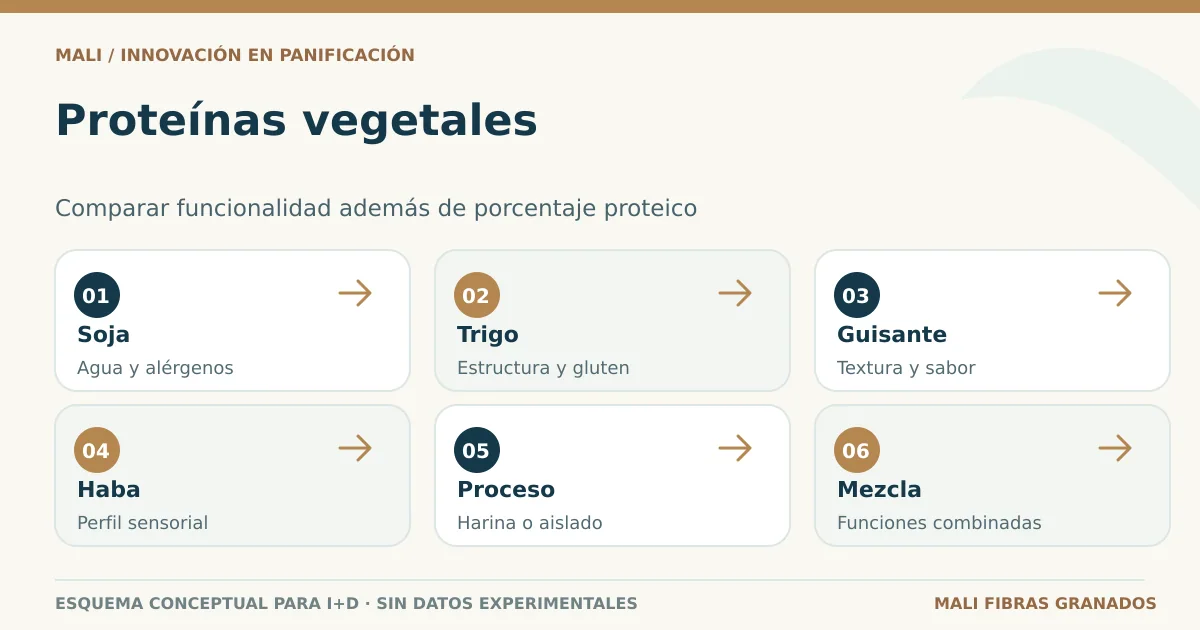
An industrial bakery can retain its flour, water and process while incorporating a mix that addresses only the more complex functional component. In high-protein bread, for example, plant proteins behave differently; Protein Pan offers a base designed for this application, around which the rest of the development can be adapted. The suitability of this approach depends on the nutritional objective and industrial validation.
If this approach suits your production, compare our mixes for professional bakeries before selecting a product for the trial.
Example of total cost per lot
This example is hypothetical: it does not represent Mali Fibras Granados's prices, dosages or yields. It serves to show why it is best to compare the same selling lot and the same final specification.
| Comparable lot cost | Individual ingredients | premix |
|---|---|---|
| Raw materials | 900 € | 980 € |
| Weighing and preparation | 80 € | 30 € |
| Waste and allocated checks | 50 € | 30 € |
| Total considered | 1.030 € | 1.040 € |
In this example, an €80 difference in raw materials falls to €10 after those tasks are included. Logistics, inventory, R&D trials and other factory-specific costs remain to be added. If yield or quality differs, recalculate per saleable kilogram: total batch cost divided by accepted output. The premix can win or lose the comparison; the decision depends on actual data.
Seven questions before deciding
- What benefit and statement do we want to get in the finished food?
- How many new raw materials would the formulation itself require?
- Do we have R&D, dosing and storage equipment?
- What volume and timing do we foresee?
- How much flexibility do we need to change the formula?
- What technical support and traceability does the supplier offer?
- What total cost results from a test on the actual line?
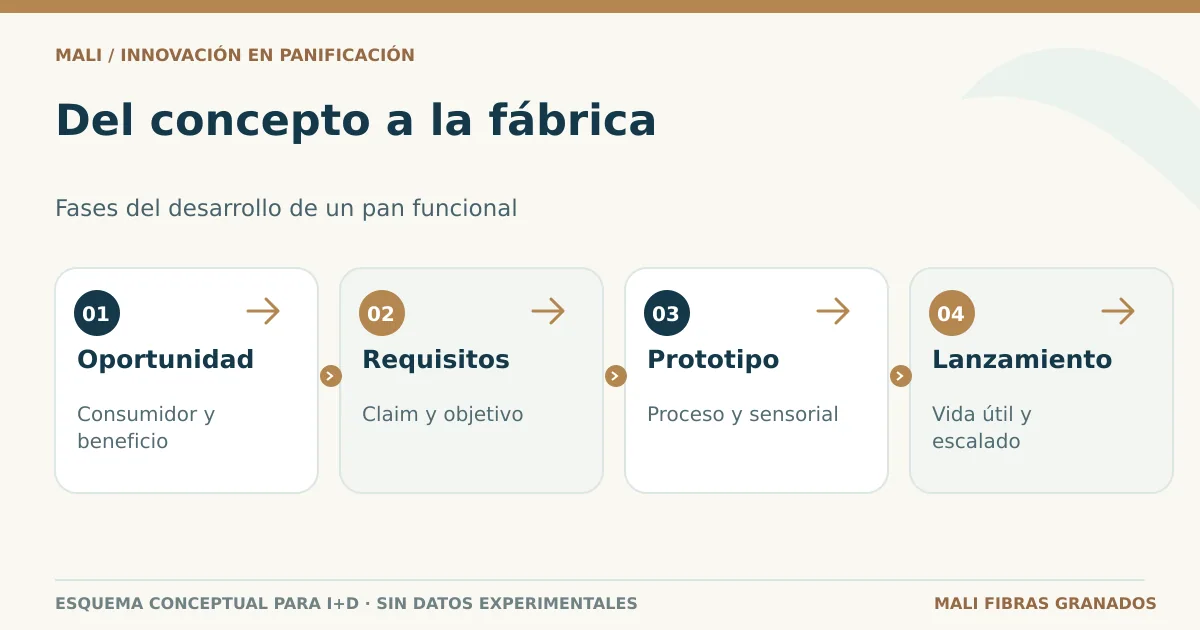
Full product development requires more than choosing a supply format: the journey from concept to industrial production includes regulation, sensory performance, shelf life and scale-up. Mali Fibras Granados offers functional mixes for prebiotic fibre, intestinal transit, cholesterol, protein bread and protein snacks; application specifications are assessed with each manufacturer.