Product trends and development
Developing a new functional bread: from idea to industrial production
A B2B development connects opportunity, benefit, regulation, formulation, sensory experience and industrial process. Ten decisions to bring an idea to a viable bread.
A functional bread should not begin with the available ingredient but with the product a customer will want to make and the consumer choose. The proposal must connect consumer, benefit, formulation, process, legislation, taste and cost. This guide orders the project; the specific articles elaborate on each technical challenge.
In summary: ten decisions
- Detect a real opportunity and define the client.
- Choose consumer, time of consumption and main benefit.
- Check from the beginning category and allowed statements.
- Translate the concept into nutritional and technological objectives.
- Prototyping, sensory evaluation and measuring shelf life.
- Validate scale-up, repeatability, labelling and communication.
1. Start with the opportunity
Having many raw materials does not mean having many commercially viable products. Fibre, protein, gut microbiota and convenience are areas to explore, not formulation instructions. A good opportunity identifies a professional need and a benefit that can be explained clearly. Industry signals from 2026 and their possible application to projects are reviewed in bakery trends for 2027.
2. Defining consumer and time of consumption
“Healthy bread” is too broad a brief. Specifying the audience, eating occasion, sales channel and point of difference helps R&D define texture, format, price and shelf life. This initial definition avoids developing a technically sound product that does not fit the range.
From briefing to factory
Five doors that must go through a concept
- ConsumerNecessity and occasion
- BenefitClaim and legal framework
- Prototypeformulation and sensory
- scale-upLine and shelf life
- LaunchCommunication and measurement
The recipe and the manufacturing parameters of a customer are not published.
3. Choosing a Main Benefit
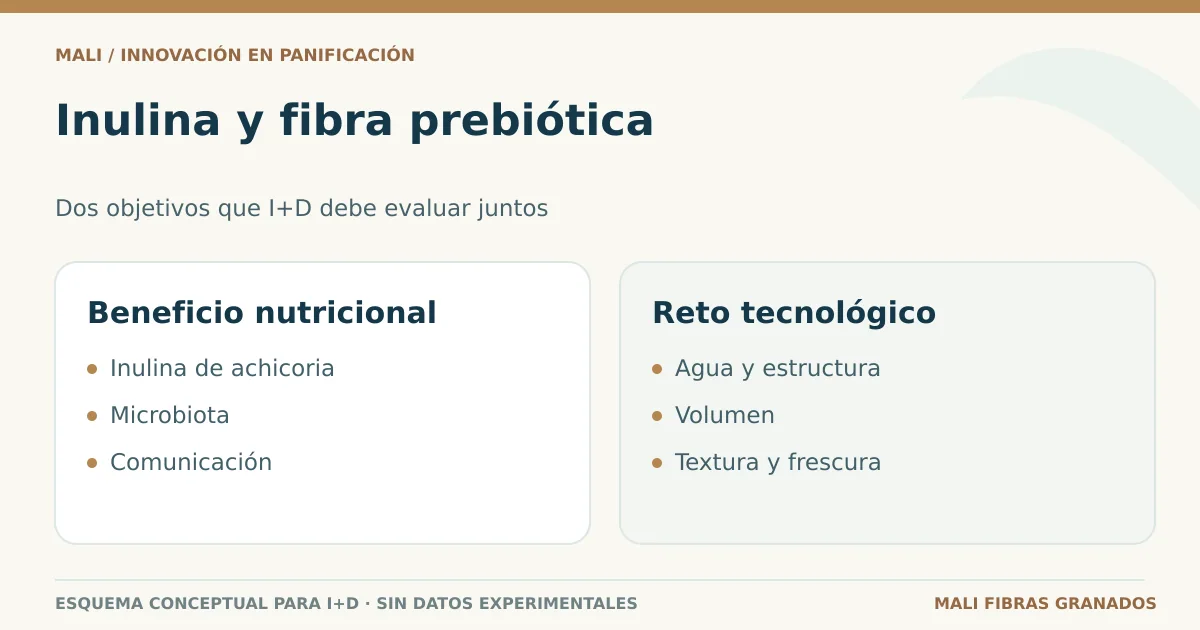
A proposition is usually clearer when it leads with one benefit. Prebiomix contains prebiotic chicory inulin fibre associated with the gut microbiota; Fibra Verde helps accelerate intestinal transit; Fibracol helps lower cholesterol; Protein Pan enables high-protein bread development; and Protein Snacks brings that attribute to baked snacks. In every case, communication about the finished food requires verification of composition and applicable conditions.
4. Study legislation before formulating
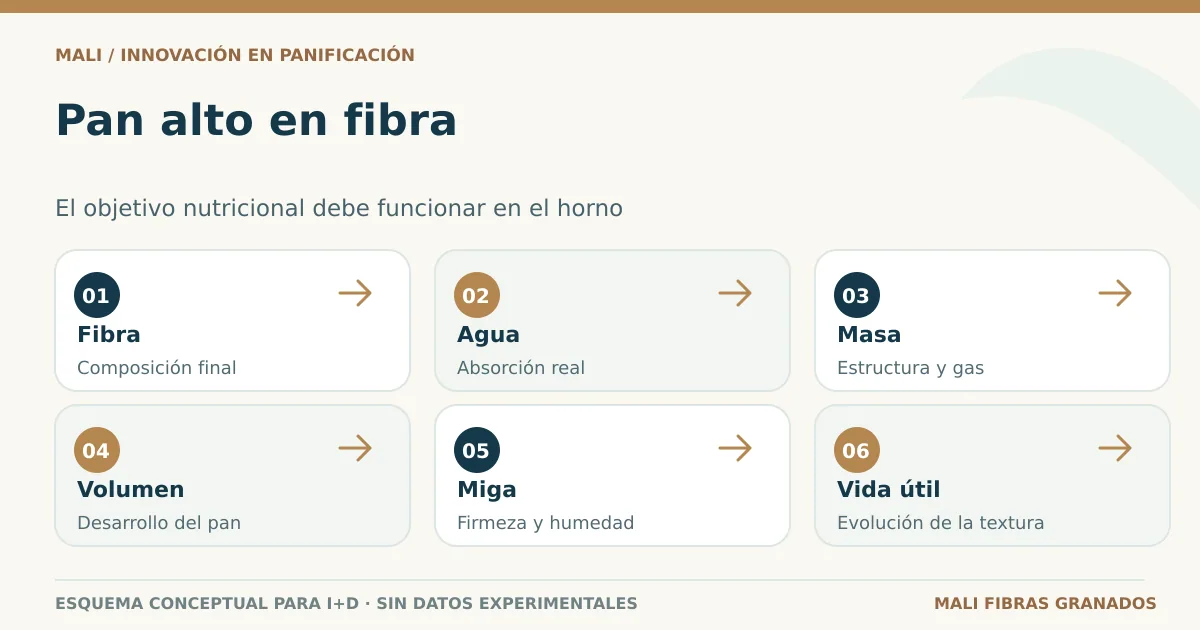
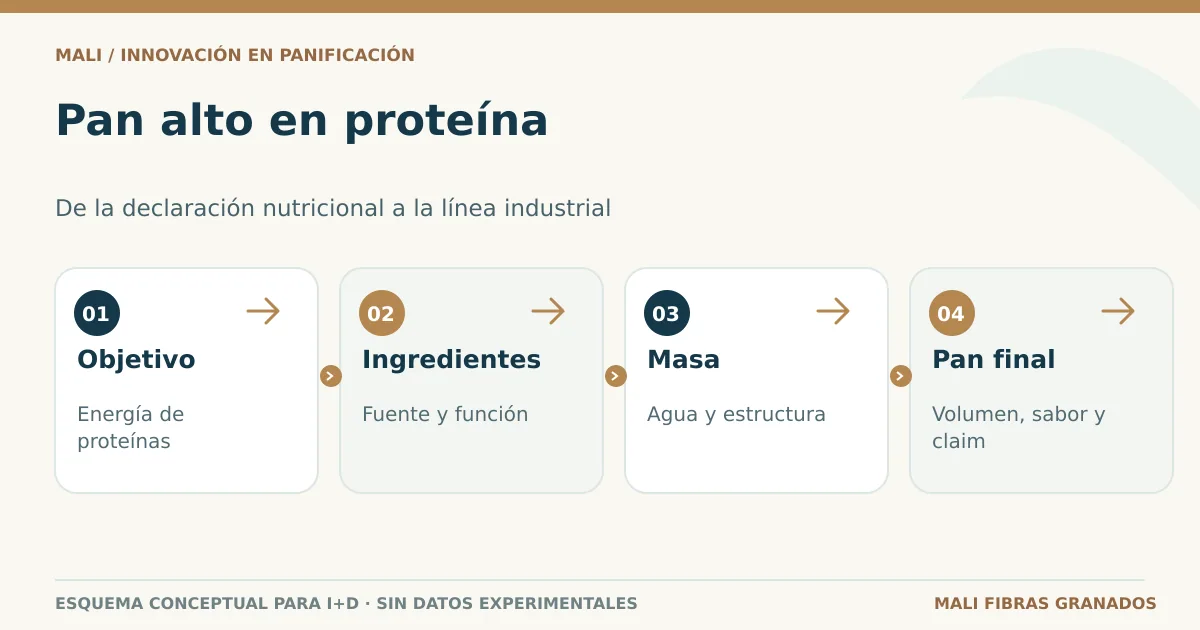
In the EU, “high fibre” requires at least 6 g/100 g or 3 g/100 kcal. “high protein” requires that 20% of the energy value comes from proteins. Some functional statements add conditions on the ingredient, intake or food category; added phytosterols are also subject to authorised categories. Quality must intervene from the first prototype.
5. Set technical specifications
| Area | Objective to be defined |
|---|---|
| Nutrition | Fibre, protein or functional ingredient in final food |
| Format | Weight and portion |
| Bakery | Acceptable volume and structure |
| sensory | Texture, flavour, aroma and appearance |
| Operations | Line and tolerances available |
| Business | Cost and availability |
| Communication | Planned declaration and labelling |
6. Develop prototypes
Compare ingredients, water, mixing, fermentation and baking to understand the variables controlling the product. The aim is not to find a final recipe immediately, but to identify the trade-offs involved. For a specific food matrix, see bread with inulin, high-fibre bread, high-protein bread, bread with phytosterols or protein snacks.
7. Evaluate sensory experience
A functional food is still a food. A high protein or fibre content does not necessarily compensate for an overly firm crumb, unwanted aftertaste, or unattractive texture. Collecting sensory results along with nutritional results allows you to decide which variant deserves to scale.
8. Studying the shelf life
Observe the newly produced product and at the end of the planned period. Depending on the format, measure firmness, humidity, crunch, stability, aroma and microbiology. The packaging can be decisive, particularly for dry snacks.
9. Scale and check repeatability
Moving from a small mixer to a production line changes mechanical energy, temperatures, timing, dividing and shaping. Reviewing several batches and raw-material availability helps prevent the best laboratory prototype from becoming an unworkable factory product.
10. Validate final product and communication
R&D checks that it works; Quality checks composition and legality; Production confirms repeatability; Purchasing guarantees supply; Marketing explains an understandable benefit. The label should describe the food actually manufactured. The specifications of each mix and the exact application are worked directly with the manufacturer.
Reusable briefing to talk to Mali Fibras Granados
You can copy and complete this template without sharing a proprietary recipe. A clear description of the desired result helps assess whether a mix or bespoke development is suitable.
| Field | Initial information |
|---|---|
| Product and channel | Type of bread or snack, customer and occasion |
| Main benefit | Protein, fibre, prebiotic territory or other objective |
| Format and portion | Size, presentation and intended consumption |
| Desired experience | Taste, texture and reference product |
| Installation | Available stages and line restrictions |
| shelf life and container | Commercial need and anticipated format |
| Restrictions | Ingredients, allergens, cost and destination market |
| Test plan | Responsible persons, time limits and acceptance criteria |
Before scaling up, agree on the results that R&D, Quality and Production must approve. Detailed process information is shared directly according to project needs.
From an approved prototype to a production-line trial
Before production in the actual equipment, agree on the comparison that will support the decision.
| Decision | Evidence and responsibility |
|---|---|
| Product specification | R&D identifies the product version and attributes to be maintained. |
| Comparison | Production and R&D record the reference and representative lots in the planned line. |
| Acceptance | Quality agrees on composition, safety and conservation criteria; R&D, physical and sensory. |
| Next step | Those responsible document deviations and decide to approve, adjust or repeat the test. |
The storage plan can draw on the shelf-life evaluation guide. The table assigns responsibilities; the manufacturer’s own parameters remain in its internal documentation.
Mix or formulation from individual ingredients?
Formulating from raw materials offers detailed control, but also adds suppliers, inventory and production variables. A mix can simplify part of the process and facilitate repeatability. No option is universally superior: it depends on R&D capabilities, scale and objective concept. Mali Fibras Granados develops functional mixes to convert nutritional opportunities into industrial references without publishing the reserved formulation of its customers.
If you need a specific combination of ingredients, format or nutritional objective, you can propose a bespoke mix development, specifying your project requirements and production conditions.