
Bread and nutrition · Everyday guides
What is dietary fibre and why it is important
Dietary fibre is a set of components present mainly in plant foods that our enzymes do not digest in the small intestine. It reaches the large intestine, where a part can be used by the gut microbiota. It intervenes in intestinal functioning and, depending on the type of fibre, has other effects related to digestion and metabolism.
It is in daily foods such as pulses, fruit, vegetables, whole grains, nuts and seeds. Understanding what it does helps you choose what you eat better, without having to look for a single food that solves everything.
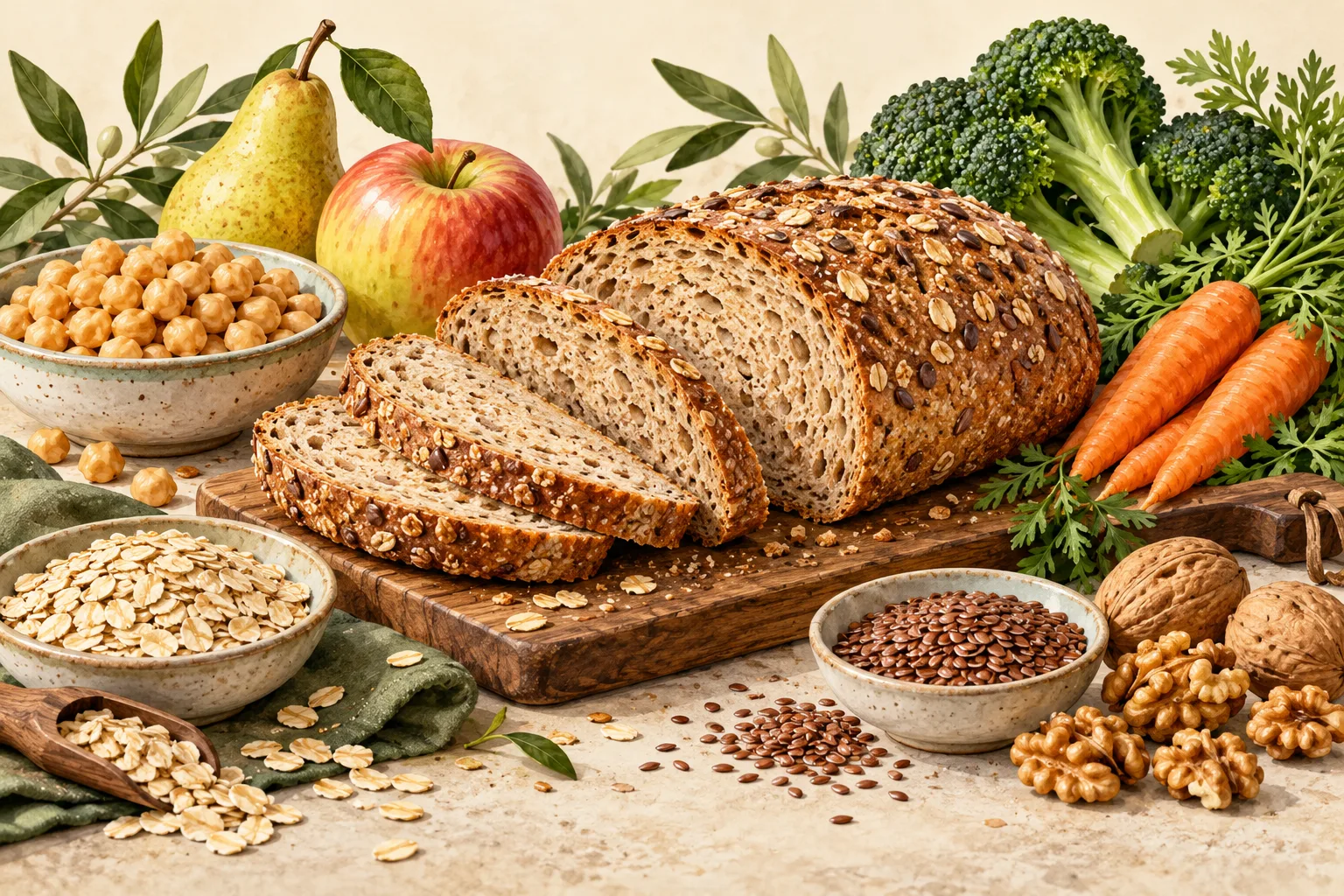
Editorial illustration: fibre can come from different plant foods. The bread represented is generic.
What happens to fibre when we eat it
During digestion, many nutrients are broken down and absorbed into the small intestine. The fibre resists that digestion and continues towards the colon. There it can retain water, contribute to the volume of faeces, or serve as a substrate for intestinal microorganisms.
Therefore, not digesting it with our enzymes does not mean that it is useless or that everything leaves the body unchanged. The Definition of EFSA includes different non-digestible carbohydrates and other associated components, such as lignin.
What fibre is for
Participates in intestinal functioning
Fibre can increase stool bulk and water-retention capacity. This explains its role in bowel movements and intestinal transit. The specific effect varies with fibre type, quantity and individual characteristics.
Some fibres are used by the gut microbiota
Colon microorganisms can ferment certain fibres. During this process they transform and generate substances that participate in the intestinal environment. Not all fibres ferment the same, and not all people respond the same way.
Some influence the response to meals
Certain viscous fibres modify the intestinal content and may slow the absorption of carbohydrates. Some also have effects on cholesterol. They are properties of specific fibres, in quantities studied, that cannot be attributed automatically to any food containing fibre.
The Scientific evaluation of EFSA on fibre and nutrition distinguishes these functions. To talk about 'fibre' as if it were a single ingredient with a single effect is too simplified.
Differences between soluble and insoluble fibre
The distinction between soluble and insoluble describes how fibre behaves in relation to water. It is useful, although it does not explain all its effects on its own.
| Type | General characteristics | Examples |
|---|---|---|
| Soluble | Can dissolve in water; some fibres form viscous solutions, while others are readily fermented. | Fruit pectins and beta-glucans from oats or barley. |
| Insoluble | Does not dissolve in water; different fibres in this group contribute to the structure and bulk of intestinal contents. | Cellulose and some wheat bran fibres. |
Many foods contain a combination of both. You don't need to choose one and discard the other: it matters the variety of foods and how you tolerate them. In addition to solubility, they count their viscosity, their ability to retain water and their fermentation. Characteristics of the fibre according to EFSA.
Two types, different behaviors
Soluble fibre
It dissolves in water; some fibres form gels. Many are fermented by the gut microbiota.
Examples: inulin and pectins.
Insoluble fibre
It doesn't dissolve in water. It can help increase stool volume.
Examples: cellulose and part of the bran.
Food usually combines various types of fibre. Soluble does not always mean prebiotic.
Fibra Verde by Mali Fibras Granados brings this into bread: it combines soluble and insoluble fibre sources with wholemeal flours, brans, dehydrated vegetables and seeds. This ingredient mix illustrates how bread can contain different fibres. See its general composition.
Fibre and prebiotics don't mean exactly the same thing.
Not all fibre is prebiotic. In order to consider a substance prebiotic, certain microorganisms should use it selectively and such use should have a demonstrated health benefit. That's the central idea of scientific consensus of ISAPP.
Inulin and certain fructooligosaccharides are well known examples within this area. However, a label that says "high in fibre" reports a quantity of fibre; it does not itself demonstrate a specific effect on gut microbiota.
In Prebiomix, chicory root fibre is combined with wheat and oat brans, flaxseed and psyllium. This illustrates how these sources can be incorporated into everyday bread; total fibre content and any specific effect must be assessed in the finished bread.
What foods contain fibre
You can find it in several groups:
| Group | Everyday examples |
|---|---|
| Pulses | Lentils, chickpeas and beans. |
| Wholegrains | Wholemeal bread, oats, brown rice and wholemeal pasta. |
| Fruit | Pears, apples, oranges and berries. |
| Vegetables | Broccoli, carrots, green beans and artichokes. |
| Nuts and seeds | Almonds, walnuts, flaxseed and chia. |
The amount depends on the food, preparation and how much you actually eat. A value per 100 g does not necessarily represent a portion: 100 g of seeds and 100 g of fruit are very different eating quantities.
The NHS recommends combining different fibre sources. So you can incorporate it into different meals and take advantage of the nutritional variety of those foods.
How much fibre we need a day
EFSA establishes 25 g daily as an appropriate intake for normal bowel function in adults. The Catalan Food Safety Agency places its general recommendation on 25–30 g daily. They are references for the total of the day and not a goal to be achieved with a single food. EFSA and ACSA.
If you currently eat little fibre, increase it gradually and stay adequately hydrated. For meal ideas, see our guide to eating more fibre every day.
What role bread can play
If you eat toast or sandwiches often, the bread can provide a portion of your daily fibre. To find out how much it adds up, look at the grams of fibre per 100 g and the weight of the portion you take.
Wholemeal and high-fibre bread are not equivalent terms: one describes flour, the other nutritional composition. We explain this in which bread to choose for more fibre.
At Mali Fibras Granados, we develop mixes such as Fibra Verde and Prebiomix for bakeries and manufacturers to make fibre-containing breads. They offer a way to expand choice in an everyday food. Final composition depends on each baker’s recipe.
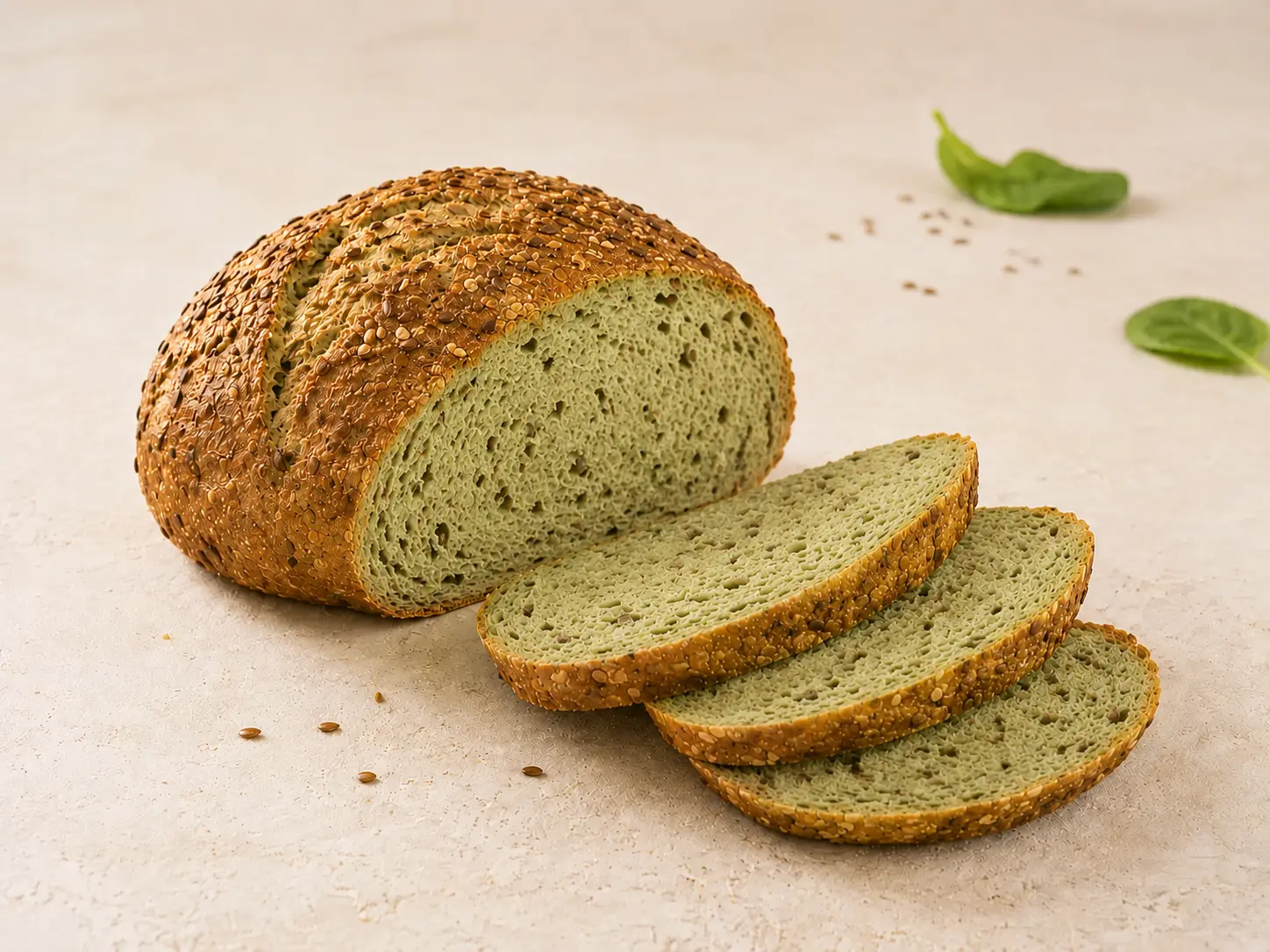
Fibra Verde · Image of the finished bread published by Mali Fibras Granados. Appearance may vary with production.
Ask your usual shop for more options
If you would like to find these breads near home, you can share this proposal with your bakery or with your supermarket customer service:
Common questions about fibre
Is fibre found only in fruit skin?
No. The flesh can contain fibre too. Eating well-washed edible skin can contribute to intake, but peeled fruit is not necessarily fibre-free.
Does added fibre make a food wholemeal?
No. Adding fibre can increase its content, but does not change the type of flour used by itself. The other ingredients and the whole of the food should also be assessed.
Are the effects of eating more fibre immediate?
There is no single timeframe or response for everyone. Make gradual changes and observe your tolerance. If you have a digestive condition or instructions to limit fibre, adjust your intake with the professional caring for you.
More options in your bakery
Share this guide with your bakery or supermarket and tell them what bread you would like to find.
Contact Mali Fibras Granados for your bakery →