Protein and Bakery
The future of protein bread: competing in 2027
A decision sheet to evolve a protein range: combine protein and fibre, improve texture, evaluate alternative sources and validate industrial cost.
For an industrial bakery that already works the protein attribute, the 2027 plan can start by improving an existing reference: texture, contribution per serving, combination with fibre, formatting or total cost. The priority should come out of product behaviour and commercial briefing, not from indiscriminately increasing the grams of protein.
Innova’s 2026 bakery analysis identifies interest in protein alongside nutrition and the eating experience. The plan proposed below is an interpretation for R&D: it does not guarantee which products will succeed in 2027.
First: identify what the range needs to improve
Choose a primary goal and a measure of success. If the problem is repeat shopping, it can matter more to improve flavour and crumb than to incorporate a novel source. If the channel requests individual portions, the work will include form, packaging and cost per unit.
To define the audience and eating occasion, see protein bakery beyond sports consumers. Here, the focus is on prioritising product changes and checking that the new version better meets the chosen objective.
Protein plus fibre: two targets to be checked separately
The combination may lead to a useful proposal, but requires adjustment of the whole. Water, structure, volume and texture depend on the specific ingredients and process. Adding a fibre source to a protein base does not in itself guarantee an acceptable baking result.
In the EU, “high protein” requires that at least 20% of energy comes from protein. ‘High fibre content’ requires at least 6 g/100 g or 3 g/100 kcal. Both criteria are checked in the final product. A change in humidity, size or formulation forces you to review the values; the claim of one reference is not automatically inherited by another.
Trial the combination alongside a control product, record each change and keep the remaining variables as stable as possible. The high-fibre bread guide provides additional technical criteria.
Texture and flavour: set a standard before changing ingredients
Define a reference product and compare crumb, crust, aroma and changes during storage. A change that improves composition but reduces acceptance may fail to meet the commercial brief.
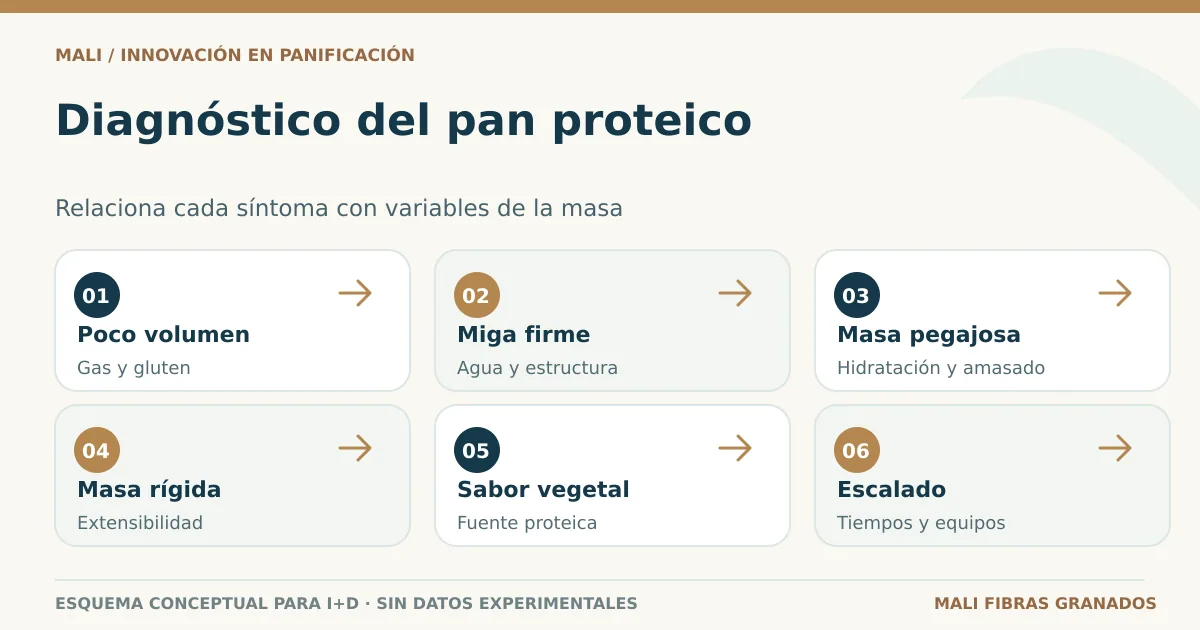
When defects appear, use the protein bread troubleshooting guide. Do not attribute every loss of volume to a single cause or change several raw materials at once without recording the effect.
Reformulation plan
From an improvement sought to an industrial decision
- ObjectiveChoose the main problem of the range
- ComparisonRehearse against a reference
- ValidationComposition, sensory, process and cost
- DecisionContinue, reformulate or stop
Each change must maintain the specifications of the final product.
New sources: compare specifications and supply
Pea, chickpea, faba bean or rice can be included in a trial plan alongside soya and wheat. They are not presented as equivalent substitutes or as current Protein Pan ingredients. The plant protein guide helps with selection based on functionality, flavour and documentation.
Procurement should assess availability, consistency and cost in use. Differentiation by origin makes sense when it provides something customers value and the factory can reproduce. An attractive price per kilogram may still require process changes or create more waste.
New formats: open a project with own requirements
Bread rolls, crackers, breadsticks and baked snacks do not necessarily share the same technological base. A cracker needs different fracture, moisture and packaging-protection targets from a soft bread crumb.
Protein Pan is intended for developing high-protein breads. Protein Snacks provides a route to baked snack applications. For the latter, start with the protein snack development guide.
Apply protein and fibre to a reference of sliced bread
Packaged sliced bread brings protein and fibre objectives into breakfasts and sandwiches. The brief should define pack weight, slice thickness, appearance and primary use; then compare softness, resistance to fillings, toasting and storage performance.
The guide to high-protein, high-fibre sliced bread takes that process through to packaging and cost per pack. For an appearance without visible seeds, consider Protein Pan Sin Semillas as a possible starting point and assess the specific adjustments needed.
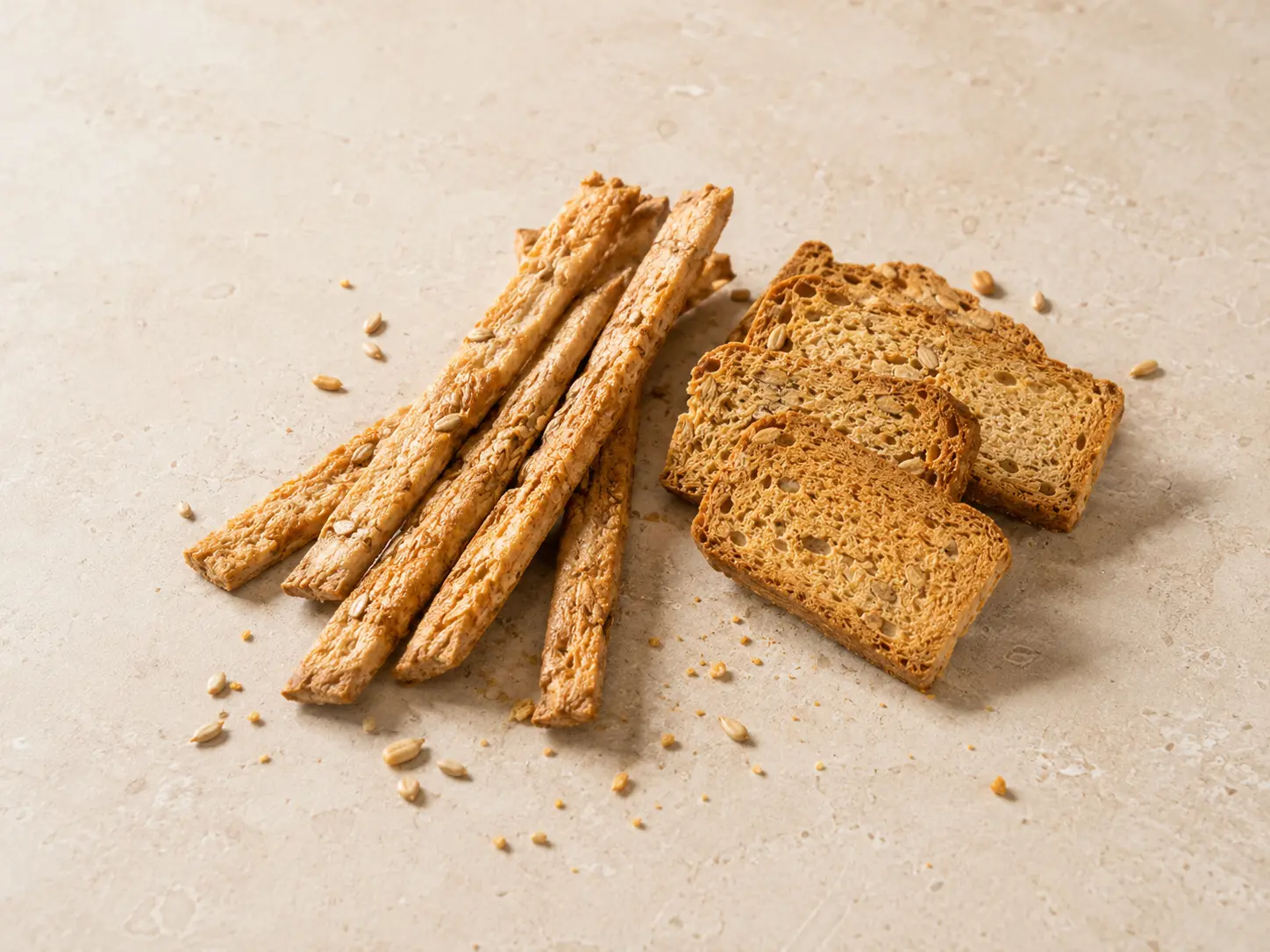
A decision sheet for the 2027 plan
| Priority | useful trial | Criterion to continue |
|---|---|---|
| Improve experience | Sensory comparison with reference | Acceptance under briefing |
| Combine protein and fibre | Nutritional Prototype and Verification | Both objectives with a workable process |
| Change protein source | Comparison of specified ingredients | Sufficient function, flavour and supply |
| Change Format | Line and packaging test | Repeatability and cost per unit |
| Adjust Cost | Waste and total-cost calculation | Savings while maintaining specifications |
Avoiding an accumulation of messages without hierarchy
Protein, fibre, wholegrain content and seeds can coexist, but every statement must be understandable and substantiated. Choose a leading proposition and check how customers interpret it. Wholemeal designations and nutrition claims are reviewed under their respective rules.
The team can close each phase with a decision: continue, reformulate or stop. This helps to devote industrial trials to better fit ideas and to prevent a trend from keeping a project alive that does not meet the objective.
Decide which improvement should lead the next version
Before adding attributes, identify what limits the product today. This prevents a reformulation from adding additional costs without resolving the ground for rejection.
| Observed situation | Priority for development |
|---|---|
| Good nutritional profile, poorly accepted texture | Improve sensory experience |
| Good product, unclear occasion | Review format and use proposal |
| Interest on protein and fibre | Set both objectives and validate the matrix |
| Dependence on a raw material | Studying comparable alternatives |
This page addresses the evolution of a product range. The everyday consumer guide helps with audience selection; the industrial development guide supports formulation work.
Protein Pan and tailor-made protein developments
Protein Pan is a starting point for making high protein breads. A reformulation that adds other ingredients or changes the process needs to be revalidated. Mali Fibras Granados can study with the manufacturer the objective, application and feasibility of a tailor-made solution.
Explore Protein Pan and tell us what you want to improve in your protein range. Specific formulations and conditions are developed directly with each customer.